
Back to School in Zambia: The Complete Family Guide

Back to school in Zambia is one of the great family projects of the year, and this guide will get you through it with your budget, your sanity and your sense of humour intact. Every January, homes across the country run the same beloved routine: new uniforms pressed and ready, black school shoes polished by Sunday night, books covered in bright paper, and a lunchbox plan that will survive the first week. Whether your child is starting Grade One, moving up to secondary school or heading back after the holidays, here is everything worth knowing, from the school calendar to the uniform list, plus tips that make the season easier and even fun.
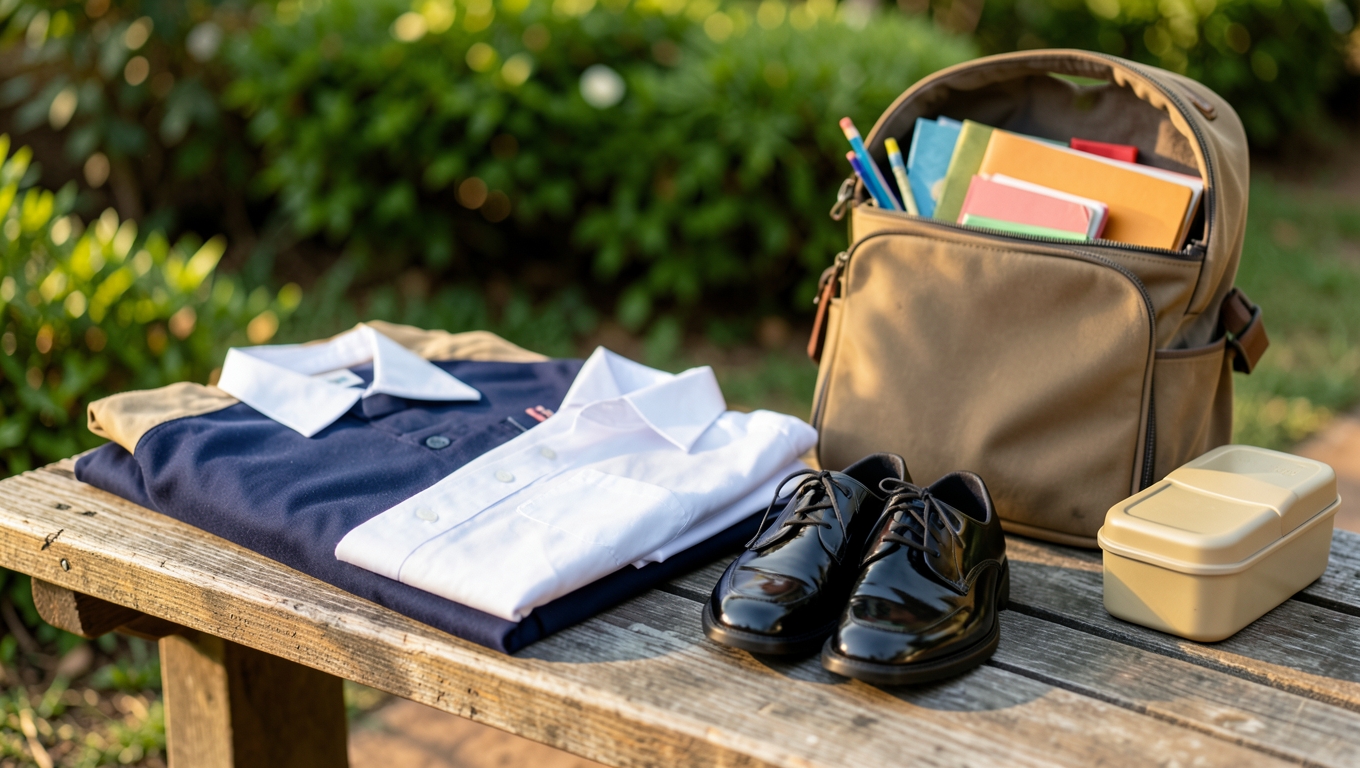
Ready for the first bell: uniforms, shoes, books and a packed bag.
When Does the Zambian School Year Start and How Is It Structured?
The Zambian school year follows the calendar year, opening in January and running through to December. It is divided into terms with short breaks in between, and the Ministry of Education publishes the calendar so families can plan around it. For the 2026 school year, the Ministry confirmed that Term One opens on 12 January 2026 for government schools, with some private schools starting slightly earlier in the first week of January. Term dates are published well in advance, so the smartest move is to check the official calendar and mark the dates on the fridge the moment they are out. For background on how the system is structured, and why education remains one of the country's biggest priorities, see this overview of education in Zambia and the work being done to keep more children in classrooms through UNICEF's education programmes in Zambia.
In practice, that means the serious school shopping happens in December and early January, the uniform gets its first wear in the second week of January, and every shop in town from the market to the mall is busy right up to opening day. Plan early, and the season feels exciting instead of frantic. Zambia itself is young and growing fast, with families at the centre of everything, as the country's national profile makes clear.
When | What families are doing |
November | Checking results, confirming school places, budgeting for the new year |
December | Buying uniforms, shoes, books, bags and stationery before the rush peaks |
First week of January | Final shopping, uniform labels, haircuts, bags packed and ready |
12 January | Term One opens: the first bell of the year |
In Zambia, the school year starts with new shoes, a new uniform and a family that has already done the shopping in December.
What Is on the Back-to-School Shopping List?
The list is longer than people expect, and this is where December planning pays off. Here is the full kit for a primary or secondary pupil in Zambia. The uniform is the centrepiece: in Zambia and across much of Africa, it signals that a pupil is at school to learn, and it removes one more thing for families to worry about each morning, as the wider history of the school uniform shows.
Uniform: shirts or blouses, trousers or skirts, sweaters or jerseys, and a blazer and tie for many secondary schools. Uniforms are compulsory in the vast majority of Zambian schools, government and private alike, as comparative data on school uniforms confirms.
School shoes: black leather school shoes are the standard, with white socks. Buy one size up, and not so far up that the shoes flap.
Physical education kit: many schools require a sports outfit or tracksuit as well.
Books and stationery: exercise books, textbooks where the school requires them, pens, pencils, a ruler, a geometry set for older pupils, and a calculator for secondary students.
School bag: sturdy, comfortable and big enough for books, a lunchbox and a water bottle.
Lunchbox and water bottle: two of the most-used items of the entire year.
Labels: name labels or a permanent marker for every item that can walk away, which is most of them.
Where to buy? Families in Zambia use a mix of sources: the market for value and negotiation, dedicated school-uniform shops, supermarkets, malls, and for many, tailors who sew uniforms to measure. Buying from a tailor can be the best value of all for growing children: a little extra fabric lets you let the hem down next term. And remember that uniforms are an equaliser by design: every child arrives in the same colours, which is exactly the point. For many families, keeping children in uniform is a real investment, which is why school shoes and uniforms are also one of the most common charitable drives in the country.
Two practical notes from seasoned school shoppers:
Label everything before it leaves the house. Name labels or a permanent marker on shirts, sweaters, bags and lunchboxes. Unlabelled items vanish in week one.
Buy the second pair of shoes now, not in June. Growth spurts and wear-and-tear are predictable, and prices are friendliest when everyone else is not shopping.
Buy the shoes one size up. The feet of January are not the feet of October.
How Much Does Back to School Actually Cost, and How Do You Budget?
Costs vary widely by school, age and where you shop, so treat any figures you see, including in this article, as a rough map rather than a rule. What matters is the method: set a budget early, divide it across uniform, shoes, books and stationery, and buy in waves. December for the big items, early January for the top-ups. This spreads the cost, lets you hunt for value, and avoids the one-week panic shop that always costs more.
Category | Watch out for | Money-saving move |
Uniform | Buying too small in January growth spurts | Tailor-made with room to let out; buy one spare shirt |
Shoes | Cheap soles that split by March | One size up, and good leather over fashion |
Books | New textbooks where a second-hand copy works | Ask about the school's book list early and share with siblings |
Stationery | Buying pens and pencils singly all year | Buy a term's worth in bulk packs |
Bag and lunchbox | Fashion over endurance | Buy once, buy sturdy; it will survive the whole year |
Three more money tips that local parents swear by. First, buy basics like exercise books and pens in bulk, and split them across the term. Second, keep a 'school box' at home where spare socks, pencils and the second pair of shoes live, so lost items are replaced from stock, not from the shops. Third, involve the children in the shopping: they take far better care of a uniform they helped choose, and you will enjoy the day a lot more.
The school year is a marathon, not a January sprint. Buy in December, top up in January, breathe in February.
How Do You Get the Uniform, Laundry and Routine Ready?
Now for the part that keeps the whole year running: laundry. A school uniform takes more punishment than almost anything else in the house. It is worn five days a week, sat on grass, walked through red dust, splashed in the rainy season, and worn again two days later. The families who have the easiest school years are simply the ones with a laundry system.
Buy two sets. Two shirts and two sets of trousers or skirts per child, at minimum. With two sets, there is always a clean uniform on the hanger and a wash cycle in progress, which removes the midnight panic.
Wash school uniforms as a family load. Keeping uniforms together makes a quick weekday cycle simple, and white shirts stay white when they are not mixed with sportswear and work clothes.
Keep a rainy-season backup plan. From November to April, drying is slower and skies are dramatic, as anyone who knows Zambia's climate will tell you. A covered hanging space, a spare shirt, or a laundry service for the heavy weeks keeps the routine unbroken.
Set the Sunday-night routine. Uniforms pressed, shoes polished, hair done, bag packed by the door. Monday morning will thank you, every single week.
Label everything. Shirts, sweaters, bags, lunchboxes, even water bottles. The lost property box at every school in the country is a museum of everything unlabelled.
One seasonal note: January in Zambia sits in the rainy season, so first-week school runs can come with mud, puddles and sudden storms. A spare pair of socks in the bag and a quick car-clean routine during the wet weeks will save a lot of scrubbing. And if the term's laundry ever starts to win, professional help is closer than you think.
Two uniforms, one routine. The secret to a calm school week is a full hanger on Sunday night.
What Are the First-Week Tips That Make the Year Easier?
The first week sets the tone for everything. Small preparations now pay off all year.
Do the school run test-drive. Before the first morning, walk or drive the route and time it, including the rain and the traffic.
Introduce yourself. Say hello to the class teacher and get the school's phone number and WhatsApp group on day one.
Prepare breakfasts that travel. A quick, filling breakfast makes the whole day easier; porridge, fruit and eggs do the job.
Keep a homework station. A quiet corner with good light, pens and books, ready for the nightly routine.
Build the bedtime rhythm early. Move bedtimes back a week before school opens, gently, using the long holiday evenings as practice.
Celebrate the start. A first-day photo on the front step, a small treat after the first bell. These are the photos families keep forever.
The first-day photograph is the cheapest family heirloom ever made. Take one every year.
Back to School Zambia: Quick Answers
These are the questions families ask us most every January.
When do Zambian schools open in 2026?
Term One of the 2026 school year opens on 12 January 2026 for government schools, with some private schools opening in the first week of January. The Ministry of Education publishes the official calendar, so confirm the exact dates with your school locally.
Are school uniforms compulsory in Zambia?
Yes. Uniforms are standard and compulsory across almost all government and private schools in Zambia. Primary school uniforms are usually light khaki or navy with white shirts, while many secondary schools add a blazer, tie and jersey. Exact colours are set by each school.
What school shoes do Zambian children wear?
Black leather school shoes with white socks are the classic standard. Buy for durability and fit, ideally one size up, and treat them to a polish every Sunday as part of the school routine.
How much does back to school cost in Zambia?
It varies widely with the school and the age of the child, from modest budgets for a primary pupil to much more when blazers, textbooks and calculators are involved. Budget early, buy the big items in December, and spread the rest across early January to keep the pressure off.
Where can I buy school uniforms and stationery in Zambia?
Markets for value, school-uniform shops and tailors for fit, supermarkets and malls for convenience, and bulk stationery packs for the term. In Solwezi and towns across the country, the market-and-tailor combination is the traditional favourite for quality and price.
Back to school Zambia: anything I should know about buying in Solwezi?
Solwezi's markets and tailors are the traditional favourites for school shopping, and the town's shops fill up fast in the first week of January, so shop early. The local tourism guide is a handy orientation if you are new to town, and our newcomer's guide to Solwezi covers the rest of the settling-in essentials.
School Bags Packed? We Handle the Home Front
The school year is a family project, and it comes with a mountain of laundry, a house that needs to be clean and calm before the first bell, and a car that does the run twice a day through mud season. This is where Aenon Horizons comes in, across Solwezi and Kalumbila:
Uniform laundry, sorted. Our laundry and dry cleaning service, with its bespoke scent bar, takes on the school-week load: shirts, trousers, skirts, sweaters and the sports kit, returned fresh and folded.
A clean house for a clean start. Our cleaning team gets the house school-ready and keeps it that way, with dust kept down through the season.
The school-run car. Twice-daily runs, muddy January roads and rainy-season puddles: our car wash and auto care team keeps the family car looking decent, which after week one of term is a genuine achievement.
Everyday backup. Our maid services and office cleaning teams keep homes and workplaces running through the busiest term weeks.
Every team is vetted, uniformed and trained, and every job is graded against our five-star quality-control system. Message us on WhatsApp at +260 978 789 767 or email info@aenonhorizons.com to book, and visit our services page and about page to see everything we do. Our office is on Kansanshi Road, opposite Yadah Christian School, Solwezi 10101, and you can book right here. For more family guides, from settling into Solwezi to getting ready for the rains, browse our blog.
You get the children to school. We will keep the uniforms clean, the house calm and the car presentable.


Comments