
Zambia's Rainy Season: What the Sky Is About to Do (and How to Be Ready)

The Zambia rainy season is the talk of the town right now, and for once the small talk is backed by a genuine national buzz: "weather" is the number one trending search across Zambia this week, with thousands of searches a day as the country waits to see when the first rains will finally break. It is the most Zambian conversation there is. Will the season start early or late? Will the north get the good rain? And will that first storm arrive this afternoon, while the washing is still on the line? This guide unpacks the 2026/27 seasonal forecast in plain language, then hands you a fun, practical playbook for the season ahead: how to read the sky, how to get your home, your car and your garden ready, and how to enjoy the most dramatic weather on earth. Rain is coming. Let us make it a gift.
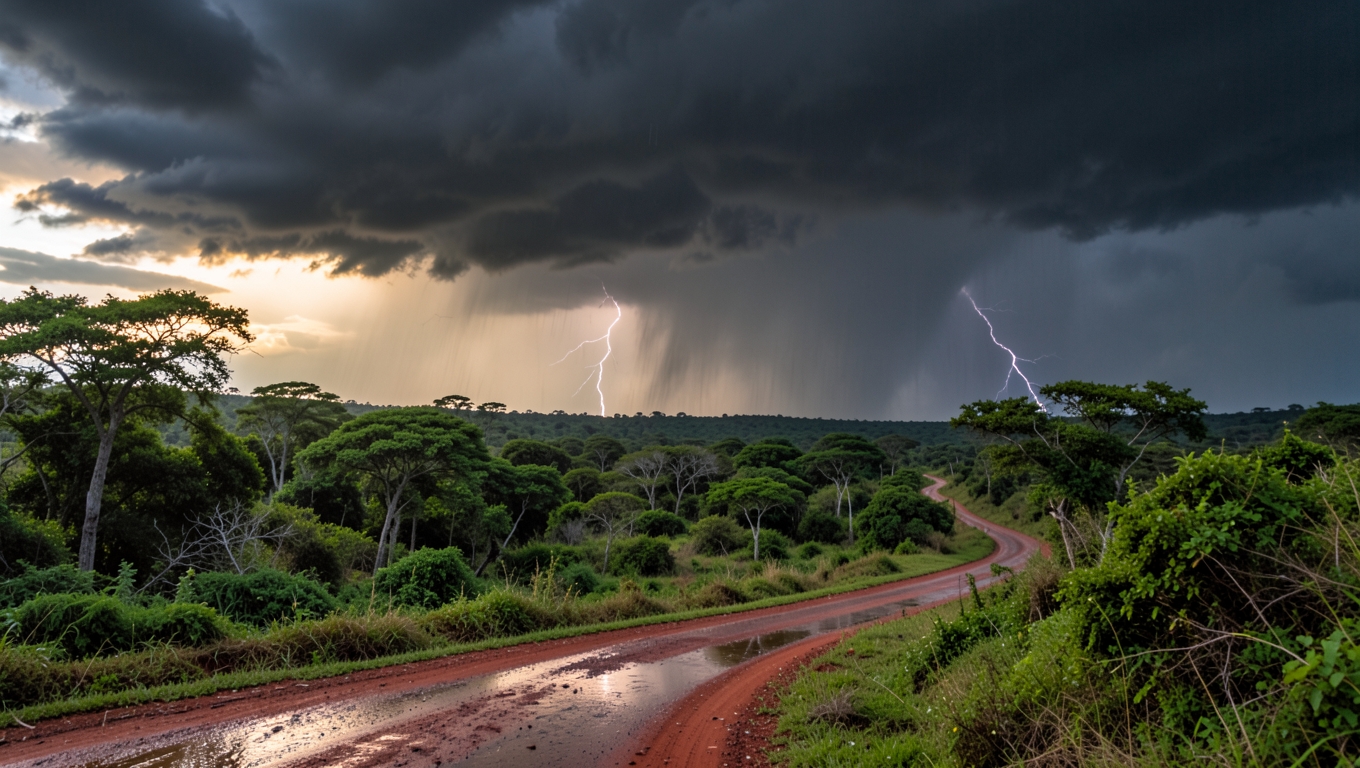
The first rains over the Zambian bush: the most anticipated weather event of the year.
Why Is Everyone in Zambia Searching for "Weather" Right Now?
Every year around October, Zambia does the same thing: we look up. The hot dry season has dragged on since August, the bush is brittle, the dust is everywhere, and the whole country is waiting for the sky to change its mind. This year the wait has an extra edge because the government has just released the National Seasonal Rainfall Forecast Outlook for 2026/2027, and it makes for genuinely interesting reading. The forecast splits Zambia into three zones, and it is worth knowing which one you live in.
Zone | 2026/27 forecast | What it means for you |
Northern Belt (North-Western, Copperbelt, Northern, Luapula, Muchinga) | Above-normal to normal rainfall expected | Good rains, green bush, full rivers, a proper season |
Central Transition Zone (Lusaka, Central, parts of Eastern) | Changeable conditions through the season | Plan for surprises, keep an umbrella in the car |
Southern Belt (Southern, Western, parts of Eastern) | Below-normal rainfall and a delayed onset | A drier, hotter season with a late start |
The national picture is shaped by El Niño, which forecasters and the World Meteorological Organisation put at above 90 per cent probability of developing this season. In practice that means a drier, hotter trend for much of southern Africa. The Zambia Meteorological Department's models point to a high probability of drought conditions, a delayed onset of rainfall, and localised floods and storms during 2026 to 2027. Government has already activated contingency plans, which is why the whole country is talking. For the official detail, see the Zambia Meteorological Department's 2026/2027 Seasonal Rainfall Forecast.
If you live in Solwezi or anywhere in North-Western Province, there is a silver lining: you are in the belt expected to get above-normal to normal rain, the good news zone on the map.
In Zambia, the first rains are never just weather. They are national news, a relief, and a fresh start, all in one afternoon.
When Exactly Do the First Rains Arrive?
The honest answer is: nobody, not even the forecasters, can give you a date, which is half the fun. Zambia's rainy season classically runs from November to April, with the north and north west getting both the earliest start and the heaviest totals. The country's tourist boards describe the pattern well: the hot dry season runs from about August to November, then the rains arrive with frequent, intense showers followed by bright sunshine. Rainfall fades from north to south, and it is rare for meaningful rain to fall between April and September. The climate of Zambia follows this rhythm year after year: a cool dry season from May to August, a hot dry stretch through September and October, then the rainy season proper.
So what should you actually watch for in the weeks ahead?
Late October to early November: the first teasing thunderheads build over the horizon in the afternoons. These are the "false alarms": spectacular, loud, and often rainless by the time they reach you.
Mid to late November: the real deal begins in the north west, including the Solwezi and Kalumbila area. The first proper soaking usually arrives as a short, violent thunderstorm that floods the road outside your gate in twenty minutes.
December to March: the heart of the season. Warm days, near-daily build-ups, and the greenest scenery you will see all year.
April: the farewell rains, tapering off in a week of soft, steady showers that leave everything washed and gleaming.
One more detail worth knowing: Solwezi sits high on the plateau at around 1,200 mm of rain a year, so in the north west the season here is generous, green and glorious. One thing to note: with the onset possibly running later than usual in the south, if you have family or trips planned that way, pencil rather than ink the dates.
The Zambian sky does not schedule appointments. It sends invitations.
What Is That Amazing Smell When the First Rain Falls?
You know the one. The first fat drops hit the dry red earth and the whole world suddenly smells like the best thing you have ever breathed. That smell has a name, and the story behind it is wonderful. It is called petrichor, a word coined by two Australian scientists in a 1964 Nature paper, and its main ingredient is a compound called geosmin. Geosmin is made by Streptomyces bacteria that live in the soil, quietly going about their business all through the dry season. When rain hits the ground, the drops fling tiny aerosols of that compound into the air, and your nose picks it up instantly.
How instantly? Humans can detect geosmin at concentrations below five parts per trillion, which makes us many thousands of times more sensitive to the smell of coming rain than a shark is to blood in water. Evolution wired our noses to detect water in a dry land. Every time you step outside and breathe that smell, you are using a sense as old as humanity itself, working exactly as designed.
Geosmin comes from soil bacteria that release it in dry conditions, ready for the rain.
Ozone, created by lightning splitting the air, adds that clean, electric note before a storm.
Plant oils that accumulated in the soil over the dry months get carried into the air on the first drops.
The result is a signature smell that perfumers have chased for decades and never bottled.
You can smell rain five parts in a trillion. No app will ever beat that.
How Do You Get Your Home Ready for the Rains?
Here is where the fun meets the practical. A few hours of prep in the hot, dusty weeks before the rains arrive will save you days of mopping, drying and regret once the storms begin. Think of it as laying the table for the season. The biggest jobs, ranked by how much trouble they save:
Job | Why it matters | When to do it |
Clear gutters and drains | A blocked gutter turns a five-minute storm into a waterfall down your wall | Before the first big storm, then monthly |
Check the roof | Loose sheets and cracked tiles fail at 3am, loudly | Now, in the dry |
Seal doors and windows | The window that always leaked has not fixed itself since last season | Before November |
Set up mud control | Washable mats and an umbrella spot cut the red dust trampled inside | First week of the rains |
Plan laundry cover | Rainy season is when drying becomes an art form | Before the heavy weeks |
Store smart | Damp hates mattresses and documents; move them up and away from walls | One dry afternoon |
Sort the garden | Trim overhanging branches and clear storm drains | While the ground is firm |
A dry-season afternoon spent on gutters is worth a wet-season week spent on towels.
How Do You Get Your Car Ready for Mud Season?
Within a week of the first proper storm, every car in Solwezi wears the same badge: red mud. The roads here are famously generous with it, and the rainy season turns bush tracks that were merely rough in September into proper adventures. Getting the car ready is cheap insurance and a little bit of joy, because a vehicle that handles the wet properly makes the whole season feel more fun.
Tyres first. Check tread depth before the roads get slick. Wet-season braking on red earth is a different sport.
Wipers and washer fluid. If your wipers smear in October, they will fail you in December. New blades are one of life's cheapest upgrades.
Lights all round. Storms here turn day into dusk in minutes. You want to be visible and you want to see.
Brakes and fluids. Get the once-over now, while every mechanic in town still has spare diary space.
An emergency kit. Tow strap, basic tools, a torch, water and a poncho. The season of kindness is also the season of helping push somebody out of a ditch.
Plan for the mud tax. Accept that your car will be filthy by Thursday, every week. Budget for regular washing, or embrace the camouflage.
Drive to the conditions. Keep momentum in soft patches but never race a storm drain, avoid crossing fast-running water you cannot see the bottom of, and remember that four-wheel drive helps you start, not steer, and certainly not stop.
Four-wheel drive helps you start. Nothing helps you steer on wet clay except slowing down.
Is the Rainy Season Good for Health, or a Trap?
Both, with the same answer: prepare. The rains bring out the best of Zambia and, unfortunately, the mosquitoes. Their populations peak during the rainy season, which is when malaria transmission risk climbs, and Zambia Tourism rightly advises visitors to consult a doctor about anti-malarials for the wet months. The good news is that the counter-measures are simple, well proven, and mostly free. Indoor residual spraying is a standard pre-season control strategy in Zambia, and studies in high-burden districts like Nchelenge show why it is timed for exactly this moment, just before the rains arrive.
Fix and use your mosquito nets. Check for holes in the dry season so the family is covered from the first night of rain.
Empty standing water. Old tyres, buckets, flower-pot saucers and blocked drains are mosquito nurseries. A weekly walk around the yard is ten minutes of powerful medicine.
Keep gutters flowing. The same blocked gutter that floods your wall also breeds the neighbourhood.
Screen what you can. Windows, doors and that one gap above the kitchen door that everybody knows about.
Stock the basics. A household first-aid kit with rehydration salts, and a plan for where you go if fever hits. In Zambia, testing for malaria early is simply what responsible people do.
Watch the food and water. Wash produce, store leftovers covered, and keep rubbish sealed between collections. Storms and warm evenings are a gift to germs.
The rains are not the enemy. Standing water and a hole in the mosquito net are the enemy.
What Is There to Love About the Rainy Season?
Everything, if you lean in. This is the season when the bush grows thick and the waterfalls roar loudest. The whole list of North-Western wonders wakes up: the drive out to Mutanda Falls and the region's adventures becomes a different experience when the rivers are full, and the thunder afternoons are worth the price of admission alone.
The season also has its own social life. Rainy evenings, board games, and braais under a roof overhang while the rain drums above. It is the time of year when Solwezi slows down a gear and the people around you matter more than the plans you made. The petrichor after the first storm, the impossibly bright green of December, the dramatic skies that photographers chase from the whole region: it is all a feast. Zambia Tourism describes the season as heavy tropical storms followed by bright sunshine, and honestly, that is the whole personality of a Zambian summer.
Chase the waterfalls when the rivers are up (safely, and never across flooded crossings).
Photograph the storms from a sheltered spot, and learn one great new camera skill this season.
Braai under cover while it pours: the most Zambian afternoon of the year.
Read, cook, rest. The rain is the best excuse culture ever invented.
Every season has its sport. Ours comes with thunder.
Zambia Rainy Season: Quick Answers
These are the weather questions everyone in Zambia is asking right now.
When does the rainy season start in Zambia?
Classically November to April, with the first proper storms in the north west, including Solwezi and Kalumbila, in mid to late November. The 2026/27 forecast suggests the southern belt may see a delayed onset, while the north can expect a normal to above-normal season.
Will the north west get good rain this season?
The Northern Belt, which includes North-Western Province, is forecast to receive above-normal to normal rainfall for 2026/27. That is the good news zone on the government's seasonal outlook, with green bush and full rivers in prospect.
What does an El Niño season mean for Zambia?
El Niño typically tilts southern Africa drier and hotter, and this season it is considered highly likely to develop. For Zambia it means sharp regional differences: a decent northern season, a changeable middle, and a drier, later-starting south.
What is the smell of the first rain called?
Petrichor, an earthy scent produced when rain hits dry ground. Its key ingredient, geosmin, is made by soil bacteria and detectable by the human nose at under five parts per trillion.
Is the rainy season a good time to visit Zambia?
It is the most beautiful, greenest and most dramatic time in the north and north west, and it is waterfall season. Plan around the storms, allow extra driving time, and ask your doctor about malaria prevention.
How do I stop mud and damp from taking over my house?
Clear gutters before the season, use washable entrance mats, keep wet umbrellas and rain gear in one place, stay on top of laundry with covered drying space, and consider a regular home cleaning schedule for the heavy weeks. That is where the team below comes in.
Rain-Ready Homes: Where We Come In
Here is the smart part. Rain does not just change the weather, it changes the workload: mud on every floor, laundry that never dries, a car that wears a new coat of red earth every week, and gutters that need eyes on them before the first big storm. That is exactly what Aenon Horizons does across Solwezi and Kalumbila. Get ahead of the season with us:
Pre-season home reset: our cleaning team gives the whole house a deep clean and a weatherproof once-over before the storms arrive, and keeps floors and bathrooms winning once the mud starts.
Laundry that beats the rain: our laundry and dry cleaning service, with its bespoke scent bar, handles the school runs and the workwear when the sky refuses to cooperate.
The weekly mud tax: our car wash and auto care team keeps your vehicle presentable through the season instead of camouflaged.
Busy households: our maid services and office cleaning teams keep homes and workplaces running while the sky does its thing.
Every team is vetted, uniformed and trained, and every job is graded against our five-star quality-control system. Message us on WhatsApp at +260 978 789 767 or email info@aenonhorizons.com, and visit our services page and about page to see everything we offer. Our office is on Kansanshi Road, opposite Yadah Christian School, Solwezi 10101, and you can book right here. For more local guides, from how to host a braai to surviving the season in style, browse our blog.
The rains will do what they do. The smart move is what you do before they arrive.


Comments