
Shopping at a Zambian Market: The Fun Insider's Guide

Shopping at a Zambian market is one of the great joys of living here, and this fun guide turns first-timers into confident market regulars. Zambia's markets are loud, colourful, fragrant and wonderfully alive: pyramids of tomatoes, bolts of chitenge fabric snapping in the breeze, dried kapenta by the scoop, groundnuts by the cup, and traders whose patter is half sales pitch and half comedy show. Whether you are doing a weekly shop, hunting for chitenge, or looking for the perfect gift to take home, here is everything you need to know: what to buy, how to bargain, what things cost, how to shop with confidence, and how to carry it all home without ruining your car seats.
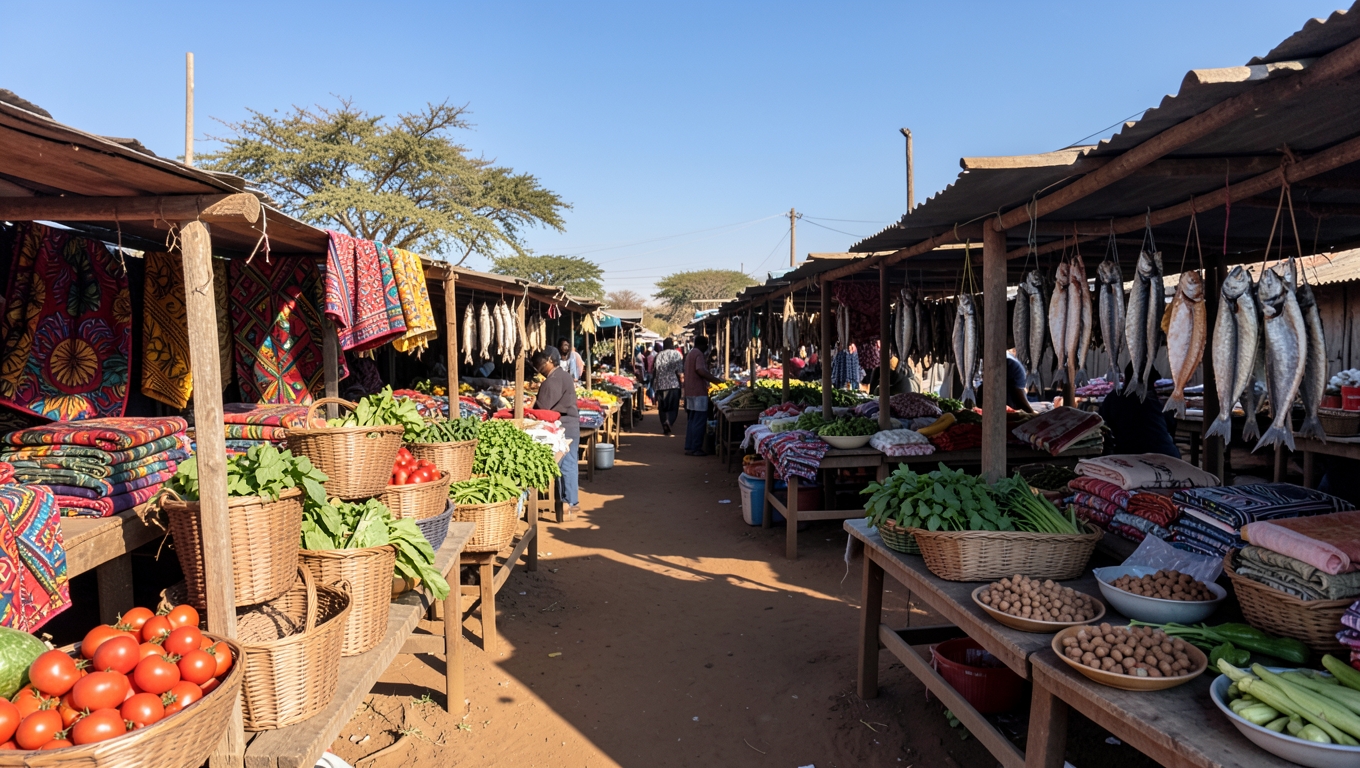
Zambian market mornings: colour, noise, and the best fresh food in town.
Why Do Zambians Love Their Markets So Much?
Markets sit at the centre of Zambian life. Most towns keep their shops along the central road, and the market is where that road gets its pulse: it is the place to buy fresh produce, the place to find fabric and hardware, and the place where the whole town crosses paths. In towns like Solwezi, market morning is a social institution, part shopping trip and part news bulletin, and you will never finish a conversation with just one purchase. With the north west's population booming (see these figures on Zambia's fastest-growing province), the markets are busier, brighter and better stocked every season.
The food is also simply better. Produce in the market travelled a shorter distance than anything in a supermarket fridge, and the traders know their onions, literally: ask which tomatoes are best for relish, which greens are tenderest today, and whose groundnuts are freshest, and you will get honest, expert answers. The local climate cooperates: from the rainy, green months through to the dry season, something delicious is always in season. For anyone building a Zambian kitchen, the market is the first stop.
You can learn more about a Zambian town in one market hour than in a month of driving around it.
What Should You Buy at a Zambian Market?
Everything, eventually. Start with these categories and you will have the full market experience in one lap.
Section | What to look for | Typical local favourite |
Vegetables and fruit | Tomatoes, onions, greens (rape, pumpkin leaves, Chinese cabbage), avocados, bananas | Whatever is in season; it is always cheapest and best |
Staples | Mealie meal, groundnuts, beans, rice | Buy mealie meal and nuts by weight for the best value |
Fish and protein | Fresh fish, dried kapenta, eggs, village chickens | Dried kapenta by the cup for the classic relish |
Fabric | Chitenge in every colour and print, by the two-metre length | For skirts, head wraps, tablecloths and gifts |
Home and hardware | Pots, plates, buckets, brooms, baskets | The woven baskets double as shopping bags and decor |
Snacks and street food | Chikanda, roasted maize, fried cassava, groundnuts | Breakfast or the walk-home treat |
Two market-only bargains worth knowing: chitenge fabric is far cheaper by the market length than in boutiques, and woven baskets and mugs from local artisans make brilliant gifts at prices you will not believe. The chitenge itself is a piece of culture: a printed cloth about six feet long, worn as a wrap or tailored into outfits, and sold in markets across the region in every colour imaginable. Do a slow first lap with no intention of buying, then circle back to your favourite stalls. The traders will remember your face, and the second lap always gets warmer prices.
First lap for the map, second lap for the bargains, third lap for the things you swore you did not need.
How Do You Bargain Without Being a Menace?
Bargaining is expected in most markets, but the style matters more than the skill. Here is the etiquette that makes you a trader's favourite customer rather than their afternoon headache.
Ask the price first, then counter. A polite "How much?" starts every good negotiation; never open with an insulting offer.
Bundle to bargain. Buying five kilos across three stalls? Say so, and ask for a bulk price. Bundling beats haggling item by item.
Keep it friendly and smiling. This is banter, not battle. Laugh, chat, and be genuinely prepared to pay a fair price.
Carry small change. Notes and coins in small denominations speed everything up and avoid awkward change hunts.
Know when to stop. If a trader is firm on a fair price, pay it. Goodwill on your tomato stall pays dividends all year.
Buy the story too. Ask where the produce came from, whose farm, whose recipe. The conversation is half the purchase.
One more tip the regulars swear by: get there early. The best produce goes before eight, the crowds build after nine, and the friendliest prices are negotiated before the heat. And bring your own bags: a market trip without a basket is a missed opportunity.
In a Zambian market, a smile is worth more than a discount.
How Much Should Things Cost?
Prices vary by town, season and market, so treat any figure as a starting map rather than gospel. Fresh produce is sold by the heap, the pile or the bucket; staples by the kilo, cup or tin; fabric by the length. The golden rule is to buy in season and in bulk, and to compare two or three stalls before you settle. Here is how the buying units actually work.
What you are buying | How it is sold | The savvy move |
Tomatoes, onions, greens | By the heap or pile | Buy heaps across stalls and ask for a bundle price |
Mealie meal, rice, beans | By the kilo, cup or tin | Buy the bigger unit; it is always cheaper per kilo |
Groundnuts | By the cup or small bowl | Sample one first; fresh nuts smell sweet, not dusty |
Kapenta | By the cup or small heap | Buy from the busiest stall: it turns over fastest |
Chitenge fabric | By the two-metre length | Compare prints across three stalls before choosing |
Baskets and crafts | Per piece, very negotiable | Buy two and ask for the pair price |
For visitors, three tips make budgeting easy. First, budget in kwacha and keep a rough running total in your head. Second, carry both mobile money and cash: many traders take mobile money, but small-notes cash is still king at the vegetable stalls. Third, remember that the market is where your money goes furthest: the same tomatoes, greens and groundnuts cost materially less here than at the mall.
Seasonal produce: cheapest and best, so plan your cooking around what is on the tables.
Staples in bulk: mealie meal, rice, beans and groundnuts reward buying bigger.
Fabric: compare prints across two or three stalls; quality varies as much as price.
Craft and baskets: buy from the maker where you can, and pay fairly: the work is beautiful.
Street snacks: pocket change covers chikanda, maize and cassava.
Buy in season, buy what the traders are proud of, and you will always eat like a local.
What Are the Unwritten Rules of Market Etiquette?
Markets run on courtesy, and a few simple habits will make you welcome everywhere, from a bustling city market to the stalls along the road in a small town.
Greet first. A friendly hello before a question is expected and appreciated. In Zambia, greetings are not optional small talk; they are the doorway to everything.
Ask before you touch the produce. Point, ask, and let the trader pick for you. Nobody squeezes a trader's tomatoes without an invitation.
Keep your bag close and your wits about you. As in any busy market anywhere in the world, watch your belongings and keep phones and wallets out of easy reach.
Respect the pitch. Do not block aisles, do not move a trader's display, and do not let children wander far in the crowd.
Take the photo with permission. Markets are photogenic, but ask first, especially of people. A smile and a request in English or a local greeting works wonders.
Leave it cleaner than you found it. Take your wrappings with you and use the bins or take them home.
The market is a neighbourhood. Shop like a neighbour and you will be treated like one.
How Do You Shop for a Whole Week in One Trip?
A little planning turns a chaotic wander into a smooth weekly routine. Here is the route that experienced shoppers swear by:
Make a list by section: vegetables, staples, protein, extras. It keeps you focused when the stalls start shouting.
Order the lap: produce first (it is heaviest and most fragile), staples next, meat and fish last so they stay cool longest, then snacks on the way out.
Bring the right kit: a basket or strong bags, a cooler bag for fish and meat, and small notes for change.
Buy the week, not the day: roots and greens keep well if stored properly; buy tomatoes and avocados in ripeness waves so they do not all turn at once.
Have a storage plan: wash and dry greens before the fridge, keep mealie meal sealed and dry, and store groundnuts airtight.
Go early, finish happy: arrive at opening, and you will be home before the heat and the crowds peak.
And when you get home, protect the seats: market crates, damp vegetables and the occasional leaking bag are the reason your car could use a wash-day habit. More on that below, but the short version is that the market-to-home run is hard on a vehicle, and a small routine keeps it in shape.
Shop the market like a weekly ritual, and cooking becomes the easy part.
Where Else Should You Shop in a Zambian Town?
The market is the anchor, but a full Zambian shopping week uses the whole town. Zambia's towns pair modern shopping centres with traditional markets, and small shops and malls cover the packaged goods, banks and fuel stations cluster along the main road, and artisans sell everything from furniture to copper jewellery from workshops and stalls. In mining towns like Solwezi, the mix is especially rich: fresh market produce, mall convenience and a growing food and coffee scene, all within a few minutes of each other. For the food side of the haul, see our Zambian food guide, and for a feel of what the freshest stalls carry, this food guide to Zambia is a lovely read.
If you are new to town, spend one morning just mapping it: market first, then the shopping centre, then the hardware and craft spots. Ask at two or three stalls for the best local recommendations for everything from a tailor to a mechanic, and you will have a personal town directory by lunchtime. In the north west, the market scene grows with the town itself: Solwezi's population is around 368,000 and rising steeply on the back of the Kansanshi copper mine's more than 13,000 jobs, so there is always a new stall, a new trader and a new taste to find. And keep an eye on the shopping habits of longer-standing locals: they know which day the fish arrives and which stall has the weekend mangoes.
Learn the market, and you have learned the town.
Zambian Market Shopping: Quick Answers
These are the questions new shoppers ask us most.
Can I bargain at a Zambian market?
Yes, politely. Bargaining is normal and expected at most stalls, especially for produce and fabric. Ask the price, make a friendly counter-offer, bundle a few items for a better deal, and settle happily when the price is fair. Smiles and greetings do more than hard tactics.
What are the best gifts to buy at a Zambian market?
Chitenge fabric for sewing, woven baskets, carved wooden pieces, beaded jewellery, roasted groundnuts and coffee. Textiles and crafts are light, characterful and pack easily, and buying from the maker puts money straight into local hands.
How much cash should I take to the market?
Enough for a full weekly shop plus a small buffer, and in small notes. Many traders accept mobile money, but cash moves faster and is essential at the vegetable stalls. Budget per kilo or per heap, and compare a few stalls before committing to the bulk of your shop.
When is the best time to go to the market?
Early morning, ideally as it opens. The freshest produce arrives first, the crowds are lighter, the traders are relaxed, and the best of everything is still on the tables. By late morning, the good stuff is gone and the sun is strong.
What should I buy first at a Zambian market?
Start with what is in season: tomatoes, onions, greens and fruit. Then staples like mealie meal, rice and groundnuts, then protein such as fish, kapenta or chicken. Round it off with chikanda or roasted maize for the walk home. If you want to cook a proper Zambian meal, the market has everything you need, and around Solwezi the produce is some of the freshest in the province.
Is it safe to shop at Zambian markets?
Yes, with normal big-city sense. Markets are busy and generally friendly; keep your belongings close, avoid flashing cash, keep phones secure, stay with your group, and ask your hosts which areas are best at which times. The overwhelming memory of a Zambian market is the welcome, not the worry.
Market Day, Done: We Handle What Comes After
A proper market shop changes everything it touches: the kitchen fills with washing and chopping, the car collects crates, leaves and the odd tomato that rolled under a seat, the laundry basket fills with market-day clothes, and the dust of a busy morning finds its way indoors. It is the nicest kind of mess, and it is exactly what Aenon Horizons exists to clear, across Solwezi and Kalumbila:
The kitchen reset. Our cleaning team handles the aftermath of a big shop and a big cook: surfaces, floors and the vegetable-prep chaos, back to spotless.
Market laundry. Shopping clothes, tablecloths and the apron that did the chopping: our laundry and dry cleaning service, with its bespoke scent bar, keeps everything fresh.
The market-run car. Crate scratches, dust and those mystery smells from the cooler: our car wash and auto care team gets your vehicle market-fresh again.
Everyday backup. Our maid services and office cleaning teams keep homes and workplaces running while you enjoy the best shopping in town.
Every team is vetted, uniformed and trained, and every job is graded against our five-star quality-control system. Message us on WhatsApp at +260 978 789 767 or email info@aenonhorizons.com to book, and visit our services page and about page to see everything we do. Our office is on Kansanshi Road, opposite Yadah Christian School, Solwezi 10101, and you can book right here. For more local guides, from what to cook with your market haul to settling into town, browse our blog.
Shop like a local, cook like a hero, and let us keep the kitchen worthy of the haul.


Comments