
Football in Zambia: The Game That Runs the Nation

Football in Zambia is the national conversation, and this week the country is at it again: transfer talk from Europe's big leagues has been lighting up Zambian search trends as fans track every rumour and every move. Ask anyone in Solwezi which striker their club should sign and you will get a full tactical analysis, a history lesson and a heated debate, all before the kettle boils. This guide celebrates the game the whole country plays, watches and argues about: the moments that built the legend, the stars carrying the flag today, how to host a match-day crowd you will be famous for, how to play like the kids on the dust pitches, and the small matter of what your lounge looks like when everybody finally goes home. Let us get the ball rolling.
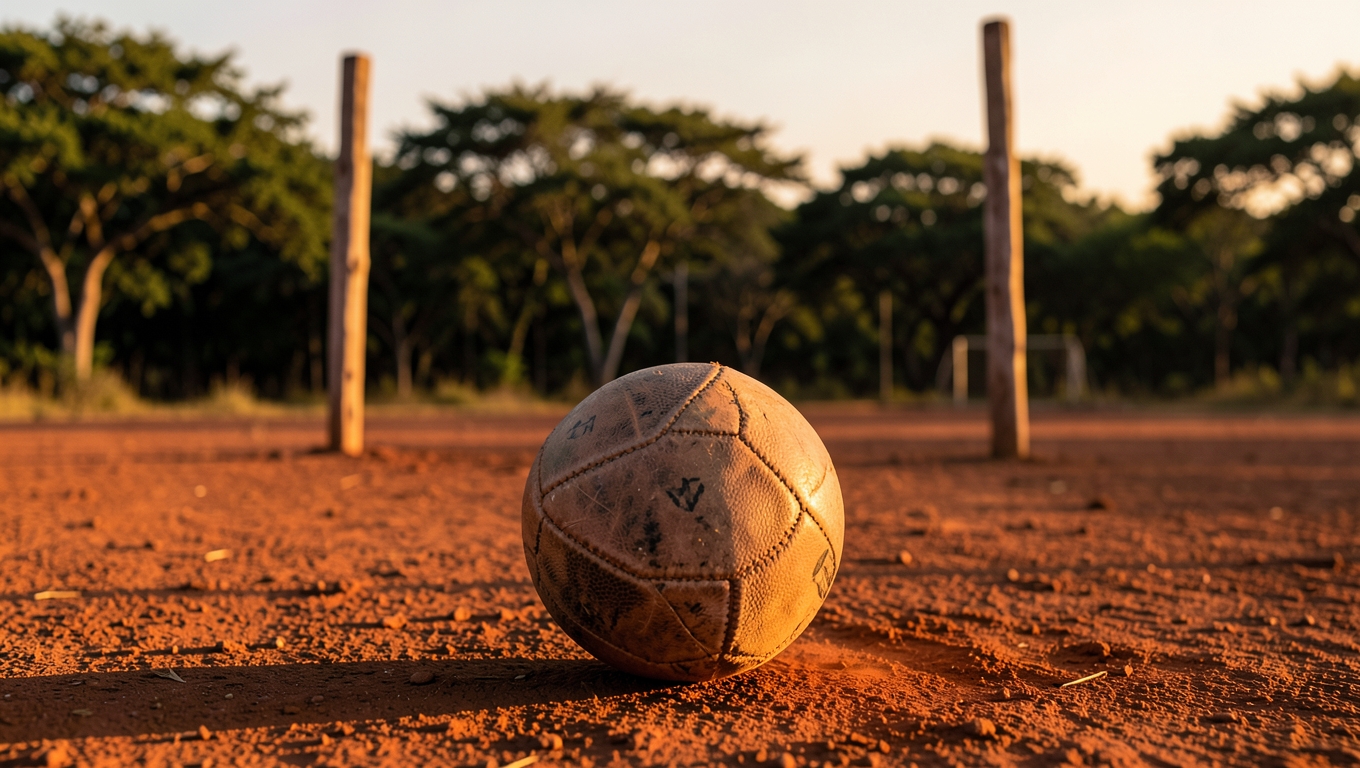
Where every Zambian legend starts: a dust pitch, a worn ball and golden hour.
Why Is Football Zambia's National Obsession?
Walk through any neighbourhood in Zambia on a Saturday afternoon and you will hear it before you see it: a radio crackling from a shop doorway, kids shouting on a dust pitch, and a sudden roar from a house with every window open. Football is the one language every Zambian speaks, from the Copperbelt mining towns where the game took root, to farming districts, to fast-growing towns like Solwezi at the edge of the mining boom.
The national team's nickname tells a story of its own. The Chipolopolo, or "Copper Bullets", are named for the copper that has powered Zambia's economy for generations, the same metal mined at Kansanshi just up the road from town. When the national team runs out in orange and green, they carry the mines, the towns and the whole country with them.
And here is what visitors notice first: football in Zambia is a family affair, never just a spectator sport. Grandmothers argue about offside. Toddlers wear oversized jerseys. Match days are weddings, funerals and celebrations rolled into ninety minutes, plus stoppage time, plus the analysis.
In Zambia, football is not a game we watch. It is a language we all speak.
Which Moments Turned Zambia Into a Football Nation?
Every football country has its stories. Zambia's are the kind that make neutrals cry. Here are the milestones, in the order they broke our hearts and then repaired them.
Year | The moment | Why it still matters |
1988 | A generation learned that Zambia could trade punches with anyone on earth | |
1993 | The national team perishes in the Gabon air disaster, flying to a World Cup qualifier | The wound that still shapes every celebration, and the reason 2012 meant everything |
2012 | Zambia win the Africa Cup of Nations in Libreville, beating Ivory Coast 8-7 on penalties | The fairytale: one trophy, won only miles from where the 1993 team was lost |
2023 | The Copper Queens debut at the Women's World Cup and beat Costa Rica for a first-ever World Cup win | Zambian women planted their flag on the biggest stage of all |
2024 | Barbra Banda scores a record third Olympic hat-trick in a wild 6-5 game against Australia | Global records, Zambian pride, and a new generation of girls wanting the number 9 shirt |
Put those five lines together and you have the full emotional range of a nation: triumph, tragedy, redemption, and a rising women's game rewriting what is possible.
When Did Football Become Zambia's Greatest Story?
Two of those moments deserve to be told slowly, because together they form one of the great sports stories anywhere. In April 1993, the national team was flying to Senegal for a World Cup qualifier when their aircraft crashed into the Atlantic Ocean shortly after leaving Libreville, Gabon. All 30 people on board were killed, among them 18 players, the coach and the support staff. A golden generation was gone, and the whole country grieved as one.
Nineteen years later, the road led back to Libreville. At the 2012 Africa Cup of Nations, an unfancied Zambian side fought through to the final against a star-studded Ivory Coast team led by Didier Drogba. Before the match, the players travelled to the coastline where their predecessors had been lost, and laid flowers. Then they produced the only goalless draw of the whole tournament, and after 14 successful kicks the penalty shoot-out rolled into sudden death. Up stepped Stoppila Sunzu, a young defender, who buried the winning penalty. Final score: 8-7. Zambia were champions of Africa for the first time.
That night remains the most joyful in Zambian sporting history, and the 2012 final still gets replayed in bars and living rooms around Solwezi whenever the world needs reminding.
Sudden death in Libreville: one nation holding its breath, one young defender with ice in his veins.
How Do Zambian Fans Watch the Beautiful Game?
From packed viewing centres to a phone propped against a sugar tin on the veranda, Zambians watch football with total commitment. The English Premier League is the most-watched football league on the planet, beamed across sub-Saharan Africa by SuperSport, and its transfer sagas trend in Zambian searches the way rainfall does in October. The global numbers explain the pull: broadcast into 212 territories and 643 million homes. And yet the domestic game still owns our hearts, from the national team to the township derbies where the real scouts are watching.
Signs you are watching football the Zambian way:
The volume only goes up. Every attack raises it a notch, and it never comes back down, not even at half-time.
Every decision gets a trial. The referee makes a call, the room becomes a courtroom, and appeals are heard for the rest of the evening.
Somebody predicts the exact score. With total confidence and, usually, total inaccuracy. They will not be discouraged.
The family group chat becomes commentary. Live opinions, instant replays, aunties with strong views on the left back.
Half-time is sacred. Food appears, and nobody moves until the plates are empty and the second half kicks off.
The analysis runs for days. The final whistle ends the match, never the conversation. Wednesday is still part of the debate.
Every big match in Zambia starts with a prediction and ends with a retrial.
Who Are the Copper Queens, and Why Is the World Watching?
Zambia's women's national team started as an afterthought and has become the story everyone wants to tell. The Copper Queens, captained by striker Barbra Banda, made history in 2023 with their first Women's World Cup appearance, finishing the group stage with a 3-1 win over Costa Rica, the country's first World Cup victory at any level. A year later in Paris, Banda rewrote the record books: a third Olympic hat-trick, one more than Brazil's Cristiane had ever managed, in a wild 6-5 group game against Australia. She finished the tournament with four goals in three games, among the very top scorers in the world.
Watch the Copper Queens play and you are watching something bigger than football: a generation of Zambian girls learning that the number 9 shirt is theirs to take. If you have a daughter, a niece, or a team of your own to raise, this is the football to follow.
The Copper Queens did not join the world stage. They made it louder.
How Do You Host a Match-Day Gathering Zambians Will Love?
Hosting football the Zambian way is part potluck, part theatre and part marathon. Get these five stations right and friends will be asking whether your place is showing the next big game before you have even offered.
Station | What goes there | Why it works |
The screen corner | Best seats at eye level, enough room for at least three people to disagree loudly | Nobody misses a minute, nobody gets a sore neck |
The snack table | Chips, peanuts, roasted maize, chikanda and something sweet | Far from the screen, so there is no crumb rain during penalties |
The cooler | Cold drinks, plenty of ice, water for the drivers | Long games need long drinks; hydration keeps the arguments friendly |
The kids' corner | Cushions, a second screen or crayons, and the garden for a half-time kick-around | Happy kids, happy commentary |
The analysis bench | A comfortable spot for the post-match show | In Zambia the conversation is the main event and the game is the warm-up |
Timing notes from a thousand living rooms, so your match day runs itself:
Guests arrive well before kick-off. The pre-match talk is half the event.
Cooking starts early, food lands at half-time. Nobody misses a minute, nobody eats cold rice.
Buy in bulk, marinate early. Two bowls of the same snack disappear faster than one, always.
Station a bin where everyone can see it. Your future self, standing in a surprisingly calm kitchen after the whistle, will thank you.
And for the guests, a short checklist that keeps you invited back:
Arrive before kick-off. Walking in during the first attack is a crime with no appeal.
Bring something. A snack, a cool drink, a bag of ice. Arriving empty-handed is noticed.
Never move the lucky chair. Every living room has one. It belongs to somebody, and that somebody earned it.
Help at half-time. Carrying plates scores more points than any hot take.
If you already host a good crowd, our braai playbook is the natural next level: same people, same energy, more smoke.
The food is ready at half-time. The arguments are ready from kick-off.
How Do You Play Street Football Like a Zambian Kid?
Long before the stadium lights, every Zambian legend learned the game on the dust: bare earth underfoot, a plastic ball or a bundle of rolled-up socks, stick goalposts, and twenty friends who all want to be the number 10. If you want to understand Zambian football, watch the kids. Better yet, join in.
Find the pitch. Flat red earth, two sticks or two jumpers for goals, and the bush as a sideline. That is the whole stadium.
Master the first touch. The dust is fast and unforgiving. A soft first touch is the difference between a legend and a long jog to fetch the ball.
Play one and two touch. Quick passing beats size on small pitches. The best kids know where the ball is going before it arrives.
Train both feet. Nobody remembers which boots you wore. Everybody remembers who can finish with either foot.
Climb the ladder. Every dust pitch has its levels: the little ones on the small patch, the big kids in the middle, the teenagers and uncles in the showground game. Earn your way up.
Play to the last light. The game ends when you cannot see the ball, or when your mother calls you home. Whichever comes first.
Two practical notes for newcomers: water first, and shoes for the thorny edges of the field. And when a local striker nutmegs you and the whole pitch erupts in laughter, just clap. That is the initiation. You are one of them now.
The dust washes off. The bragging rights last a season.
Football in Zambia: Quick Answers
These are the questions our team gets asked most, usually mid-match.
Why is Zambia's national team called the Chipolopolo?
Chipolopolo means "Copper Bullets" in Bemba, a nod to the copper mining that built the country's economy and still shapes its identity, from the Copperbelt towns to Kansanshi near Solwezi. The bullets in the crest are the real thing: pride in the metal, and in the spirit it stands for.
Who is the most famous footballer in Zambia's history?
Kalusha Bwalya, the 1988 African Footballer of the Year, whose hat-trick against Italy at the Seoul Olympics announced Zambia to the world. He escaped the 1993 air disaster by travelling separately to the match, and years later, as head of the football association, he helped build the team that won the 2012 Africa Cup of Nations.
What is Zambia's greatest football moment?
The 2012 Africa Cup of Nations final in Libreville: goalless after extra time, then 8-7 on penalties, with Stoppila Sunzu scoring the winning kick and Zambia crowned champions of Africa for the first time.
Who are the Copper Queens?
Zambia's women's national team and the country's fastest-rising sports story. They made their World Cup debut in 2023, beating Costa Rica for a first World Cup win, and captain Barbra Banda became the first player in history to score back-to-back Olympic hat-tricks, adding a record third in 2024.
Where can I watch football in Solwezi?
As in every Zambian town, match day gathers wherever the screen is biggest and the commentary is loudest: homes, viewing centres, lodges and social clubs. Ask around for the spot with the best atmosphere, arrive early for a seat, and never sit in somebody's lucky chair.
How do I keep the house looking human after a match-day crowd?
Set a bin station where everyone can see it, keep drinks on a tray, serve food at half-time to contain the crumbs, and put a washable mat at the door for boots and balls. And if the mess wins anyway, the next section is exactly what we are here for.
After the Final Whistle: The Match-Day Mess, Handled
Every great gathering ends the same way: brilliant memories, a lounge at sixty per cent capacity, and a kitchen with a mind of its own. Football in Zambia is played, watched and celebrated at home, which is precisely why the morning after needs a plan. That is where Aenon Horizons comes in, across Solwezi and Kalumbila:
Match-day reset. Our cleaning team brings the lounge, kitchen and patio back to spotless after the crowd, and keeps the dust down as the season turns.
Kit laundry, mud included. From school football kits to grass-stained jeans and the jersey somebody spilled on, our laundry and dry cleaning service, with its bespoke scent bar, handles it all.
Dusty car recovery. Match-day parking on red earth and long drives to away games leave their mark; our car wash and auto care team sorts that out.
Busy households. Our maid services and office cleaning teams keep homes and workplaces running all week, so your free time stays reserved for the beautiful game.
Every team is vetted, uniformed and trained, and every job is graded against our five-star quality-control system. Message us on WhatsApp at +260 978 789 767 or email info@aenonhorizons.com to book, and visit our services page and about page to see everything we do. Our office is on Kansanshi Road, opposite Yadah Christian School, Solwezi 10101, and you can book right here. For more local reading, from things to do in Solwezi to practical guides for every season, browse our blog.
The final whistle ends the match. The mess does not. That is why we exist.


Comments