
Zambia Independence Day: The Biggest Party of the Year

Zambia Independence Day is the biggest birthday party in the country, and the countdown to 24 October is already on. In towns and cities across the country, the national colours of green, red, black and orange are appearing on shopfronts and gates, chitenge fabric is being sewn into fresh outfits, and every family is quietly planning where they will watch the parades, what they will cook and who is bringing the cooler box. If you are new to Zambia, curious about the history, or simply looking for the best ways to celebrate, this guide is for you: the story behind the day, the meaning in the flag, the traditions to join, and a fun playbook for hosting the celebration at home.
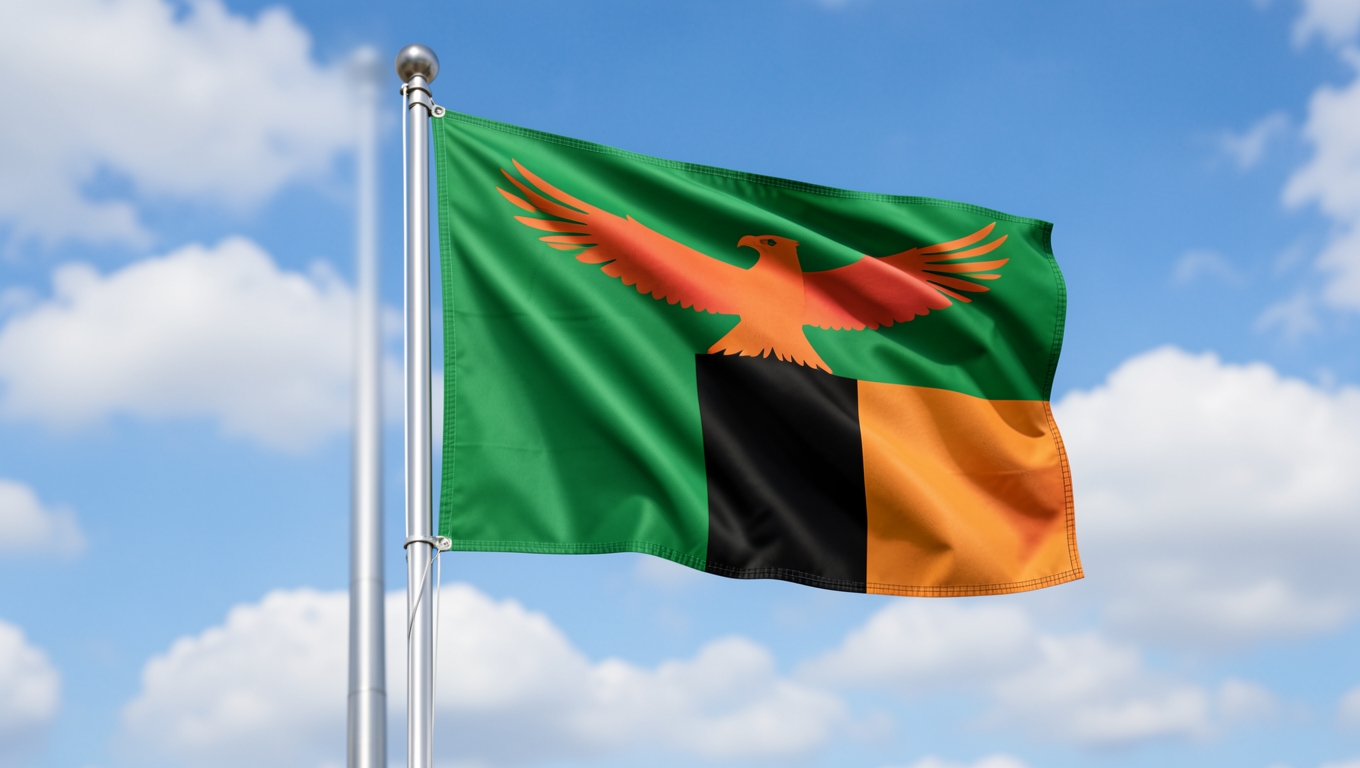
Green for the land, red for the struggle, black for the people, orange for the copper: the flag that tells Zambia's story.
What Is Zambia Independence Day, and Why Does It Matter So Much?
Every year on 24 October, Zambia marks the day in 1964 when Northern Rhodesia became the Republic of Zambia, free from British colonial rule. It was the culmination of a determined independence movement that had campaigned for years, and on that day the country's new flag was raised for the first time. More than six decades later, the date still carries enormous weight: it is a national public holiday, a family day, and a moment when the whole country stops to remember how far it has come.
The story of how it happened is worth knowing, because it explains the mood of the celebrations. The independence campaign was led by the United National Independence Party under Kenneth Kaunda, a former teacher and the son of missionaries, who had been influenced by the non-violent philosophy of Martin Luther King Jr. and led a campaign of civil disobedience that carried the country to constitutional talks with Britain, as the BBC's profile of the independence leader recounts. Elections followed, and on 24 October 1964 Kaunda became the first president of an independent Zambia. He would lead the country for 27 years and is remembered today as the father of the nation, instantly recognisable by his trademark white handkerchief, which he carried as a symbol of his commitment to love and peace. When he died in 2021, Zambians waved white handkerchiefs in his memory, a farewell unlike any other.
One Zambia, One Nation: three words that built a country out of more than 70 peoples.
That unity mattered, and still matters. Zambia is home to dozens of different language groups, and Kaunda's great achievement was in forging a single national identity from all of them. His philosophy of Zambian Humanism put mutual aid, trust and community at the centre of national life, and the results are visible every Independence Day: whatever else divides people in the other 364 days, on 24 October everybody is Zambian first.
The day also has a strong community flavour that visitors love: as one Zambian remembers it, "Independence Day was the biggest party of the year. Lots of drinking and lots of chicken and rice, which seems to be what everyone wants during a celebration in Zambia." The colours go up on homes and businesses for weeks beforehand, and the fabric shops run out of chitenge before you know it.
What Do the Colours of the Zambian Flag Actually Mean?
If you are going to wave the flag this October, you should know what you are waving. The national flag is one of the most story-rich in Africa, and every single element was chosen deliberately.
Element | Meaning |
Green field | The land: Zambia's abundant natural resources and fertile countryside |
Red stripe | The struggle for freedom, and the blood and sacrifice it cost |
Black stripe | The people of Zambia |
Orange stripe | The country's mineral wealth, above all its copper |
African fish eagle | Freedom, and the ability of the Zambian people to rise above their problems |
One fun detail that wins trivia nights: the eagle and the stripe block sit at the fly end of the flag, on the outer edge rather than the centre. That is unusual in world flags, and the design has remained essentially unchanged since it was adopted at independence. The Zambian Embassy in Washington sums up the symbolism simply: red for the struggle for freedom, black for the people of Zambia, orange for the mineral wealth, and green for the natural resources, with the eagle in flight standing for freedom and the ability to rise above the country's problems. Designed by Gabriel Ellison and based on the flag of the independence movement, it was raised for the first time as an independent Zambia was born. When the country's national teams run out in their green and orange kit, that is the flag they are carrying on their shoulders.
Four colours, one eagle, and a whole nation in flight.
How Does Zambia Celebrate Independence Day?
The celebrations are big, loud, happy and remarkably inclusive, and visitors are always welcome to join. If you are in Lusaka, the capital, the headline events are the flag-raising ceremony and the military parade, followed by fireworks; National Today's guide to the holiday notes the military parades, cultural performances and public addresses that mark the day nationwide. Elsewhere, the day comes to your own neighbourhood, which is part of the charm.
The national ceremony in Lusaka. A formal flag-raising, a large parade with marching school bands, and an address by national leaders, with fireworks lighting up the evening.
Local parades everywhere. Towns and districts hold their own events, with schoolchildren marching, traditional dancing and cultural performances through the day.
Traditional dance and music. From the drumming groups to the choirs, Independence Day is the year's biggest celebration of Zambian culture in every province.
Independence Day football. Of course there is football. Every celebration needs a match, and the beautiful game is never far from the middle of the fun.
Family feasts. This is the heart of the day for most Zambians: chicken and rice, nshima with every relish going, fizzy drinks for the kids and a long, loud afternoon together.
Chitenge everywhere. For weeks beforehand, tailors around the country are busy turning the national fabric into beautiful outfits for the day itself.
Zambia does not just celebrate independence. The whole country gets dressed up for it.
What Should You Wear, Cook and Bring to an Independence Day Celebration?
Whether you are marking your first Independence Day or your fortieth, the playbook is the same: dress in the national colours, cook more than you think you need, and invite one more family than planned. Here is how the day usually comes together on 24 October.
Time | What happens | How to join in |
Morning | Parades, flag-raising, official ceremonies | Arrive early, wear green/red/black/orange or chitenge, cheer the marching children |
Midday | Cultural performances, music, dancing, visits | Bring the family, a camera and plenty of sunshine-smarts |
Afternoon | The great family meal, football, storytelling | Cook big: chicken, rice, nshima and as many relishes as the table allows |
Evening | Fireworks in the cities, music and visiting at home | Find a viewing spot, or host the after-party where the stories are told |
Three practical notes for a smooth day:
Shop early. Markets and shops are busy in the run-up, so buy the ingredients in advance and start marinating the night before.
Beat the heat. 24 October sits at the tail of the hot dry season. Water, shade and hats keep everyone at their best.
Keep the house celebration-ready. Independence Day gatherings have a way of moving inside once the music starts, and a house full of happy people leaves a party behind it.
What to wear: the national colours, a chitenge outfit, or your best Zambia jersey.
What to cook: chicken, rice, nshima with kachumbari, kapenta, ifisashi and a big pot of something comforting.
What to bring: a cooler with drinks and ice, a chair, a speaker, and enough food to share.
What to say: learn one line of Bemba, Nyanja or your local language. "Zambia ni yetu" ("Zambia is ours") goes down very well.
Here is the short version to save, share and stick on the fridge:
Book or plan the meal early: decide who cooks, who brings what, and who owns the cooler.
Dress the part: national colours or chitenge for everyone, kids included.
Know the programme: parade in the morning, meal at midday, entertainment all afternoon, fireworks in the evening where you find them.
Take photos: one full family picture every year, same spot if you can. Future generations will thank you.
Remember the meaning: one quiet moment, before the plates come out, for the people who won this day.
Bring an appetite, wear the colours, and expect to make at least three new friends.
Why Is This Independence Day Different in North-Western Province?
The national story feels especially close to home in the north west, the province where the future is being built fastest. Zambia's copper built the modern economy, and it still does: the Kansanshi mine near Solwezi is one of the largest copper and gold operations in Africa and employs thousands of people, mostly Zambians. The orange stripe on the flag is not a history lesson here. It is the daily economy.
North-Western Province is also Zambia's fastest-growing region, with some of the youngest towns in the country. In Solwezi and Kalumbila, Independence Day is a celebration of a new, urban, ambitious Zambia: mine families, market traders, teachers, nurses, entrepreneurs and students, all gathered around the same braai stands and parade grounds. And there is a fitting local connection: Solwezi is where the country's modern mining boom is most visible, and it is a fine place to spend 24 October, with all the community sports, cultural events and family gatherings that make the day special. You can even make a patriotic weekend of it: a morning parade, a family lunch, and an afternoon out exploring the best of Solwezi.
The copper glinted on the flag in 1964. In Solwezi, it is still what the future is made of.
Zambia Independence Day: Quick Answers
Here is everything newcomers ask us about 24 October.
When is Zambia Independence Day?
Every year on 24 October. It marks independence from British colonial rule in 1964, when Northern Rhodesia became the Republic of Zambia, and it is a national public holiday. When the date falls on a Sunday, the following Monday is usually observed as the holiday.
Who was Zambia's first president?
Kenneth Kaunda, a former teacher and independence leader who became the country's first president on 24 October 1964 and served until 1991. He was known for his philosophy of Zambian Humanism, his slogan "One Zambia, One Nation", and his trademark white handkerchief, a symbol of peace that Zambians still wave in his memory.
What do the colours of the Zambian flag mean?
Green for the land and its natural wealth, red for the struggle for freedom, black for the people of Zambia, and orange for the country's mineral wealth. The orange African fish eagle above the stripes represents freedom and the nation's ability to rise above its challenges.
How is Independence Day celebrated in Zambia?
With flag-raising ceremonies, military and school parades, traditional dances and concerts, fireworks, football matches and huge family meals. In Lusaka the biggest official events take place, but every town and district celebrates in its own way, and visitors are always welcome.
What food is eaten on Independence Day in Zambia?
Celebration food: chicken and rice, nshima with a spread of relishes, braai meat, kapenta, ifisashi and cool drinks for the whole family. The cooking starts early, because the eating and the storytelling run all afternoon.
Why is Independence Day special in Solwezi and North-Western Province?
The province is Zambia's fastest-growing region and the heart of the copper industry that the flag's orange stripe celebrates. Kansanshi mine near Solwezi is one of Africa's largest copper operations, and the town's young, growing community celebrates 24 October with real pride and plenty of local events.
Host the Celebration, Keep the Memories
Independence Day in Zambia is the biggest party of the year, and it happens mostly at home: the family lunch, the parade before it, the football after it, and every plate, pot, glass and grass stain that comes with celebrating properly. So after the last guest has gone, when the kitchen looks like a parade went through it and the kids' chitenge outfits need a proper wash, remember that help is closer than you think. Aenon Horizons has looked after homes and offices across Solwezi and Kalumbila for years, and the morning after a national celebration is exactly our kind of day:
The great Independence Day reset. Our cleaning team brings kitchens, lounges and patios back to spotless, with the dust kept down at the tail end of the dry season.
Celebration laundry. Chitenge outfits, tablecloths and the shirt that caught the gravy: our laundry and dry cleaning service, complete with its bespoke scent bar, handles it all.
Cars back to their best. After a day of parade parking and red-dust roads, our car wash and auto care team will have your vehicle gleaming again.
Busy households all year round. Our maid services and office cleaning teams keep homes and workplaces running, so your time stays reserved for family and the national party.
Every team is vetted, uniformed and trained, and every job is graded against our five-star quality-control system. Message us on WhatsApp at +260 978 789 767 or email info@aenonhorizons.com to book, and visit our services page and about page to see everything we do. Our office is on Kansanshi Road, opposite Yadah Christian School, Solwezi 10101, and you can book right here. For more local culture and practical reading, from hosting a braai to the football that runs the nation, browse our blog.
Celebrate like Zambians do: all in, all day. We will handle what is left behind.


Comments