
Zambian Wedding Traditions: Kitchen Parties, Lobola and Love

Zambian wedding traditions are the warmest, loudest and most delicious celebrations in the country, and this guide is your friendly introduction to them. Zambia does marriage its own way: families meet families, advice is shared over feasts, a groom is welcomed with fire-cooked food, and the whole community dresses in chitenge to celebrate. Whether you have been invited to your first kitchen party, you are marrying into a Zambian family, or you simply love a good celebration, here is everything worth knowing, from lobola to ichilanga mulilo, explained with the fun intact.
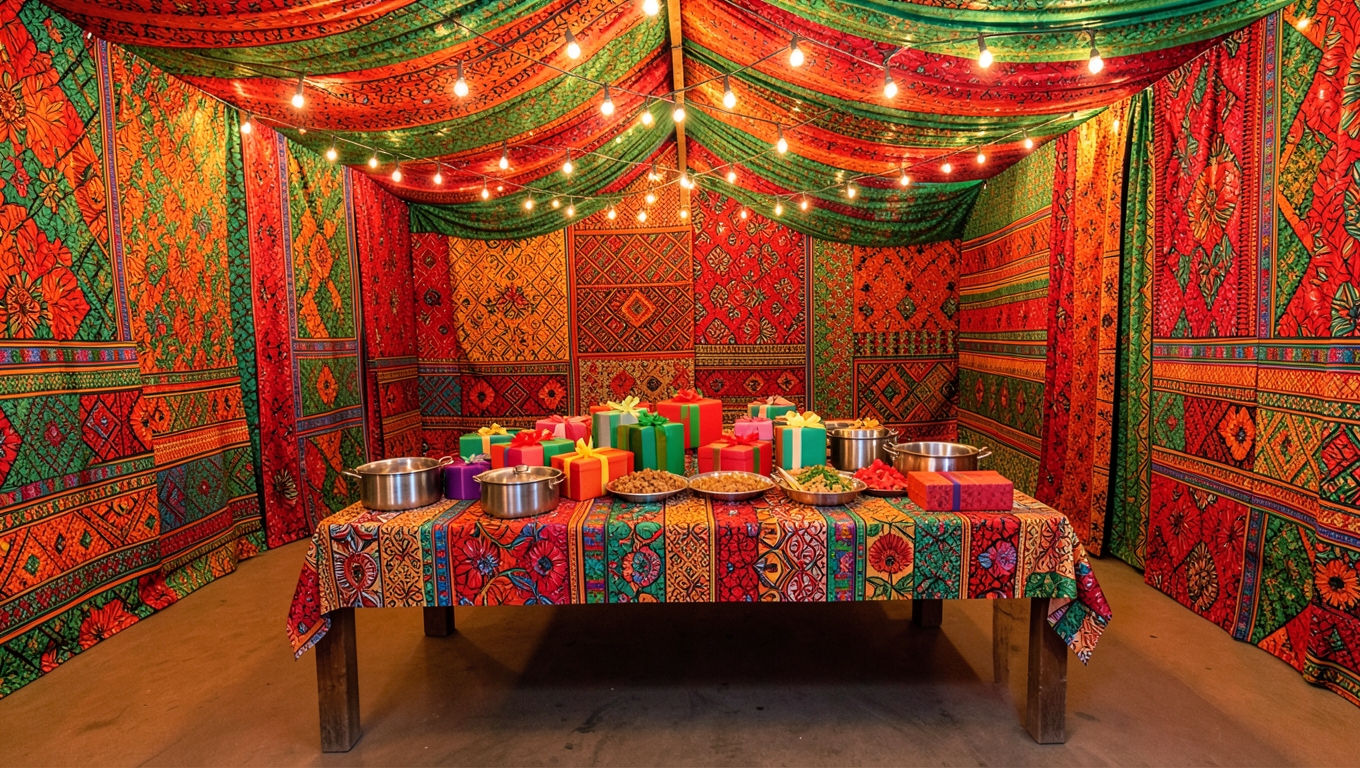
Chitenge, gifts and food: the colours of a Zambian celebration.
Why Are Zambian Weddings So Special?
Because in Zambia, a wedding is never just two people. It is two families joining, and they take their time doing it properly. The marriage is prepared in stages: the families meet, the bride's side is honoured, the elders share their wisdom, and only then do the couple approach the altar. Every stage has food, music and advice attached, which tells you exactly what Zambian culture values: family, respect and a great table.
Here is the typical shape of the journey to the altar:
Stage | What it involves |
The proposal of interest | The groom's family visits the bride's family with a token, traditionally a plate with money inside, known as kambale |
Lobola | The two families negotiate and agree the traditional bride price, with elders guiding the process |
Kitchen party | The bride's mother hosts a bridal celebration with advice, songs, food and kitchen gifts |
Ichilanga mulilo | The bride's family cooks a traditional feast to welcome the groom into the family |
The wedding | Church or civil ceremony, followed by photographs, food and speeches |
The reception | The big celebration: music, dancing, cake and a table groaning with food |
The traditions vary by region and people, from the Bemba traditions of the north to the many cultures of the south and west, so treat this guide as the shared shape of things rather than a strict programme. Ask your hosts about their family's way of doing it, and you will get the best story in the house.
In Zambia, you do not just marry a person. You are welcomed into a family, with a plate in your hand.
What Is Lobola, and How Does It Work?
Lobola, also known as bride price, is the traditional payment made by the groom's family to the bride's family as part of the marriage process. It is one of Zambia's oldest customs and is treated as a serious and meaningful step: as guides to Zambian marriages explain, the engagement traditionally begins when the groom's family visits the bride's family with a token of interest, historically a plate containing money, before the full lobola arrangements are made. The practice remains widespread today, and research on bride price in Zambia shows how deeply it is woven into the idea of a marriage being valid and respected.
Two things surprise newcomers most. First, lobola is a family matter, not a checkout counter: it is negotiated respectfully between families, often with elders leading, and the amount is not the point. Second, the customs around it vary enormously. Some families prefer a symbolic amount, others a more substantial one, and the modern conversation about keeping lobola meaningful without making it a burden is very much alive in Zambia today. The broader picture of how weddings in Zambia combine lobola, rituals and modern celebration is a lovely thing to read up on before your first ceremony.
Lobola is not a price list. It is a handshake between two families, in the old way.
What Happens at a Zambian Kitchen Party?
If you are invited to a kitchen party, clear your diary and bring your dancing shoes. It is the traditional Zambian bridal shower, and it is a phenomenon: part celebration, part advice ceremony, part village-wide party. The custom is for the bride's mother and her close friends to gather women from both families to prepare the bride for marriage with guidance on looking after a home, a husband and children. In one bride's words on Love My Dress, the party "symbolises the Mother of the Bride inviting her wise and experienced friends to share their advice with her daughter".
The theatre is wonderful. The bride is led in by an aunt, wrapped in a long chitenge, and stays covered and seated with her head bowed while guests arrive. There is a nachimbusa, a mentor who has been guiding her, and there are servers for the party who dance in before the food is served; at one celebrated kitchen party featured by BellaNaija Weddings, the traditional shower brought together the bride's mother and closest women to honour her in full colour. Gifts are the other great tradition: guests bring things for the bride's new kitchen, from pots and plates to brooms and blenders, and the pile of presents is half the fun. When the groom's side arrives, expect playful negotiation, singing and dancing before the bride is unveiled. The kitchen party is, as one guest put it, the Zambian equivalent of a bridal shower but with far more cultural importance.
Moment | What happens |
The build-up | Women from both families gather; the venue is dressed in chitenge and lights |
The entrance | The bride is led in by an aunt, covered in chitenge, and seated |
The advice | Each group shares words of wisdom, often as a song or dance |
The feast | Food is served; the servers dance in to start the meal |
The gifts | Kitchen gifts are presented for the newlyweds' first home |
The unveiling | After the groom's party negotiates in song, the bride is revealed |
The kitchen party is a bridal shower, a university lecture and a music festival, all in one hall.
What Is Ichilanga Mulilo, the Ceremony of Food?
This is the tradition that makes Zambian weddings famous. Ichilanga Mulilo, from the Bemba people, translates roughly as "showing of the fire", and it is a pre-wedding feast in which the bride and her family cook traditional dishes for the groom and his family. It is a way of welcoming the groom into the family and proudly demonstrating the food he can expect in his new home. As guides to Zambian marriages describe it, the groom is treated to a pre-wedding buffet of traditional foods from his future wife's family, cooked over firewood or charcoal, with the bride and her female relatives preparing the spread together.
The ceremony is a celebration of Zambian cuisine: dozens of dishes, drumming, songs announcing the arrival of the food, and the groom's family receiving each dish with appreciation. If it sounds like the greatest dinner party on earth, that is because it is. Guests invited to this part of the wedding are the luckiest people in the country. The flavours on show are the classics of Zambian food: nshima, relishes, village chicken and all the rest, cooked over fire the traditional way.
Ichilanga Mulilo: proving that the way to anyone's heart runs through nshima, served with a drumbeat.
How Do You Dress and What Should You Bring?
Zambian celebration style is bold, colourful and joyful, and the rule of thumb is: dress up, and dress in chitenge or smart African print if you can. Guests at kitchen parties and weddings often coordinate in matching fabric, and the effect is spectacular. As writers on Zambian fashion note, the chitenge is far more than a wrap: it is worn around the waist, over the shoulder, as a head wrap, and tailored into every kind of outfit, and it carries a mark of respect and decency, especially around elders and at community gatherings. One creative blogger catalogued 37 different ways to use it, from skirts to head wraps to table settings, which tells you how central this fabric is to Zambian life.
Here is the guest checklist we give first-timers:
Dress the theme. Ask the family if there is a colour or fabric theme, then dress in it if you can.
Bring a kitchen gift. Pots, plates, towels, a kettle: practical presents for the couple's first home.
Wrap it beautifully. The gift table is part of the show.
Bring cash in small notes. Contributions and tips move quickly at these celebrations.
Wear comfortable shoes. There will be dancing, and possibly a fair amount of it.
Charge your phone. You will be asked to help capture memories, and you will want your own.
For gifts, the kitchen party tradition makes it easy. Useful wins every time.
Kitchen gifts: pots, pans, plates, cutlery, a kettle, storage containers, and the classic brooms and buckets.
Home basics: towels, bedding, curtains and small appliances are always welcome.
Something personal: for the wedding itself, a card with a heartfelt message beats a fancy box every time.
Fabric: a beautiful chitenge length for the couple is traditional, practical and stylish.
Wrap it beautifully. Presentation matters here; the gift table is part of the show.
Etiquette is simple:
Arrive when doors open. The entrance of the bride and the welcome of the families are moments you do not want to miss.
Dance when the music starts. Participation is the whole point; nobody is judging your moves.
Respect the solemn moments. Keep quiet and phones away during the advice, the prayers and the unveiling.
Accept the food. Feeding guests is a point of pride; a full plate is a compliment.
Speak from the heart. If your table is called up to give advice, stand, smile and say something kind. That is the whole game.
Dress like the celebration, give like the family, and dance like nobody is watching. They all are, and they love it.
What Actually Happens on the Wedding Day?
Zambian couples do this part their own way. Many hold a church service and a reception, and many also keep the traditional ceremonies at the heart of things, so the full experience can run across several weeks. The good news for guests is that each event is a party in its own right, with its own dress code, its own food and its own flavour of music.
The engagement stage: the families meet and the lobola process unfolds, often quietly and respectfully.
The traditional ceremonies: ichilanga mulilo and the kitchen party bring the families together before the big day.
The wedding itself: church service or civil ceremony, followed by photographs, food and speeches.
The reception: the biggest party of the programme, with music, dancing, cake and a table groaning with food.
One more lovely detail: whatever the budget, the food is never an afterthought. Chicken and rice, nshima with relishes, braai meat and cold drinks are the backbone of a Zambian celebration, and feeding guests generously is a point of family pride. Across Zambia, these ceremonies are woven into national life: they are how families mark one of the biggest transitions there is. If you are attending as a guest, come hungry and pace yourself; there is a lot of table ahead of you.
Some weddings are a day. A Zambian wedding is a season, and everyone is invited to dance.
Zambian Wedding Traditions: Quick Answers
These are the questions we hear most from guests and newcomers.
What is a kitchen party in Zambia?
It is the traditional Zambian bridal shower. The bride's mother and her friends gather women from both families to celebrate the bride and give her advice on marriage and running a home. There are songs, dances, a feast and a pile of kitchen gifts for the couple's first home.
What is lobola?
Lobola, or bride price, is the traditional payment made by the groom's family to the bride's family as part of the marriage process. It is a sign of respect and commitment, negotiated between families, and it remains an important custom in Zambia today.
What is ichilanga mulilo?
Ichilanga Mulilo means "showing of the fire" in Bemba. It is a pre-wedding ceremony where the bride and her family cook a feast of traditional dishes for the groom and his family, welcoming him into the family and showing the food of his future home.
What gift should I take to a Zambian kitchen party?
Anything for the kitchen is perfect: pots, pans, plates, a kettle, storage containers, towels, or classic brooms and buckets. Wrap it nicely, and if you can, dress in colourful chitenge or African print. Practical gifts are loved; presentation doubles the joy.
What do guests wear to a Zambian wedding?
Smart, colourful and celebratory. Chitenge or African print in coordinated colours is the classic choice for women, and smart suits or traditional shirts for men. Ask the family if there is a colour theme, because coordinated fabric is a big part of the style here.
Do Zambian weddings have a reception and a traditional ceremony?
Usually both, in some order, and it varies by family. Many couples hold the traditional ceremonies before the wedding itself, then a church or civil ceremony, then a big reception with food, speeches and dancing. When in doubt about the programme, ask your host; they will love that you did.
Celebrate First, We Will Handle the Rest
A Zambian wedding month leaves behind the happiest kind of aftermath: a kitchen that cooked for a village, chitenge outfits that need careful washing, a car that has done a hundred airport and venue runs, and a house that hosted half the family along the way. That is exactly the kind of chaos Aenon Horizons is built for, across Solwezi and Kalumbila:
The post-celebration reset. Our cleaning team returns kitchens, lounges and venues to spotless after the feast, so the family can keep celebrating instead of scrubbing.
Chitenge care. Colourful fabrics need gentle, proper handling. Our laundry and dry cleaning service, with its bespoke scent bar, treats them (and the wedding outfits) with the care they deserve.
Wedding-season car care. All those venue runs, market trips and guest pickups leave their mark; our car wash and auto care team keeps the family fleet looking its best.
Back to normal life. Our maid services and office cleaning teams keep homes and workplaces running while the newlyweds recover from the best month of their lives.
Every team is vetted, uniformed and trained, and every job is graded against our five-star quality-control system. Message us on WhatsApp at +260 978 789 767 or email info@aenonhorizons.com to book, and visit our services page and about page to see everything we do. Our office is on Kansanshi Road, opposite Yadah Christian School, Solwezi 10101, and you can book right here. For more Zambian culture and practical local guides, from the food you need to try to the biggest party of the year, browse our blog.
You bring the joy and the kitchen gifts. We will bring the shine back to the house afterwards.


Comments