
How to Clean Your Sofa, Carpets and Mattress: The Complete Guide

Learning how to clean your sofa, carpets and mattress properly is what turns a house that merely looks tidy into a home that actually smells fresh, and soft furnishings are where the real grime hides. Floors get swept and counters get wiped, but the couch, the rug and the bed quietly collect the dust your family breathes every night. This guide covers the lot: what your upholstery is made of, a sofa routine that works, mattress care that protects your sleep, carpet and rug upkeep, rainy-season drying, and when to call in a machine or a professional. For the rest of the house, our companion guide to how to deep clean your house takes each room in turn; this page stays with the soft surfaces.
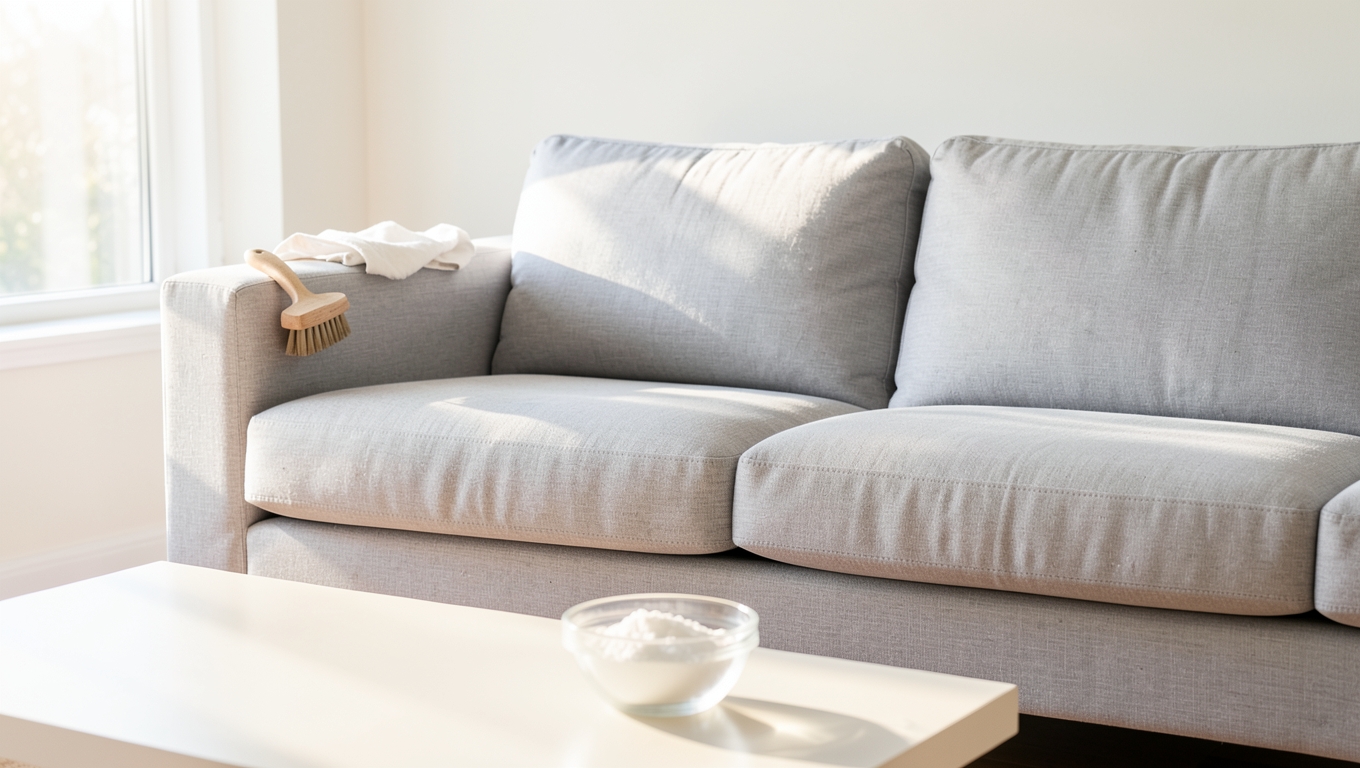
Sofas, carpets and mattresses collect more dust than any other spot in the house.
Why Do Sofas, Carpets and Mattresses Hoard the Most Dust?
Soft furnishings are the quiet filters of a home. Every fibre in a couch, a rug and a mattress grabs dust, skin flakes and whatever the wind carries indoors, and in Solwezi and Kalumbila that wind carries red dust straight off the dry-season roads. It settles into fabric faster than most families expect.
According to the Sleep Foundation, at any given time there can be tens of thousands, even hundreds of thousands, of dust mites living in your mattress and bedding, feeding on the dead skin cells every sleeper sheds. A house dust mite is 0.2 to 0.3 mm long, lives 65 to 100 days and can produce around 2,000 fecal particles in its short life, as the biology of house dust mites sets out. The University of Georgia Extension adds mattresses, pillows, carpets, upholstered furniture and stuffed toys to the list of favourite addresses.
Anyone can react to that waste: it is one of the most common household triggers of asthma and allergic reactions, with mite antigens estimated to contribute to 60 to 90 percent of asthma cases. A sofa that has not seen a vacuum since Christmas hosts the same problem as a mattress in its tenth year of nightly use.
Floors are honest about their dust. A sofa keeps the secret for years.
What Is Your Sofa Made Of, and What Do the Codes Mean?
Before any product touches your couch, learn what it is made of. At heart a sofa is simple: a frame, springs, padding and a covering, as the anatomy of a couch describes it. The covering, corduroy, linen, leather or a woven blend, decides how it may be cleaned safely.
The industry leaves you a clue: a cleaning code on a small tag, usually tucked under the seat cushions. Good Housekeeping's cleaning lab walks through the four you will meet:
Code on the tag | What you may use | Home approach |
W | Water-based foam or shampoo | Spot clean sparingly, vacuum when dry |
W/S | Water or solvent cleaner | Patch-test, then spot clean |
S | Dry-cleaning solvent only | Light spot treatment; book a professional |
X | Nothing wet | Vacuum and brush only |
No tag | Unknown | Vacuum freely; test liquids on a hidden seam |
No tag? Run the simple tests instead. Press a cloth dampened with your chosen cleaner against a hidden stretch of fabric behind the sofa, wait a few minutes and check the colour has not shifted. The textile care experts at University of Georgia Extension add the golden rule: pretest every product on an inconspicuous area, and never overwet, because too much liquid soaks through to the padding.
How Do You Clean a Sofa, Step by Step?
A sofa routine works in layers: dry first, damp second, dry again. A few run-throughs and it becomes a twenty-minute job.
Strip and empty. Remove cushions, throws and stray toys; crumbs always gather in the seams beneath.
Vacuum first. Upholstery attachment over the back, arms, seat and skirt, then the crevice tool along seams and buttons. The experts at Homes and Gardens suggest weekly vacuuming in busy homes, and more often with pets.
Cushion duty. Vacuum under the cushions, then flip and rotate them so no seat takes all the wear.
Spot treatments. Blot spills from the outside in; rubbing pushes marks deeper. The three rules ARM & HAMMER teaches for laundry spills apply: act fast, test before you treat, and check the result before heat goes near it. The same blot-first logic runs through our guide to removing stains from clothes.
Baking soda deodorising. Sprinkle generously over cushions and crevices, leave it half an hour, then vacuum it away. Sodium bicarbonate is a gentle alkali with mild disinfecting properties, as its chemistry explains.
Covers and throws. Washable covers and a good throw are a sofa's raincoat; check the care label before removing any cover.
Keep this quick reference for the spills that will happen anyway:
What landed | First move | Watch out for |
Coffee, juice, soft drink | Blot, then dab with mild soapy water | Rinse the soap out; sugar grabs dust |
Greasy food | Scrape, blot, then dish soap on a damp cloth | Soap residue; wipe with clean water |
Ink or marker | Dab, never scrub; test spirits on a hidden seam | Some inks never lift fully |
Red dust and mud | Let it dry, vacuum it away, then treat the mark | Wet mud smears deeper into the fibres |
Pet accidents | Blot, then an enzyme cleaner or dish soap suds | The smell lives in the padding |
Sweat and body oils | Wipe arms and headrests with mild soapy water | Overwetting; slow to dry |
Dry first, damp second, dry again. Most sofa damage happens while it is still wet.
How Do You Keep a Mattress Fresh and Healthy?
You spend a third of every day on your mattress, and it collects sweat, oils and skin flakes. That is why the Sleep Foundation recommends washing sheets weekly and cleaning the mattress itself about every six months, or straight after a spill, while the allergy guidance from MedlinePlus adds pillows to the weekly hot wash.
Strip the bed. Sheets, pillowcases and blankets into the wash, hot water where the labels allow; heat is what evicts dust mites.
Vacuum everything. Upholstery attachment across the top, sides and seams, then the underside, stretching the fabric slightly at the seams.
Spot-clean gently. Solution on the cloth, never straight onto the mattress: blot the mark, then blot with a cloth dampened with cold water. Enzyme cleaner or foamy dish soap suds for sweat, blood and urine; a half-and-half mix of cold water and hydrogen peroxide for other marks.
Deodorise with baking soda. A thin layer once the cover is dry, several hours to work, then vacuum it off. Memory foam hates getting wet, so go light there.
Flip and repeat. The other side where the design allows it, then rotate head to foot.
The long game is simple too. Most mattresses want rotating head to foot every six to twelve months, and older innersprings every two to six, according to the Sleep Foundation's mattress care advice. A machine-washable protector stops dirt and moisture before they reach the padding, and practically every warranty objects to a dirty mattress.
Zambian households already practise the other half of mattress care: airing and sunning. On a bright morning, mattresses across Solwezi and Kalumbila get propped up in the sun, and the old habit earns its keep, because light and moving air pull the damp out of the ticking. The maintenance notes on mattresses explain the stakes: a mattress left damp can develop mildew inside its upholstery. Turn it while you are there, and bring it in before the evening dew.
Job | How often |
Wash sheets and pillowcases | Weekly; more with pets on the bed |
Treat spills and accidents | Immediately, before the mark sets |
Clean the mattress: vacuum, spot, baking soda | Every six months, or after an accident |
Rotate head to foot | Every 6 to 12 months; older innersprings 2 to 6 |
Replace the mattress | Around every 6 to 8 years |
A mattress gets a third of your life. Give it an afternoon twice a year.
How Do You Deep Clean Carpets and Rugs at Home?
Carpets and rugs take more footfall than any other textile in the house, and the US Environmental Protection Agency recommends vacuuming them weekly to keep dust, allergens and mite waste down. With red dust riding in on school shoes, that habit pays you back.
Vacuum slowly. Slow, overlapping passes lift the grit that cuts pile fibres; rushed strokes just polish the surface.
Do the edges. Crevice tool along skirtings, under furniture and around the sofa's feet.
Beat and air small rugs. Beating the dust out of a rug on the line is old, proven housecraft: nineteenth-century households did exactly this with rattan rug beaters, as the history of carpet cleaning records. Sunlight and moving air finish the job.
Spot-treat on sight. Blot, never rub, and treat marks while they are fresh; the longer a stain sits, the higher the chance of a permanent colour change.
Keep water honest. Enough to treat the mark, never enough to soak the backing, and always followed by real drying.
A rug on the line with dust flying out of it is housekeeping at its oldest and best.
How Do You Dry Soft Furnishings in the Rainy Season?
From November to April, North-Western Province does its wettest work. Zambia's northern half collects 1,250 mm of rain or more a year, and at the height of the season it rains on seven or eight days out of ten, as Zambia's climate guide describes.
Dry damp things within a day or two. EPA guidance is blunt: wet items should be dried completely within one to two days to keep mould from growing.
Chase 30 to 50 percent humidity. The same guidance suggests keeping indoor humidity in that band, which means airing rooms hard whenever the sun breaks through.
Lift and separate. Cushions on edge, mattresses turned and propped, rugs over the line: flat is where damp hides.
Catch the early signs. A musty sofa, a clammy patch under the mattress, a dull ring on the rug: deal with it while it is still just damp. Our rainy season guide takes the same approach across the whole house.
The rain here runs on its own calendar. Dry today what the clouds will try to reclaim tomorrow.
When Is It Time for a Machine or a Professional?
Home methods handle routine care, spots and smells. Some jobs outgrow a bucket and a brush:
S-coded fabric, leather and velvet. Solvent-only covers, unfinished leather and delicate velvets are professional territory; home experiments end in tears.
An entire sofa gone dull. A deep clean with proper equipment beats weeks of spot cleaning, and most homes need it only once or twice a year.
Set-in stains and pet accidents. Old marks and anything that shrugged off a home attempt need professional products, and often the padding too.
Smells that come back. If baking soda and airing fail twice, the source is inside the padding, and padding needs extraction equipment.
Large rugs, wool rugs and fitted carpets. These want hot water extraction: hot soapy water driven deep into the pile and pulled straight back out with the dirt, as the technology behind extraction vacuums describes. Home kits rarely pull the water back out as thoroughly, and thoroughness keeps mould away.
A cloth and a Saturday will carry you far. When the whole sofa is tired, bring in the equipment.
Sofa, Carpet and Mattress Care: Quick Answers
These are the questions households ask us most often.
How often should you clean a sofa?
Vacuum weekly in busy homes and at least monthly elsewhere, and give the whole sofa a deeper clean every six to twelve months, more often with pets or small children. Spot-treat spills the day they happen.
Can you use a normal vacuum on a sofa, mattress and carpet?
Yes, with the right attachment: the upholstery tool for sofa and mattress, the crevice tool for seams, and a fine or HEPA filter where you can, because dust that escapes the machine goes back into the air you breathe. Empty the bag before it fills.
How do you remove smells from a sofa?
Sprinkle baking soda over the cushions and crevices, leave it half an hour, then vacuum it off. For stubborn smells, mist with equal parts white vinegar and water and let it air dry; the vinegar smell disappears as it dries, as the care guidance from Marks and Spencer notes. If the smell returns, it is in the padding.
How do you clean a mattress?
Strip the bed and wash the bedding, vacuum the whole mattress with the upholstery attachment, spot-clean marks with a cloth rather than a soaked mattress, and finish with a few hours of baking soda before vacuuming it off. Twice a year does it, sooner after accidents.
How long does a carpet take to dry?
A spot blot dries within a few hours; a washed carpet or rug needs up to a day with good airflow. Fans and open windows cut the time sharply, and anything still damp after two days needs another pass.
When should you call a professional?
For S-coded or delicate upholstery, wool and large rugs, whole-sofa cleaning, set-in stains, pet odours and anything damp that smells of mould. A professional clean once or twice a year keeps soft furnishings healthy and out of the skip.
For the Soft-Furnishing Jobs That Need Proper Equipment
Most of this guide is work any determined household can take on, and it should be. Some jobs outgrow a rented machine and a free Saturday: the corner sofa that has swallowed a decade of red dust, the wool rug that needs extraction and fast drying before the next storm, the guesthouse mattress that must be spotless between guests. That is where Aenon Horizons comes in, across Solwezi and Kalumbila in North-Western Province, with Lusaka coming soon.
Maid and cleaning services. Our maid and cleaning teams in Kalumbila and Solwezi handle one-time deep cleans and scheduled maintenance for homes, and our cleaning services for corporate and residential clients cover office sanitation too.
Laundry and dry cleaning. Throws, washable covers, mattress protectors and bedding are all fair game for our laundry and dry cleaning service, finished at a bespoke scent bar with an express turnaround of 1 to 4 hours.
Car wash and auto care. Vehicles collect the same dust and crumbs, so our car wash and auto care team looks after interiors too.
Every team is vetted, uniformed and trained, and every job is graded against our five-star quality-control system. Message us on WhatsApp at +260 978 789 767 or email info@aenonhorizons.com, book right here, see everything we do on our services page, meet the team on our about page, or browse more practical reading on our blog, including our guide to Zambian languages for settling into the province. Our office is on Kansanshi Road, opposite Yadah Christian School, Solwezi 10101, and the journey starts at aenonhorizons.com.
Sofas, carpets and mattresses do the hardest work in any home. When they need a proper clean and a proper dry, that is our job.


Comments