
How to Remove Stains from Clothes: The Complete Rescue Guide

Knowing how to remove stains from clothes is a skill that saves wardrobes, school uniforms and favourite shirts. It comes down to a handful of habits rather than a cupboard of products, and here is the full rescue plan: golden rules, a stain-by-stain playbook, pantry staples that do the heavy lifting, and an honest word on when to call a professional.
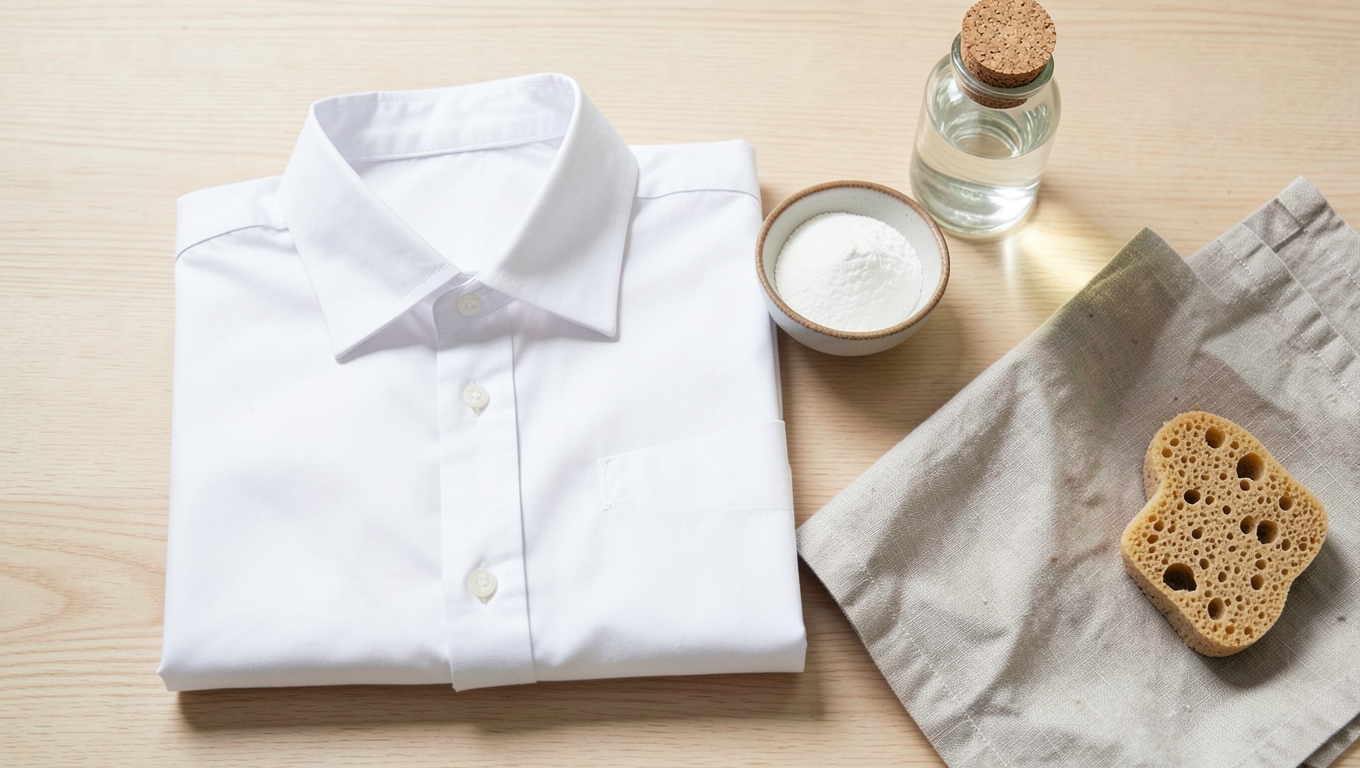
Quick, gentle action saves most stained clothes: cold water first, harsh heat never.
What Are the Golden Rules of Stain Removal?
Stains damage more clothes than most families realise. According to the New Mexico State University Extension guide on removing clothing stains, damage from spots and stains, or their improper removal, is one of the most common causes of discarded clothing. Five rules cover almost every spill:
Act fast. A spill caught in the first minutes is a rinse; the same spill found the next morning is a project.
Cold before hot. Start with cold water, especially on blood and unknown marks. Heat sets stains.
Dab, never rub. Work from the outside of the mark inwards; rubbing drives the stain deeper and spreads it.
Test first. Dampen an inside hem with the product, wait a few minutes, then check. If the colour objects, stop.
Know your fabric. Cotton, chitenge, school uniforms and workwear each want different handling.
Most marks dissolve with the right solvent, as the science of stain removal explains. Detergents work because one end of the molecule holds on to water while the other grabs oil and grime. And never tumble or iron a garment until the mark is gone, because heat fixes whatever is left in place for good.
Here is the playbook at a glance:
Stain | First move | Wash at |
Cooking oil and grease | Blot, dust with cornstarch, then dish soap | Warmest setting safe for the fabric |
Tomato and relish | Scrape, flush from the back with cold water | As the label allows, after a cold rinse |
Ink | Dab rubbing alcohol from the back over a towel | Normal, once the ink stops lifting |
Blood | Cold water soak straight away, then dish soap | Cold water only |
Grass | Brush off, then vinegar and enzyme detergent | Cold water |
Sweat and underarm yellow | Vinegar soak or baking soda paste before the wash | Warmest setting safe for the fabric |
Coffee and tea | Blot, cool soak, then soap and vinegar | Normal |
Rainy-season mud | Let it dry, brush off, then cold soak | Normal |
The same tea behaves differently on cotton, chitenge and a school shirt. Cotton is the forgiving backbone of most wardrobes, as the story of cotton shows: happy in warm water, never in harsh chlorine. Chitenge wax prints reward a cold hand-wash and a shady line, as our chitenge fabric care guide explains; the same gentle routine suits traditional ceremony outfits. School uniforms face ink, grass and mud all year, so the back-to-school guide treats their laundry as a system.
Fabric | Treat it with | Keep it away from |
Cotton and blends | Warm water, oxygen bleach on whites, a good soak | Chlorine bleach on colours, boiling water on dyes |
Chitenge wax prints | A cold hand-wash inside out, mild detergent, shade drying | Chlorine bleach, scrubbing the print, direct sun |
School uniforms | Same-day treatment of collars and cuffs, whites washed apart | Drying before the mark is gone, whites mixed with sports kit |
Workwear and overalls | Warm water, enzyme detergent, grease treated the same day | Letting oil build up, tumble drying a greasy patch |
A fresh stain is a spill. An old stain is a project. Move fast and it stays a spill.
How Do You Remove Cooking Oil, Grease and Braai Stains?
Grease is the household champion of stains: cooking oil, butter, mayonnaise and the slick that slides off a sausage. All follow one routine.
Blot and scrape. Paper towel first, then the back of a spoon for solids. No rubbing yet.
Absorb. Dust the spot with cornstarch or baby powder, leave fifteen minutes, then brush it off.
Treat. Work undiluted liquid dish soap into the mark with your fingertips. Colourless soap is best.
Rinse and repeat. Cold water, then a splash of white vinegar, then rinse again, as the laundry team at ARM & HAMMER suggests.
Wash warm. Use the warmest water the label allows, and check the mark before the dryer can set it.
Tomato and relish, the kind that escape from a market-day shopping bag, are three stains in one: sugar, acid and colour. Scrape off the excess, never rub it in, then flush the mark from the back with cold water. Work liquid detergent in from the outside inwards, rinse, and repeat while the water runs coloured. On white cotton only, hydrogen peroxide or white vinegar, dotted on after a hidden-seam test, finishes the job. Sauce and ketchup rank among the most common types of stains anywhere.
Braai sauce is grease, sugar and colour in one smoky package: cold flush, liquid detergent, a vinegar rinse, repeat, then a normal warm wash. If the weekend includes a proper match-day braai, our Zambia vs Uganda match day guide covers the fun; keep this page for the morning after.
Grease is patient, so be patient back: dust it, soap it, rinse it, and let dish soap do the quiet work.
How Do You Rescue Ink, Blood and Grass Stains?
Ink is the school-bag classic, and it follows one strict rule: treat it before the wash, never after. Place a white paper towel under the stain, then dab it with a cotton pad dipped in rubbing alcohol, sold at most Zambian pharmacies as surgical spirits, working from the outside inwards and letting the alcohol do the lifting. Some ballpoint, felt tip and liquid inks may be impossible to remove entirely, as the guide from Texas A&M AgriLife Extension warns, so act early and know when to stop.
Blood answers to cold water and little else; hot water cooks the proteins into the fibre.
Soak in cold water straight away, for about thirty minutes, then rub in dish soap or an enzyme detergent.
For dried marks, soak in warm water with an enzyme product, then launder.
Skip the heat. Air dry until the mark has gone, wash cold, and check again before the dryer.
Grass is the football pitch's revenge, hiding a protein that soap struggles to shift. Brush off the dried bits, rub a mix of one part white vinegar to two parts water into the mark with an old toothbrush, rinse, and wash cold with an enzyme detergent. Heat fixes a grass stain for good, so cold water is the whole secret.
Cold water is blood's best friend. Heat turns a red mark into a permanent one.
How Do You Beat Sweat Stains, Yellow Underarms and Coffee Rings?
Sweat is the quiet worker of laundry. Over time, perspiration and the aluminium salts in antiperspirant react with fabric dyes, which is why shirts develop pale patches and yellow underarms, as the chemistry of perspiration explains. University of Georgia Extension experts warn that ironing a deodorant-stained garment lets the chemistry finish the job: treat fresh colour changes with a few drops of household ammonia, and older ones with white vinegar.
Soak the underarms in white vinegar and water for thirty minutes before the wash.
Paste the yellow ones with baking soda and water, leave for twenty minutes, then rinse.
Wash whites with an oxygen bleach at the warmest setting the label allows, and keep colours away.
Never iron a marked shirt. Heat locks the chemistry in for good.
Coffee and tea are gentler than they look, as long as you reach them before the mug dries. Blot, soak in cool water, then treat with lukewarm water, a little liquid dish soap and a tablespoon of white vinegar for fifteen minutes. Wash as normal with an enzyme detergent, and finish pale shirts with a vinegar rinse.
Underarm yellow is chemistry at work, and it answers to vinegar, baking soda and patience.
How Do You Get Rainy-Season Mud Out of Clothes?
Zambia's rainy season runs from November to April, and the north collects more than 1,250 mm of rain a year, with rain falling on seven or eight days out of ten at the height of the wet season, according to the Zambia Tourism climate guide. Around the mining town of Solwezi and neighbouring Kalumbila, that means red mud on hems, socks and school shoes. Mud is soil in transit, and soil wants two things: lifting before it is smeared, and soaking before it is washed. Let the mud dry completely, then brush it off. Do not scrub it wet, because you will only work the minerals deeper into the weave. Then soak the garment in cold water for about thirty minutes, work in liquid detergent, and wash as normal. The habit that saves school shirts is a dry, covered corner by the door for muddy clothes, where the dust dries before anyone panics and feeds wet mud to the machine. For the full wet-season playbook, see our guide to getting Zambia rainy-season ready.
Mud is soil in transit: let it dry, brush it away, and soak before you wash.
What Do Baking Soda, Vinegar and Dish Soap Actually Do?
The best stain kit is mostly already in the kitchen. Here is what each pantry hero does:
Baking soda: a mild alkali that lifts grease and deodorises. Mix a paste with water for underarm marks, collars and cuffs, and keep the water warm rather than boiling, because sodium bicarbonate starts to break down between 80 and 100 degrees Celsius.
White vinegar: acetic acid, at 4% to 18% depending on the bottle, a gentle acid for rinsing out detergent residue and lifting old deodorant marks.
Dish soap: the undisputed grease champion, safe undiluted on most washable fabric; colourless is best so it adds no tint of its own.
Hydrogen peroxide (3%, from the pharmacy): a mild bleach for blood and for whites. About 60% of the world's hydrogen peroxide supply goes to bleaching pulp and paper. Test it on a hidden seam and keep it off coloured cloth.
Cool water: the most underrated stain remover in any house, and the heart of every good wash, as the basics of laundry have shown since the washboard.
Two pantry bonuses: lemon juice and an hour in the sun lift pale marks from white cotton, though the same sun fades colour, so keep it for whites only. And a fresh juice spill loves a sprinkle of salt while it is still wet. Keep the kit in one caddy, away from children and pets.
What Turns a Small Stain into a Permanent One?
Some mistakes cost a favourite shirt within minutes; others do their damage over weeks of quiet habit.
Do this | Never that |
Cold water first on blood and unknown marks | Hot water on blood, which sets it for good |
Test every product on a hidden seam | Bleach on colour or print, which strips the dye |
Dab gently from the outside in | Rub hard, which spreads the stain and roughens the cloth |
Air dry until the mark is gone | Tumble dry or iron a stained garment, making it permanent |
Rinse between products | Mix ammonia with chlorine bleach, whose fumes are dangerous |
Treat the stain the same day it happens | Leave a wet stain folded in the basket for a week |
Three small habits deserve a warning too. A stained garment balled up in the basket lets moisture and chemistry team up; a mark dried on a hot radiator bakes colour into the weave; and a spot scrubbed with a hard brush dulls the colour around it. If a mark survives your best efforts, resist the dryer, and stay honest about the limits: not all stains can be removed, by you or by a dry cleaner.
If the stain survives the wash, the dryer will make it permanent. Check before you tumble, every time.
Stain Removal in Zambia: Quick Answers
These are the questions households bring to us when an attempt goes sideways.
How do I remove oil or grease stains from clothes?
Blot, dust with cornstarch for fifteen minutes, then work in undiluted liquid dish soap. Rinse cold, follow with a vinegar rinse, and wash warm. If the mark remains, repeat before anything sees the dryer.
How do I get ink out of clothes?
Treat it before washing: a paper towel under the stain, then dabs of rubbing alcohol, also sold as surgical spirits, worked from the outside inwards. Some inks never come out completely, so act early.
How do I treat blood stains on clothes?
Cold water only, straight away. Soak for thirty minutes, rub in dish soap or an enzyme detergent, then wash cold. Hot water sets blood, so air dry until the mark is gone.
How do I fix sweat stains and yellow underarm marks?
Soak the underarms in white vinegar and water for thirty minutes, or work in a baking soda paste for twenty. Avoid heat until the yellow is gone, then wash warm, with an oxygen bleach for whites.
How do I get muddy rainwater stains out of clothes?
Let the mud dry, brush it off, then soak in cold water for thirty minutes before a normal wash. Never scrub wet mud. A covered drying corner saves the most shirts.
When should I take a garment to a professional laundry and dry cleaner?
When the label says dry clean only, when the fabric is silk, suede, leather or a cherished ceremony outfit, when the stain has already set, or when the garment is too big or too precious to risk a home experiment.
Stubborn Stains? Meet the Rescue Team
Most spills never make it past the kitchen sink. A few, though, are bigger than any home remedy: the interview suit, the wedding chitenge, the mark that has already seen a dryer. That is the moment to stop scrubbing and call the rescue crew. Aenon Horizons serves Solwezi and Kalumbila, with Lusaka coming soon, for the spills too stubborn, too precious or too big for the kitchen sink:
Laundry and dry cleaning. Our laundry and dry cleaning service takes on everything from school shirts to ceremony wear, finished at our bespoke scent bar, with an express turnaround of 1 to 4 hours when the day cannot wait.
Maid and cleaning services. Our cleaning teams in Solwezi and Kalumbila keep homes fresh for residential clients while the wash soaks.
Office cleaning. The same care goes into our office cleaning service for corporate clients, because a clean workplace is a quiet kind of pride.
Car wash and auto care. Coffee goes flying in cars too, so our car wash and auto care team treats seats, mats and paintwork with the same attention.
Every team is vetted, uniformed and trained, and every job is graded against our five-star quality-control system. Message us on WhatsApp at +260 978 789 767 or email info@aenonhorizons.com, book right here, see the full range on our services page, meet the team on our about page, or browse more guides on our blog. Our office is on Kansanshi Road, opposite Yadah Christian School, Solwezi 10101, and the journey starts at aenonhorizons.com.
Fresh spills are yours to save. The stubborn ones, the precious ones and the mountain-sized ones are ours.


Comments