
Zambian Languages: A Friendly Guide to Speaking Like a Local

Zambian languages are the country's friendliest open secret, and learning even a handful of words changes the way Zambia says hello. Ask two Zambians how many languages the country speaks and you will get three answers, all with a smile: seven, twenty, thirty-plus, take your pick. One bus ride can pass through four languages here, a market vendor switches tongues mid-sentence, and "Muli bwanji" earns you a Lusaka grin while "Muli shani" opens doors up in Solwezi. Whether you have just unpacked in North-Western Province or you simply want to make new colleagues laugh, this guide covers the big seven, the phrases worth learning, how greetings really work, and the joy of code-switching.
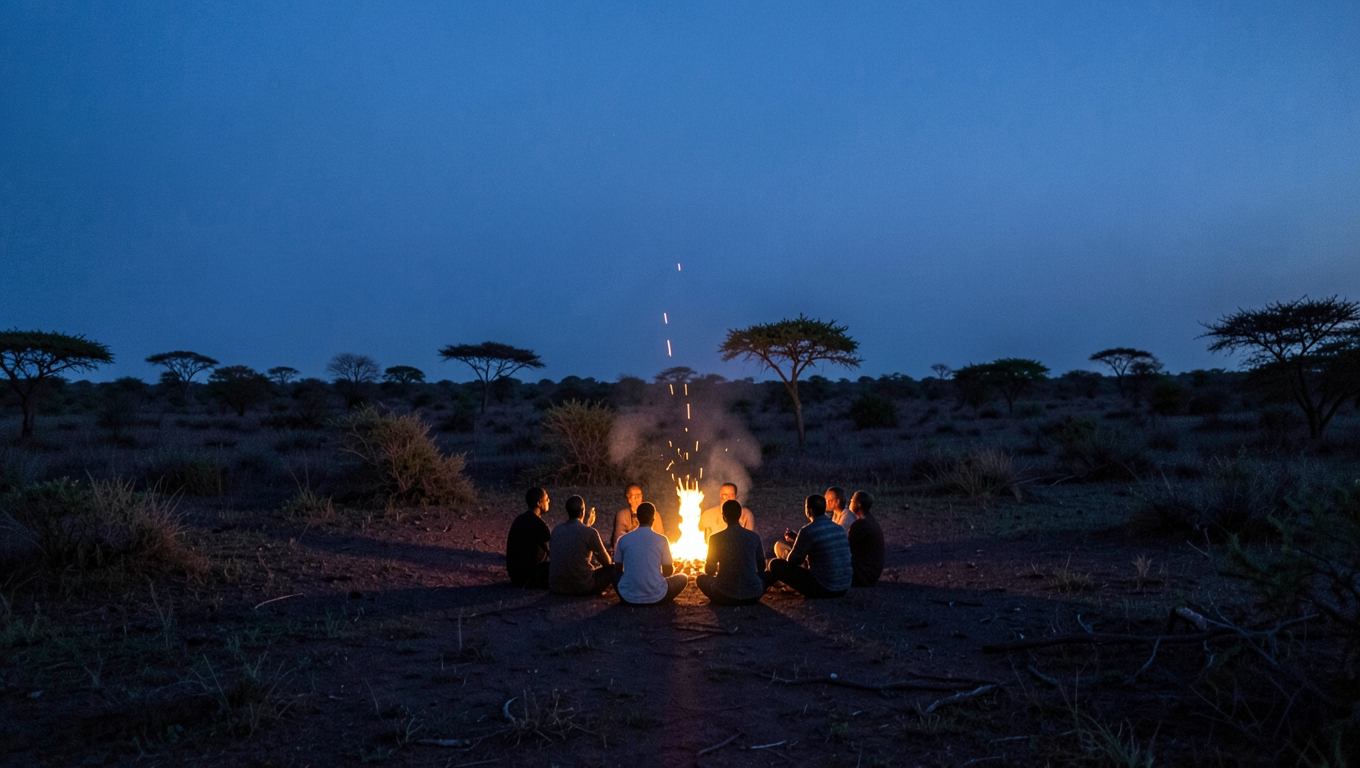
Every Zambian language carries its own music, humour and history.
How Many Languages Does Zambia Really Have?
The honest answer is that it depends how you count, and in Zambia every count comes with a story. National census language data, compiled by IPUMS International and published on the United Nations' Humanitarian Data Exchange, puts Bemba first: it is the main household language for about 28% of Zambians, with Nyanja next at around 14%. Census summaries prepared for humanitarian work by CLEAR Global count more than 30 major languages, seven of them officially recognised as regional languages. Travel guides keep it simpler still: 73 ethnic groups by the official count, speaking what they describe as 20 languages, plus dialects. None of these numbers is wrong: language, dialect and tribe have beautifully blurry borders here, and every version of the count is true in the right conversation.
What everyone agrees on fits neatly into one short list:
English is official, the language of school, business and government, and the most commonly used second language, though only about 2% of Zambians speak it first at home.
Seven languages carry regional status: Bemba, Nyanja, Tonga, Lozi, Lunda, Luvale and Kaonde.
Bemba leads the polls, topping both the household language tables and the ethnic group tables, which is why it works like a second national language in town.
Most of the languages are close cousins. Nearly all belong to the Bantu family, and with plenty of movement around the country, neighbours pick each other's languages up quickly.
That mix, plus a long history of coexistence, has spared Zambia the language conflicts that have torn other countries apart. Here, language is a handshake, never a wall.
Counting Zambia's languages is like counting stars: everyone agrees there are plenty, and nobody argues about it for long.
What Are Zambia's Seven Official Languages?
If you learn one map of Zambian languages, learn this one: the seven official regional languages, each with its own home ground. Bemba is the heavyweight, with census-cited speakers above four million across Northern, Luapula, Muchinga and Copperbelt provinces. Nyanja rules the capital, where Town Nyanja is the lingua franca of the streets, while its country cousin holds the Eastern Province. Tonga is a major lingua franca of the south, taught in schools across Southern, Lusaka and Central provinces.
Language | Home ground | Remember it for |
Bemba (Chibemba) | Northern, Luapula, Muchinga and Copperbelt | The biggest of the seven |
Nyanja (Chinyanja) | Lusaka and Eastern Province | The voice of the capital |
Tonga (Chitonga) | Southern Province, plus Lusaka and Central | A major lingua franca of the south |
Lozi (Silozi) | Western Province and the Zambezi floodplain | The pride of the floodplain |
Lunda (Chilunda) | North-Western Province | Understood by one in twelve Zambians, by an old estimate |
Luvale (Chiluvale) | North-Western and Western provinces | Spoken on both sides of the Angolan border |
Kaonde (KiiKaonde) | Solwezi, Kalumbila, Kasempa, Mufumbwe and Mushindamo | The home language of the copper country |
Lozi carries the voice of the Zambezi floodplain, a language born from a blend of Luyana and Kololo with relatives over the border in Namibia. Lunda is the first of the north-west trio, used mainly in North-Western Province, reaching into Angola and the DRC. Luvale adds the second voice, spoken by about 171,000 people in Zambia's North-Western and Western provinces and taught in primary schools. Kaonde completes the set, in the towns this guide heads to next. For the short version, the BBC's country profile trims the list to three languages: English, Nyanja and Bemba.
What Do People Speak in Solwezi and North-Western Province?
North-Western Province speaks with three proud voices, and Solwezi is Kaonde country. Kaonde, natively called kiiKaonde, is spoken mainly in the province's north and centre, with speakers found in Solwezi, Mufumbwe, Kasempa, Kalumbila and Mushindamo. Census-era counts put Kaonde speakers at around 240,000, and it travelled south from the old Luba Kingdom long before the copper mines arrived.
Around Kaonde, the wider province speaks Luvale and Lunda. Luvale is a recognised regional language for education and administration, with deep family ties to Angola. Lunda is used mainly in the province itself, reaching across Angola and the DRC. In Solwezi and Kalumbila you will hear Bemba and Nyanja too, carried by colleagues, traders and neighbours from every province, plus English wherever the paperwork lives. Here is the soundscape:
Solwezi and Kalumbila town: Kaonde all around, with English, Bemba and Nyanja in the shops and school gates.
The wider province: Luvale toward the west, Lunda across the north-west.
Home kitchens: the grandparents' language, plus a little English from the school run.
If the province is new to you, our guide to moving to Solwezi covers the practical side of settling in; this page covers the friendly side.
In Solwezi, one word of Kaonde is worth a hundred words of small talk.
Which Zambian Phrases Should You Learn First?
Greetings and thanks come first, because they open every door in Zambia. The table below covers the languages you will meet most around Solwezi and Kalumbila, and they play nicely together: Bemba and Nyanja share the same polite "muli" pattern. In Bemba, "Muli shani" serves as both hello and how are you. In Nyanja, "Moni" is the all-purpose hello, "Zikomo" is thank you, "Chonde" is please, and "Pepani" quietly covers sorry. The Luvale column comes from the community phrase lists at LughaYaNgu.
Phrase | Bemba | Nyanja | Luvale |
Hello | Muli shani | Moni | Muli ngachili mwane |
How are you? | Muli shani? | Muli bwanji? | Munayoyo? |
Good morning | Mwashibukeni | Mwauka bwanji? | Chimene mwane |
Thank you | Natotela | Zikomo | Ngwasakwililako mwane |
Please | Napapata | Chonde | Nguhaneco mwane |
Goodbye | Shalenipo | Ndapita | Salenuho mwane |
Two tiny pronunciation gifts before you start: "Muli bwanji" sounds close to "moo-lee bwan-jee", and "Zikomo" is said exactly as it looks. Nobody will grade your accent, and the answer usually comes back as a question, because "Kaya inu?", meaning and you, is the natural next line. When the talk turns to lunch, keep our guide to Zambian food nearby: a shared plate of nshima is the fastest language lesson there is.
Learn five phrases and you have a hundred new friends. That is the exchange rate in Zambia.
How Do Greetings Actually Work in Zambia?
More thoroughly than in a hurry-up world, and that is the charm. The Embassy of Zambia's own guidance is firm on the first rule: a greeting is always exchanged before any conversation, and if someone approaches you, offer the first greeting. What follows is no rushed "hi": a conversation opens with how are you, then wanders into family, work, the weather or the crops, and long greetings are the norm, with several minutes of small talk before business.
The words themselves have layers. In Nyanja, "Muli bwanji" works politely for one person or several, while the shorter "Uli bwanji" is for a single friend. Bemba works the same way: "Muli shani" for the world, "Uli shani" for the people you know well. The plural "muli" doubles as a mark of respect, as in the respectful "Inu muli bwanji, amayi?" you would use for an older woman.
Handshakes come with soft rules of their own: keep them gentle, and holding your right wrist or elbow with your left hand as you shake is a warm, respectful touch, as the Zambia travel guide explains. On the answer side, "Ndili bwino" means I am fine, and "Ndi fye bwino, natotela" adds the thank you. The ritual scales up for big occasions, too: with more than 20 annual traditional ceremonies on the national calendar, greetings are the first dance of every gathering, and our guides to Zambian traditional ceremonies and Zambian wedding traditions show what happens after the hello.
Greet first, always. Even before you ask directions or buy anything.
Use the polite form with elders. "Muli bwanji?" and "Muli shani?" never miss.
Ask how they are, and wait. The answer comes back as a question.
Take the long way round. Family, weather, work, football: the small talk is the whole point.
Shake gently, with the supporting hand. Left hand on the wrist or elbow.
In Zambia the greeting is the first gift of the conversation, so give it generously.
What Makes Zambian English Its Own Thing?
English is the official language and the shared tongue between Zambians who grew up with different mother languages, and the local version has grown its own habits, its own humour and its own music. As the story of Zambian English shows, object pronouns often drop away ("Did you reach?" means did you get home safely), phrasal verbs get tidier ("throw" stands in for throw away), and "taste" and "test" can land on the same sound. Best of all, Zambian English borrows particles from the indigenous languages, so a "ka-meeting" is a small one, and adding "chi" can make a word big or bad, depending on tone. Add a South African import like "braai", and you have an English that keeps the flavour of every kitchen it has passed through.
You will hear | It means | The story behind it |
"Did you reach?" | Did you get home safely? | The object pronoun drops away |
"Throw" (no "away") | Put it in the bin | Phrasal verbs get trimmed |
"a ka-meeting" | A small, quick meeting | "ka" is the little-particle |
"chi-" on a word | Big, or bad, by tone | "chi" is its bigger, bolder cousin |
"braai" | A barbecue | A South African import that stayed |
This is the English of the radio, the office and the mine gate, and it sits happily beside all seven official languages.
Zambian English grew up in the market, and you can still hear the market's music in it.
How Do You Learn a Zambian Language Around Town?
You do not need a classroom to start speaking. The best tutors in Zambia are the people you already say hello to, and they enjoy it when you try. A few habits turn daily life into a language course:
Start small and speak early. Master the five phrases above, then add a word a week.
Take it to the market. Vendors are patient teachers: buy something small, try a phrase, collect the correction and a laugh.
Let the music teach you. Zambian songs swap languages inside a chorus, so dancing along counts as studying.
Ask colleagues for the words for everyday things, and write them down at lunch; five words a day adds up fast.
Wear the laughter well. A mangled word is a gift; Zambians will chuckle with you, then set you right.
Two homework tips: our guide to Zambian market shopping gets you through the stalls like a regular, and our Zamrock and Zambian music guide is a free listening course. Play the greats in the car, and your ear will do the rest.
The grand finale of all this learning is code-switching, which Zambians do the way other people change gears. A sentence can start in Bemba, slide into Kaonde for the punchline, borrow an English word because it is faster, and finish with a Nyanja proverb, all without breaking stride. Join in whenever you can: a mix of languages is the most natural sound in the land.
The best language school in Zambia charges no fees: it is your street, your office and your favourite market stall.
Zambian Languages: Quick Answers
The questions we hear most from newcomers to Solwezi and Kalumbila:
How many languages does Zambia have?
Census summaries count more than 30 major languages, plus dialects, with seven officially recognised regional languages: Bemba, Nyanja, Tonga, Lozi, Lunda, Luvale and Kaonde. English runs school, business and government, and travel guides sometimes say 20 languages across 73 ethnic groups.
Which language should a visitor learn first?
It depends where you are going. In Lusaka and the east, learn Nyanja ("Muli bwanji?"); in the Copperbelt and the north, learn Bemba ("Muli shani?"); in North-Western Province, start with Kaonde, Luvale or Lunda. English and a warm greeting cover you anywhere.
Is English widely spoken in Zambia?
Yes. Only about 2% of Zambians speak English first, but it is the most commonly used second language and the language of schools, offices and government, so you can settle in with English while your ear learns the greetings.
How do you greet someone politely in Zambian languages?
Greet first, before anything else. "Muli bwanji?" works in Nyanja with anyone; "Muli shani?" is its Bemba twin. Keep the short forms, "Uli bwanji?" and "Uli shani?", for friends and children.
What do they speak in Solwezi and North-Western Province?
Solwezi's home language is Kaonde, or kiiKaonde, with Luvale and Lunda across the wider province, including Kalumbila. English, Bemba and Nyanja ride along with workers from every province, so the towns are beautifully mixed.
Are Zambian languages hard to learn?
The greetings are easy and the laughter is free. Zambian languages are tonal, with long words built from prefixes, so the deep grammar takes time, but every friendship starts the same way: a hello, a thank you and a little patience.
Meet the Local Team While You Learn the Lingo
The practical side of settling in is our kind of job. Aenon Horizons is the friendly local team that keeps homes and offices running across Solwezi and Kalumbila, with Lusaka coming soon, while you practise your "Muli shani" at the market:
Laundry and dry cleaning. Everything from school shirts to ceremony wear, finished at our bespoke scent bar, with an express turnaround of 1 to 4 hours when the day cannot wait.
Maid and cleaning services. Home and office cleaning for residential and corporate clients, so your weekends belong to you.
Car wash and auto care. Dusty mine-road cars get the full treatment, inside and out.
Every team is vetted, uniformed and trained, and every job is graded against our five-star quality-control system. Message us on WhatsApp at +260 978 789 767 or email info@aenonhorizons.com, book right here, see the full range on our services page, meet the team on our about page, or browse more guides on our blog. For the home front between visits, our guides to deep cleaning your house and to cleaning sofas, carpets and mattresses cover the rest. Our office is on Kansanshi Road, opposite Yadah Christian School, Solwezi 10101, and the journey starts at aenonhorizons.com.
Learn the languages that make Zambia home. We will keep the home itself running.


Comments