
How to Clean Your Car Interior: The Complete Guide

Knowing how to clean your car interior is a survival skill in North-Western Province, where dry-season dust re-covers every dashboard within days and the rains turn the school run into a mud rally. Add market hauls, children, mine-site commutes between Solwezi and Kalumbila, and the odd kapenta lunch, and a cabin can gather a year of mess in a month. This guide covers the full job: the kit worth owning on a budget, a step-by-step clean of seats, carpets and crevices, fabric and leather care, streak-free windows, air-con smells, a 20-minute weekly reset, and when to call in a professional team.
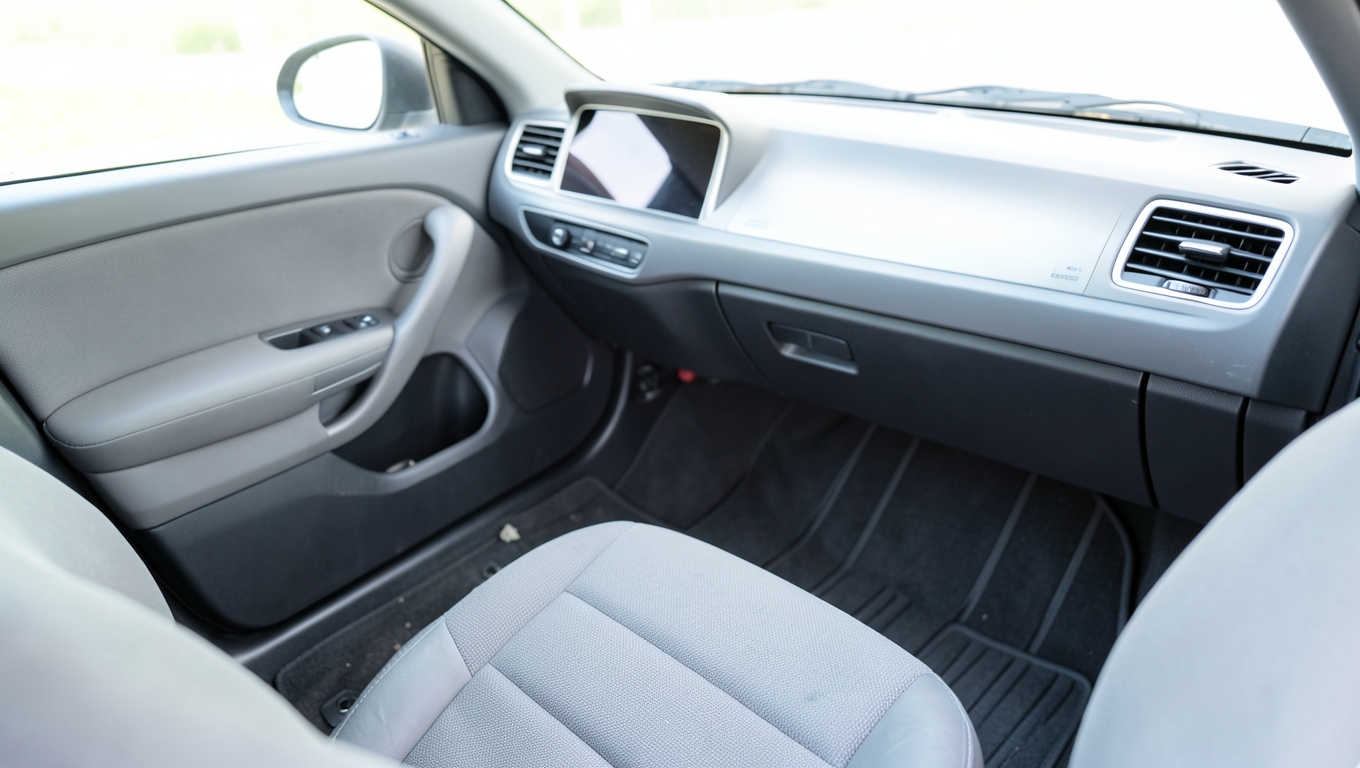
"A fresh car interior makes every trip feel better."
Why Does a Car Cabin Get So Dirty So Fast in Zambia?
The cabin is the one part of the car you actually live in, with no drains, no wipers and no wind to carry the mess away. What gets in stays in:
Red dust. One gravel-road trip pumps powder through every vent and door seal.
Rainy-season mud. From November, the school run comes home on the soles of shoes.
Market hauls. Sand, crushed tomato, a cooking oil packet that leaked on the way home.
Kids and snacks. Crumbs in the seat rails, sticky fingerprints on glass, a juice box that was fine on Tuesday.
Kapenta and smoke. Fish oil and tobacco residue settle into fabric and vents.
Children spend more time in vehicles than most parents guess. The US Environmental Protection Agency, in its America's Children and the Environment report, notes that a child can spend up to an average of 84 minutes per day in a vehicle, and that school bus cabins have recorded fine particulate matter at up to four times ambient levels. A family car is the same sealed box on four wheels.
A clean interior makes for a healthier, more comfortable ride because it reduces the dust, allergens and mould that can make breathing harder, says Duane "Doc" Watson of Bosch Mobility Aftermarket, in Family Handyman's car interior guide, and the same care helps carpet and seat fabric last longer.
New to town? The red dust takes some getting used to, and our guide to moving to Solwezi covers the rest of the settling-in list.
A car cabin is a sealed box. Everything that blows in on Monday is still there on Friday, unless somebody deals with it.
What Kit Do You Need to Clean a Car Interior on a Budget?
You do not need a trolley of specialist bottles; a caddy of basics handles almost every job:
A vacuum with the right tools. A household machine works if it has a crevice tool and a soft brush; a workshop model that takes solids and liquids earns its place in the muddy months.
Two or three microfibre cloths, one kept for glass only.
A soft detailing brush and an old toothbrush for vents, seams, seat rails and cup holders.
Mild liquid dish soap, warm water and an all-purpose cleaner, plus a spray bottle and a bucket.
A stiff brush and a bin bag. Car and Driver's detailing guide keeps its starter kit much the same: microfibre cloths, a vacuum with attachments, a brush, a bucket and a spray bottle.
Optional: a HEPA filter, which traps at least 99.97 percent of particles measuring 0.3 micrometres, the band that carries much of the fine dust and pollen.
Two small upgrades cost almost nothing: a dedicated glass cloth, and a cheap paintbrush for the vents. Vacuum cleaners come in many shapes, and the tools always matter more than the price tag.
Keep the kit in the boot and bring it out every week. A cupboard full of specialist bottles has never cleaned a single seat.
How Do You Clear Out and Vacuum a Car Interior?
Work in one direction and the job does half of itself: rubbish out, dust down, damp wipe, glass last. Detailers save the glass until the very end, because cleaning the dashboard and treating the trim throw an overspray across the windows, as Family Handyman's DIY detailing guide points out.
Clear the rubbish first. Bin bag in hand, sweep the floors, the door pockets, the space under the seats and the seat cracks; the rule from our guide to decluttering your home applies here too, in miniature: if it has no home, it leaves.
Take the mats out and shake them well away from the car, then scrub them and let them dry fully; a damp mat perfumes the whole cabin.
Slide each seat forward and back and vacuum as you go. You will meet the week again: coins, pens, enough sand for a sandpit.
Vacuum from the top down: headliner, dashboard, console and door panels, then seats and floors, then the boot. Karcher's interior cleaning guide works from the boot forward, with stiff bristles for fabric and soft ones for leather.
Lift the load-floor carpet in the boot; mine-site boots and a full market haul both leave a layer under it.
How Do You Clean Fabric and Leather Car Seats?
Seats are the hardest-working furniture in the house. A car seat is upholstery in the classic sense, padding and springs under a fabric or leather cover, as the entry on upholstery explains. Three rules cover the lot:
Blot, do not rub. Pressure drives a spill deeper into the weave.
Lift, do not soak. Wet foam stays damp for days and turns musty.
Dry, do not rush. Let the fabric dry fully before anyone rides on it again.
Fabric first. Vacuum before any liquid touches the seat, then run the crevice tool along the seams, the method Good Housekeeping's cleaning team recommends. For light grime, a foam or upholstery cleaner worked in with a cloth or soft brush is enough; stubborn marks get a specialist cleaner, rinsed and blotted dry.
Leather and vinyl next, gently. Both wear a protective coating that soap and enthusiasm can strip, so a soft damp cloth with mild soap and water does the work; saddle soap is the traditional choice, and a conditioner afterwards keeps the surface supple. Keep bleach, hydrogen peroxide and ammonia-based cleaners away, because they attack the finish and the coatings on the trim, as Consumer Reports' auto experts warn.
Spills are a timing game. Coffee, soda and the oily drip from a market treat sink deeper with every hour, so blot, lift with soap and water, and dry properly. Marks that soaked into the padding may need an extractor or a professional; our guide to removing stains from clothes has the playbook for the clothing casualties.
Seat surface | Clean it with | Keep it away from |
Cloth and fabric | Vacuum, then foam or upholstery cleaner worked in with a soft brush | Soaking, because damp padding grows mould and turns musty |
Leather | A soft damp cloth with mild soap or leather cleaner, then a conditioner | Bleach, hydrogen peroxide and ammonia-based cleaners |
Vinyl and coated trim | All-purpose cleaner sprayed onto the cloth, not the seat | Abrasive pads that dull the surface coating |
Fabric forgives a spill on the day and remembers it for a year. Leather keeps score in hours.
How Do You Clean the Dashboard, Plastics and Inside Windows?
Dashboards and door panels are where cheap cleaning shows. Dust first with a dry microfibre cloth, then wipe with a cloth wrung out in warm water and mild cleaner, and brush the vents with a barely damp paintbrush. Keep liquids off screens and buttons.
Sun is the quiet enemy of everything plastic. Ultraviolet light starts a chain reaction in polymers that breaks the long molecules apart, and the material turns brittle and prone to cracking, the process described in the entry on photo-oxidation of polymers. Park in the shade, and finish the dash with a matte protectant rather than a glossy one: shiny dressings grab dust and throw glare into your windscreen at night.
Windows close the job. Use a cleaner made for car glass rather than the kitchen bottle; household glass cleaners often contain ammonia that can damage car window finishes, as Popular Mechanics notes. No product lifts streaks without technique: wipe with one cloth, buff with a second, and stay out of direct sun.
Dust a dashboard dry before anything wet touches it, or you will only smear the season into a paste.
How Do You Beat Air-Con Smells and Stubborn Odours?
Smells are a treasure hunt with a bad prize. Start with elimination: lift the mats, check the carpet for damp, look under the seats, open the boot, and only then suspect the air system.
What it smells like | Where it usually hides | First move |
Wet socks when the air-con starts | The evaporator and the vents | Treat the plenum, then ventilate |
Sour milk or old coffee | Seat foam and carpet | Lift with soap and water, blot, dry fully |
Yesterday's kapenta | Under the seats and in door pockets | Remove the source, vacuum, wipe the surfaces |
Smoke | Headliner, carpet and the cabin filter | Clean the soft surfaces, replace the filter |
Damp and earthy | Mats and carpet | Dry completely before refitting |
The air-con classic has a known fix. What you smell when the vents first breathe is usually condensation from the evaporator inside the heating and cooling system: water collects, and when it sits long enough, bacteria and mould move in, as Consumer Reports' odour guide explains. Run the interior fan on low with the windows open, find the intake vents, called the plenum, at the base of the windscreen, and spray a disinfectant into both sides. Take the cabin filter out before you spray; it keeps the air inside the car free of allergens and contaminants. One habit prevents a repeat: switch the air-con off and let the fan run for a minute before you park.
Food smells fade fastest when the source leaves first. Kapenta oil and old chips keep working on the cabin until the wrapper and the rag are gone, so remove, vacuum, wipe and ventilate; our guide to cleaning your kitchen covers the oily side at the source.
You cannot mask a musty air-con. Find where the water sits, clean it, and the smell leaves with it.
What Is the 20-Minute Weekly Reset?
Twenty minutes, once a week, one bin bag. Do this often enough and your car never needs a lost weekend.
Zone | Job | Minutes |
Cabin clear-out | Bin bag through the door pockets, floors and under-seat gaps | 2 |
Seats and rails | Vacuum the seats, slide them, crevice the rails | 5 |
Dash, console and vents | Dry dust, damp wipe, brush the vents | 4 |
Floors and mats | Shake the mats, vacuum the floors, refit when dry | 4 |
Inside glass | Two-cloth wipe, top to bottom, in the shade | 3 |
Air check | Ventilate, sniff for damp or food, remove the source | 2 |
Keeping the habit alive is easier than finding the hours: clean the interior as you wash the car, for most drivers every two to four weeks, and keep spray, brushes and microfibre towels handy for spills. Popular Mechanics' car care editor runs that routine and notes the car is worth more on the day it is sold or traded in.
Rainy-season mats deserve their own word. Rubber beats carpet from November to April: shake them out, hose them away from the car, and dry them before they go back. Mats that never dry are the most common source of a musty cabin, and our guide to getting Zambia rainy-season ready covers the wet-month routine.
And after the good days, reset again: a match-day braai leaves smoke and crumbs, so give the cabin one extra pass before Monday. Our Zambia vs Uganda match day guide covers the fun, and the car brings home dust from every weekend out, including our things to do in Solwezi list.
Twenty minutes on a Sunday buys a Monday morning that smells of nothing at all, which is exactly the point.
Car Interior Care in Zambia: Quick Answers
These are the questions drivers in Solwezi and Kalumbila bring us most.
How often should you clean car seats?
Vacuum the seats and floors every week, and give the whole cabin a proper clean about once a month. Fabric seats benefit from a deeper clean every two to three months, and leather from a gentle wash and a conditioner.
Can you use a normal household vacuum?
Yes, if it has a crevice tool and a soft brush. A handheld vacuum makes weekly work easier, and a HEPA filter helps with fine dust. Keep hard nozzle edges off leather.
How do you remove mud and dust from a car interior?
Let mud dry first, then brush or vacuum it up before anything wet touches the car; wet mud smears and sinks in. With dry-season dust, vacuum before wiping, and keep one cloth for the dash and another for the glass.
How do you get rid of smells in a car?
Find the source before you buy anything: lift the mats, check for damp, clean up whatever soaked in, and if the smell arrives with the air-con, treat the vents and change the cabin filter. Masking it rarely lasts.
How do you clean car windows without streaks?
Use a cleaner made for car glass, work in the shade, wipe with one microfibre cloth and buff with a second. Do the glass last, after the dashboard and vents, or you will clean it twice.
Is professional interior cleaning worth it?
For set stains, smoke, pet hair deep in fabric, or a smell you cannot trace, yes. A professional team has the extractors, steam and patience that turn a lost weekend into an afternoon, and a deep clean pays for itself before you sell.
The Interior Clean You Would Rather Not Do Yourself
There is a point in every car cleaning story where the list stops being fun: the drink that soaked the seat foam, the kapenta smell that came back after every home remedy, the reset squeezed between a shift change and a long drive. That is where we do our best work. Aenon Horizons is a registered Zambian company serving Solwezi and Kalumbila, with Lusaka coming soon:
Car wash and auto care. Exterior and interior, from a weekly wash to a full cabin revival; our guide to car wash and auto care in Solwezi explains what to expect and how to book.
Laundry and dry cleaning. The jumpers, seat covers and school shirts that share the car's adventures, finished at our bespoke scent bar, with an express turnaround of 1 to 4 hours when the day cannot wait.
Maid and cleaning services. Home and office cleaning for corporate and residential clients who want the same standard where they live and work.
Every team is vetted, uniformed and trained, and every job is graded against our five-star quality-control system. Message us on WhatsApp at +260 978 789 767 or email info@aenonhorizons.com, book right here, see the full range on our services page, meet the team on our about page, or browse more guides on our blog. Our office is on Kansanshi Road, opposite Yadah Christian School, Solwezi 10101, and the journey starts at aenonhorizons.com.
Wash it on Saturday, drive it on Monday, and let us handle whatever the week leaves behind.


Comments