
How to Clean Your Kitchen: The Complete Guide to a Spotless, Safe Kitchen

Learning how to clean your kitchen properly, in the right order and with food safety in mind, is the most useful cleaning skill any household can learn. This one room feeds your family twice a day, so it deserves more than a rushed wipe-down: it needs a method. This guide walks the whole job: the exact order to work in, the method for counters, dishes, stove, oven, microwave, sink, fridge and cupboards, the food-safety habits that keep meals safe, and a rhythm that keeps it all easy.
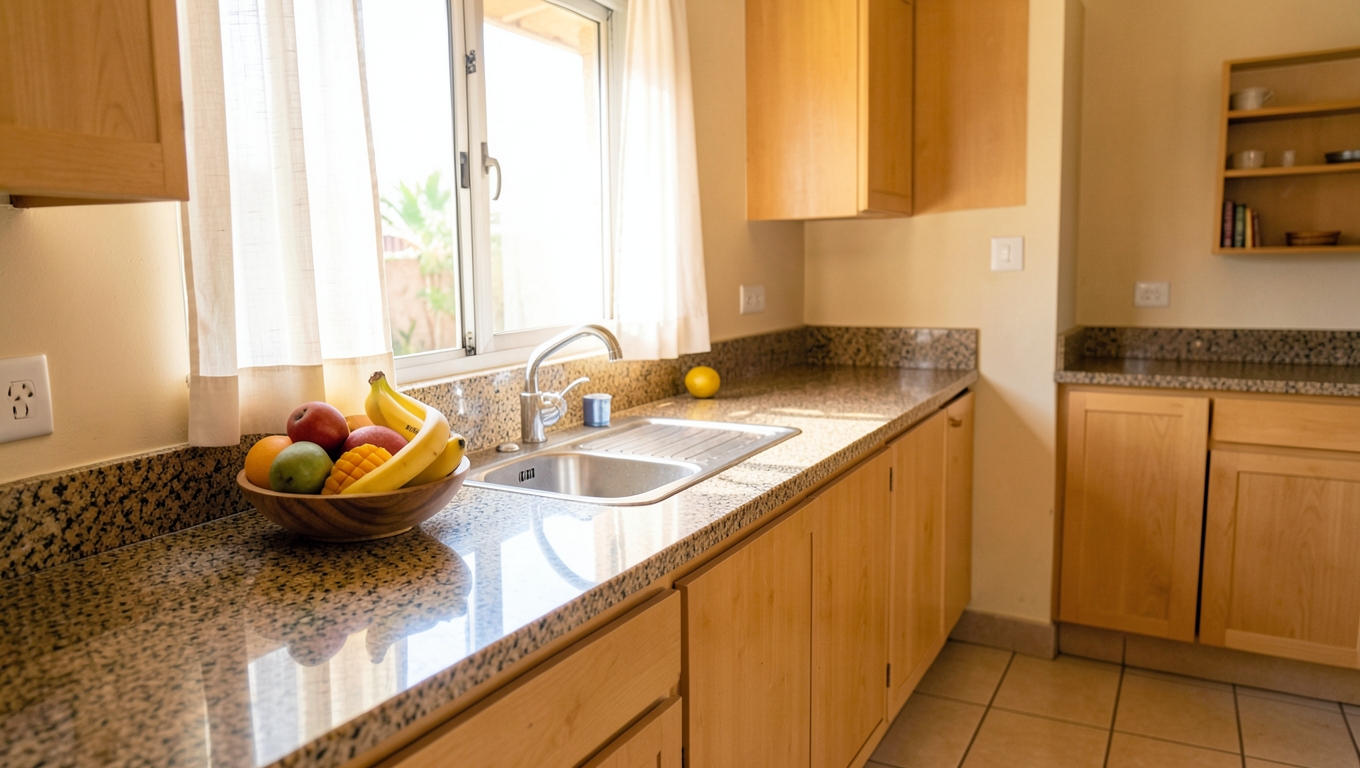
"A spotless kitchen is the heart of a happy home."
Why Does the Kitchen Need Its Own Cleaning Method?
The kitchen is the hardest-working room in any home, and it carries the highest stakes. The World Health Organization estimates that 866 million people, almost one in nine worldwide, fall ill after eating contaminated food every year, and 1.52 million die, with children under five bearing 29 percent of the health burden. Most of those illnesses begin at home, so cleaning this room is two jobs in one: making it shine, and keeping it safe to eat from.
The Frankfurt Kitchen, a compact 1.9 by 3.4 metre room built into some 10,000 German apartments from 1926, was laid out from time-and-motion studies of real cooks. Cleaning rewards the same discipline: top to bottom, because dust and grease fall; dry before wet, because dust plus water makes mud; and the floor last, because everything above it lands there. Our room-by-room deep clean guide applies this logic to the whole house.
Grease travels onto cupboard fronts, extractor hoods and window ledges.
Crumbs fall, so start high and let gravity help.
Water waits: dishes and the sink come before the floor.
Food leads: the surfaces your meals touch get cleaned first.
A kitchen is never cleaned in one heroic sweep. It is cleaned in order, one small win after another.
What Is the Best Order to Clean a Kitchen?
Professionals clean a kitchen in a fixed order every time: waiting jobs first, mess-makers in the middle, and the jobs that gather everything else at the end. Here is the order at a glance.
Step | The job | Why it sits here |
1 | Clear the benches | Bin out, dishes stacked, clutter boxed |
2 | Wash the dishes | Glasses and cutlery first, greasy pots last |
3 | Degrease the surfaces | Counters and backsplash, back to front, while the dwell time works |
4 | Stove and oven | Grates soak, a paste dwells: the longest wait, started early |
5 | Microwave | Steam does the scrubbing for you |
6 | Sink and drain | The toolshed is cleaned after the tools are done |
7 | Fridge, inside and out | Do it when it is emptiest |
8 | Cupboard fronts | A light degrease, now that nothing else will splash them |
9 | The floor | Sweep, then mop towards the door, because everything above has fallen |
Empty the drying rack before you fill the sink, and box the clutter as you clear the benches. A bench you can see is a bench you can clean.
Dishwashing is ancient hygiene: it dates back centuries to prevent foodborne illness, and health codes in many countries put hand-wash water between 35 and 49°C, as the entry on dishwashing records. Keep yours as hot as your gloves allow, and air-dry where you can.
The floor is the finale: sweep, then mop in sections from the far corner towards the door. When the job moves to the living room, our sofa, carpet and mattress guide takes over.
Cleared benches, washed dishes, wiped counters: those first three moves are half the secret.
How Do You Degrease Counters and Cookers Without a Fight?
Grease is the signature mess of a working kitchen, and time is its weakness. A degreaser left to dwell does most of the work, while scrubbing a dry surface only smears the film. Mix warm water with a few drops of liquid dish soap and a splash of white vinegar, or use a kitchen degreaser; our natural cleaning guide covers the pantry toolkit.
Spray and walk away: give the solution two to three minutes before a cloth touches it.
Start at the backsplash, then wipe counters back to front, in sections.
Rinse the cloth often, and swap it when it keeps coming back grey.
For the stove, soak the grates in hot soapy water while you work elsewhere, spray the surface, wait five minutes, then wipe; a paste of baking soda and water left for fifteen minutes lifts baked-on rings, and steel wool stays away from glass tops. The oven is the slow job: a baking soda paste over the walls and floor, avoiding the heating elements, left overnight, then wiped out, racks soaking separately.
Then comes the local test: the nshima pot. Never attack dried starch with steel; fill it with warm water and a spoon of baking soda, leave it soaking while you clean the rest of the room, and it lifts with a soft cloth by the time the kettle boils. Kapenta oil drifts, lands and sets, so wipe splashes while they are fresh. If it marks a shirt anyway, our stain removal guide has the playbook.
The microwave takes three minutes of cleverness: a bowl of water with lemon slices or vinegar, boiled inside, softens every splatter. The sink comes last of the wet jobs: scrub the basin with baking soda, then flush the drain with hot water, baking soda and vinegar. Cooking oil and kapenta oil go in the bin, never down the drain; congealed fat is the quiet cause of slow drains. Descale the tap with a vinegar-soaked cloth, then buff.
Give a degreaser its quiet minutes and it will do your scrubbing for you.
How Do You Clean a Fridge Inside and Out?
Clean the fridge when it is emptiest, usually just before the big shop.
Empty it completely, binning anything past its date; park the rest in a cooler if the job will run long.
Wash the shelves and drawers in warm water with a spoon of baking soda, and let cold glass warm up before it meets hot water, or it can crack.
Wipe the walls, ceiling and floor with baking soda in warm water: it kills most bacteria in spills, lifts marks and chases off stale odours.
Brush the door seals with an old toothbrush and a vinegar mix; those folds collect crumbs and grow mould quietly.
Clean the outside too: the handles, the sides, and the top, a dust shelf in any Solwezi dry season.
Vacuum the coils at the back or behind the front grille; the University of Georgia Extension home maintenance checklist puts fridge coils on a twice-yearly rhythm, because dust makes the motor work harder.
A refrigerator is a simple machine with one job: holding food a few degrees above freezing, where bacteria slow down. The optimal range for perishables is 3 to 5°C (37 to 41°F), and the domestic fridge only arrived in 1913, as the history of the refrigerator records. Keep yours at 4°C or below, check it with an inexpensive thermometer, which the FDA calls one of your most effective tools against foodborne illness, and never pack it so full that cold air cannot circulate. Wipe spills the moment they happen; that habit slows the growth of Listeria.
A fridge you can see into is a fridge you can trust.
How Do You Keep a Kitchen Safe to Eat From?
Cleaning and food safety are the same job wearing two hats. The most basic fix is free: wash hands with soap for twenty seconds before, during and after handling food. The University of Nevada Reno Extension reports that foodborne illnesses could be reduced by nearly half if people simply washed their hands more often. Then mind the cold chain.
Spot | Safe target | The reason |
Fridge | 4°C (40°F) or colder | The FDA line above which Listeria multiplies faster |
Sweet spot for perishables | 3 to 5°C (37 to 41°F) | The best range for fresh food |
Freezer | -18°C (0°F) or colder | Keeps the cold chain honest |
Leftovers and takeaway | In the fridge within 2 hours, or 1 hour above 32°C | The FDA two-hour rule |
Reheating | Bring sauces, soups and gravy to a boil | Heat kills what the fridge paused |
Power cut | Safe up to 4 hours with the door kept shut | Past that, bin what ran warm |
Around those temperatures sit the habits. Raw meat, poultry and seafood stay low in a tray, apart from anything eaten raw. Two cutting boards do the work of one, both washed in hot water afterwards, as Purdue University Extension sets out. The plate that held raw chicken never serves the cooked chicken, market produce gets rinsed under running water, and leftovers cool in shallow containers before their two-hour trip back, per the FDA.
The humble cloth is where food safety is won or lost. A study of used kitchen sponges in Scientific Reports identified 362 different kinds of bacteria living inside them, describing sponges as hotspots that spread germs. Replace sponges often, sanitise them with a minute in the microwave or a bleach soak, wash cloths in the hot cycle, and dry everything fully: a cloth left damp on a humid Kalumbila afternoon sours by evening. If the pile itself is the problem, our guide to how laundry works in Zambia is a friendly read.
Cold keeps food safe, heat keeps food safe, and the middle ground is where trouble lives.
What Does a Daily, Weekly and Monthly Kitchen Rhythm Look Like?
A kitchen never gets dirty in one day, so it should never need cleaning in one day either. Checklists such as the Real Simple cleaning schedule split the work by rhythm, and no other room rewards the habit more.
Rhythm | What gets done | Why it works |
Daily | Wipe benches and the sink after the evening meal, dishes out of the sink before bed, food waste to the bin | Nothing gets the chance to set or smell |
Weekly | Mop the floor, wipe appliance fronts, clean the backsplash and microwave, scrub the sink | Grease comes off before it bakes on |
Monthly | Fridge shelves, cupboard fronts, an extractor filter soak, a look under the sink for damp | Catches what daily life skips |
Twice a year | Fridge coils, extractor and exhaust screens, sweeping behind appliances | The maintenance layer that keeps appliances alive |
Notice what the daily row leaves out: scrubbing, soaking and heavy lifting. Those belong to the slower rhythms. Put the next deep date in your phone now, and the year runs itself.
Five minutes a day beats five hours on a Saturday, every single time.
How Do You Beat Kitchen Smells, Mould and Rainy-Season Damp?
Zambia writes its own calendar into a kitchen: the rains arrive in November and leave the air heavy for months, then the dry season dusts every ledge.
Smells start in four places: the bin, the drain, the cloth and the fridge gasket. Deal with those four and the mystery odours vanish.
Give the drain a weekly drink of hot water, baking soda and vinegar. Kapenta oil, cooking oil and starchy nshima water go in the bin, never down the sink.
Air the cupboards in the rainy season, wipe the shelves with a vinegar and water mix, and prop the doors ajar so damp cannot settle. Check the outside wall first, where mould moves in.
Store mealie meal and dry goods in airtight containers off the floor, oldest bag first; a kitchen that stores food dry cleans faster.
Wipe the dry-season dust from the window ledge above the sink and the top of the fridge. The same red powder hunts your car, which is why our car interior guide exists.
Frying smells deserve their own line: kapenta and rich stews perfume a whole house. Ventilation is the answer, an extractor or an open window while you fry, and a wipe of surfaces before the film sets. The US Environmental Protection Agency notes that we spend about 90 percent of our time indoors. For the wet-season routine, our guide to getting Zambia rainy-season ready takes over.
Kitchen Cleaning in Zambia: Quick Answers
The kitchen questions households bring us most.
How often should you deep clean a kitchen?
Give the heavy jobs a quarterly date: fridge, cupboard fronts, extractor filter and oven every three months, and coils and screens twice a year. Between those dates, the daily wipe and weekly mop do the rest.
How do you clean a greasy stovetop?
Soak the grates and knobs in hot soapy water. Spray the surface with a degreaser, wait five minutes, then wipe. For baked-on rings, spread a baking soda paste, leave it fifteen minutes, and wipe; no steel wool on glass tops.
How do you get rid of kitchen smells?
Hunt the source first: the bin, the drain, a sour dishcloth and the fridge gasket cover most cases. Flush the drain with hot water, baking soda and vinegar, wash cloths hot, and leave an open bowl of baking soda in the fridge.
How do you clean a fridge safely?
Wash the shelves and drawers with warm water and baking soda, wipe the walls and seals, and vacuum the coils while you are back there. Keep the fridge at 4°C or colder, and wipe spills immediately.
What is the best order to clean a kitchen?
Clear the benches, wash the dishes, degrease the surfaces, soak the stove parts and treat the oven, steam the microwave, clean the sink and drain, do the fridge inside and out, wipe the cupboard fronts, and mop the floor last.
How do you stop mould in kitchen cupboards?
Keep cupboards aired and dry: prop the doors open on dry days, wipe with vinegar and water, fix leaks under the sink quickly, and store dry goods airtight and off outside walls.
The Kitchen Reset You Would Rather Not Do Yourself
Some kitchens deserve a day you do not have: the post-renovation grease, the oven left untouched since the last tenants, the deep clean squeezed between two moving days. That is the work Aenon Horizons does best across Solwezi and Kalumbila, with Lusaka coming soon.
Maid and cleaning services. One-time deep cleans and scheduled maintenance for corporate and residential clients, including office sanitation; our guide to choosing cleaning services in Solwezi explains what to expect.
Laundry and dry cleaning. Tablecloths, tea towels, uniforms and the week's wash, finished at our bespoke scent bar, with an express turnaround of 1 to 4 hours.
Car wash and auto care. After the kitchen, the car carries the same red dust and school-run crumbs.
Aenon Horizons is a registered Zambian company, and every team is vetted, uniformed and trained, with each job graded against our five-star quality-control system. Message us on WhatsApp at +260 978 789 767 or email info@aenonhorizons.com, book right here, see the full range on our services page, meet the team on our about page, or browse more guides on our blog. Our office is on Kansanshi Road, opposite Yadah Christian School, Solwezi 10101; the journey starts at aenonhorizons.com.
The kitchen you keep meaning to deal with? That is our favourite room to reset.


Comments