
How to Declutter Your Home: The Room-by-Room Guide

Learning how to declutter your home, room by room, is a lesson in deciding: what earns its place, what moves on, and what needs a better home than a shelf nobody looks at. In Solwezi and Kalumbila the job has a local flavour: mine-town rentals come with modest built-in storage, families move with the job roster, and dust season followed by rains tests every cupboard. This guide walks the whole job: the four-box method, a room-by-room walkthrough from the wardrobe to the car boot, storage for a dusty climate, gentle tricks like the one-year rule, and the five-minute reset that keeps it clear.
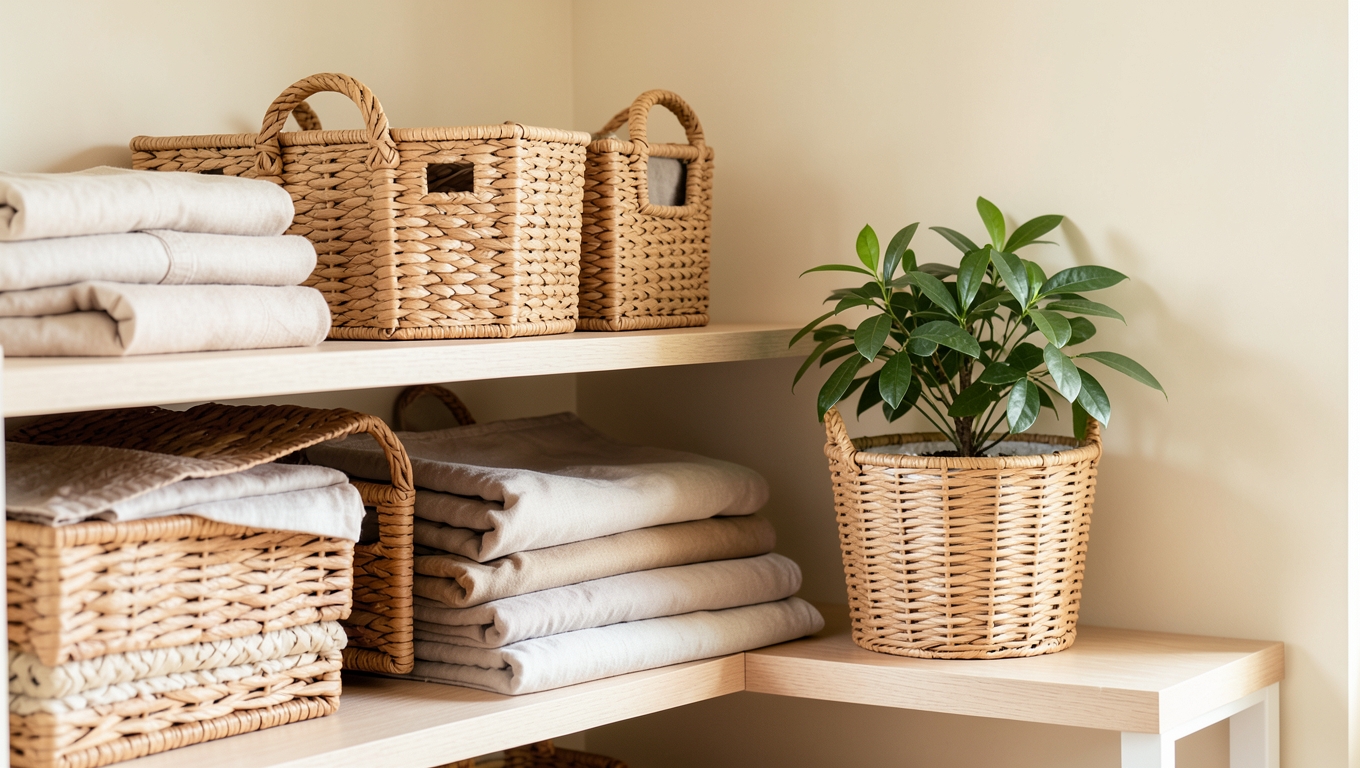
"A place for everything, and everything in its place."
Why Does Clutter Pile Up, and Why Does It Stress Us Out?
Clutter rarely arrives in one dramatic load. It seeps in item by item: a shift roster that swallows every free weekend, a wardrobe that gains a chitenge at every ceremony and loses none, a spare shelf that becomes permanent storage. The first weeks after a move are especially fertile, as we note in our guide to moving to Solwezi: every box opened, none emptied.
Research explains why a crowded home is more tiring than it looks. At UCLA, researchers counted the words 60 dual-income spouses used on video home tours; wives whose tours leaned on clutter and unfinished projects showed flatter daily cortisol slopes, a pattern linked to adverse health outcomes, and rising low mood through the day, as the study records on PubMed. A home that feels unfinished keeps tugging at you all day.
Princeton neuroscientists found the mechanism: objects in view compete for the brain's processing power and suppress one another's signals, so the busier the scene, the more attention burns on filtering it, as their visual cortex study on PubMed sets out.
Clearing what you do not need, the practice called decluttering, is as old as keeping house, as the overview of decluttering shows. A chitenge kept for a wedding, schoolbooks for the next child: each needs a decision, and a method makes decisions lighter.
Clutter arrives one item at a time; it leaves one decision at a time.
What Is the Four-Box Method?
The four-box method is the workhorse of the whole job. Set out four boxes or crates and label them: keep, relocate, donate or sell, and toss. Mississippi State University's extension educators teach exactly this, four piles and a home for everything that stays, in their guide to conquering household clutter.
Good Housekeeping's organising professionals rate the four boxes as ideal for a small space, and add a boundary rule: something old out before anything new in. The relocate box must be emptied within a week, or it becomes storage; the donate-or-sell box must leave within a fortnight, or it becomes furniture. To-go piles that linger undo the good work, as Real Simple's room-by-room guide explains. Their other rule is our favourite: do not leave the room, and finish one space before the next one calls.
Box | What goes in | The test | Where it goes |
Keep | Things you use and love | "Would I buy it again today?" | Its place, with room to breathe |
Relocate | Things that belong elsewhere | "Does this live here?" | Carried home within a week |
Donate or sell | Good-condition things you have outgrown | "Could someone else use this?" | A charity, a school or a market trader |
Toss | Broken, expired or unsafe things | "Will anyone use this again?" | The bin, the tip or the recycling |
Where the boxes go next matters here: Solwezi and Kalumbila run on a resale culture. Second-hand clothing in Zambia is known as salaula, a Bemba term meaning "to rummage through a pile", a trade that has dressed everyone from cabinet ministers to street dwellers for decades, as the BBC's portrait of it records. Yesterday's clutter becomes a trader's stock through market stalls and buy-and-sell groups. For donations, churches, community schools and clinics are the usual first stops: call first, and bring only clean, working things.
Every zone has a first pass and a small upkeep habit:
Room or zone | First big pass | Keeping it clear |
Wardrobe and chitenge | 2 to 3 hours | 20 minutes a season |
Kitchen | 2 to 4 hours | 10 minutes a week |
Living room | 1 to 2 hours | 5 minutes a day |
Bedrooms and kids' rooms | 1 to 2 hours each | 10 minutes a week |
Paperwork and photos | 2 to 3 hours | 15 minutes a month |
Boot of the car | 30 to 60 minutes | 5 minutes a week |
A box is a decision with handles: label it, fill it, let it go.
How Do You Declutter a Wardrobe and a Chitenge Collection?
Empty the wardrobe onto the bed so the whole picture appears at once, then sort with the four boxes. The keepers are the pieces you reach for in a normal fortnight; four habits make decisions quicker and kinder:
Apply the one-year rule. Anything unworn for twelve months, ceremony wear aside, starts in the donate-or-sell box.
Try the buy-again test: "If I saw this in a shop today, would I buy it at full price?"
Keep the best of each collection: one suitcase of baby clothes, one basket of chitenge, one drawer of sports kit.
Clean before you store. A wash and a full dry before the zip bag keep musty smells away.
For the clothes that resist, extension advice is gentler than willpower: treat belongings as collections, decide how much space each is allowed, keep the favourite pieces that fit, and let the rest move on, as the Mississippi State tips for decluttering suggest. Sentimental pieces keep their meaning without their volume.
Chitenge deserves its own shelf and its own rules: a wardrobe within the wardrobe, carrying weddings, churches and visits. Keep the prints you wear and the heirloom lengths of cloth, and treat care as part of the decision: wash gently, dry in the shade and store away from damp, as our chitenge fabric care guide explains. Care labels make more sense with our laundry symbols guide at hand.
Unworn for a year? It has given you its answer: thank it, pass it on.
How Do You Declutter the Kitchen and the Living Room?
The kitchen comes first, because it feeds the rest of the house. Start with one small cabinet; Good Housekeeping's checklist suggests a 10 to 15 minute timer with one drawer as the finish line, because small wins build the appetite for bigger ones, as their ultimate decluttering checklist sets out.
One cabinet at a time. Empty it, wipe the shelf, and give back only the weekly workers.
Declare war on duplicates. Two graters, four flasks, a drawer of orphaned lids: keep the best, retire the rest.
Check dates as you go. Spices, maize meal and opened packets carry a clock.
Retire the tired heroes. The pot with no handle, the kettle that trips the power.
Clinicians make the same case for a calm bench. Clutter piles on distractions that are "worse for people who are already struggling to keep themselves focused", says clinical psychologist Dawn Potter of the Cleveland Clinic, who ties decluttering to fewer trip hazards and a lift in mood. Let the counters cook.
Then the living room, which gathers the wires, remotes and masterpieces of a whole household:
Give daily items a home. Keys, remotes and chargers each get a basket.
Tuck the visible into the useful. Covered baskets and a lidded ottoman turn clutter into furniture.
Sort books, games and puzzles. Missing pieces and never-played games make easy decisions.
Handle the art with honour: photograph the masterpieces, frame the best, let the pile go.
The bench and the coffee table are landing strips. Keep them clear and the house feels lighter.
How Do You Declutter Bedrooms, Kids' Rooms and School Things?
Start the bedroom at the nightstand (chargers, old letters, dead batteries), then the dresser drawers, folding keepers upright, then whatever lives under the bed. This room carries the most weight: clutter generates stress, a known barrier to quality sleep, and a disorganised room reinforces "the sensation of having too many loose ends", as the Sleep Foundation's bedroom guide notes.
Kids' rooms need a lighter touch and shorter sessions. Sort with your children, not around them; outgrown toys leave more willingly when the child chooses which ones a younger cousin will love. School things deserve their own systems, and a school year's start is the natural moment to build them, as we set out in our back-to-school guide:
One homework station, stocked and ready, so study time never starts with a search.
One memory box per child, for the certificates and drawings worth keeping.
One landing shelf for bags, shoes and lunchboxes, so they stop migrating to the floor.
School papers arrive faster than any family can file them: keep the firsts and the bests, photograph the rest, and let each child display a favourite for the month.
A bedroom should hand you rest, not a to-do list. Clear the loose ends and sleep comes easier.
How Do You Deal with Paperwork, Photos and the Boot of the Car?
Paper is the quietest clutter in the house: it arrives daily, folds small and hides in drawers until a bank letter goes missing. Beat it daily: open the post the day it arrives, then act on it or file it. A shallow tray catches letters that need action; a lidded crate takes the archive. When motivation runs low, Real Simple's home organising section collects low-effort tasks you can do sitting down, exactly the energy a paper avalanche deserves.
Photos are the tender work: loose prints, wedding discs, phone albums. Sort in short sittings, keep the frames that tell the story, digitise as you go, and hand the doubles to the relatives in them. One album that gets looked at beats four shoeboxes that only get moved.
The boot of the car is the last hidden room in the house, hoarding shopping bags, sports kit, spare shoes and everything "just in case". Empty it onto a mat, run the four boxes over the pile, and give the car back only what it needs: a dust cloth, an umbrella in season and one crate for the bags. With the boot cleared, our guide to cleaning your car's interior covers the rest.
The boot is a room with wheels: empty it once, and every journey starts lighter.
How Do You Store What You Keep, and Keep It Clear?
Storage is the reward for sorting, not a substitute for it. Buy containers after the declutter, to stretch the space you have. In north-western Zambia, storage must survive two seasons: dry months that dust the highest shelf, and rains that run from November into April and hang dampness in the air, as Zambia Tourism's climate guide describes. Choose storage that seals against dust and breathes where the damp lives:
What you keep | Store it like this | Keep it away from |
Clothes and linen | Folded upright in breathable bags, space between garments | Damp exterior walls and over-packed shelves |
Paperwork, photos, books | Lidded plastic crates with a silica sachet | Cardboard boxes and bare floors |
Bedding and quilts | Zipped bags, on the highest safe shelf | Floor corners and spots near leaks |
Kitchen overflow and dry goods | Glass jars with sealed lids, decanted and labelled | Above the stove and under-sink corners |
The damp season has its own rules, and sleep researchers spell them out: keep humidity low, "create space between clothes and other items in your closet", and do not leave stacks of clothing or papers undisturbed, warns the Sleep Foundation's guidance on mould in the bedroom. Air the house on dry mornings and keep boxes off the floor.
Then comes the part that decides whether the work lasts. Five minutes, once a day, is all it takes:
Walk the main rooms with a basket and return everything that has strayed.
Clear the kitchen bench and let the sink finish the day empty.
Open the post, empty the school bags, and set tomorrow's things by the door.
Put today's clothes and shoes away before bed, including the ones on the chair.
There is a deeper reason to keep going: as The Minimalists argue, clearing the visible stuff handles the what; only the why stops shelves from quietly refilling. If the job is bigger than the family can face, the Association of Professional Declutterers and Organisers points to members who support the mental side of clutter too, under a code of ethics.
Decluttering Your Home: Quick Answers
The questions households in Solwezi and Kalumbila bring us most.
Where do you start decluttering?
With one small, finished space: a drawer, a shelf, the bathroom. Fifteen to 30 focused minutes and a quick win build momentum for the harder rooms.
What do you do with things you rarely use?
Apply the one-year rule, then the buy-again test: unused for a year and you would not buy it again means the donate-or-sell box. Ceremony wear gets an exception.
How do you declutter when you have no storage?
Declutter before you store: sort with the four boxes, then buy containers for what survives.
How do you keep clutter from coming back?
Run the five-minute daily reset, keep a concealed donate basket, and practise one-in-one-out: something leaves each time something arrives.
What can you do with items you no longer need in Zambia?
Sell what is good through market traders and buy-and-sell groups, and donate the rest to churches, community schools and clinics. Call first, and pass things on clean.
How long does decluttering take?
A room takes one to three hours; a whole house is best split across a few weekends or a week of evenings, one zone per session.
The Clutter Is Cleared: Where We Come In
There is a moment, just after the last box leaves, when the house stands lighter: shelves you can see again, floors that have reappeared, a boot that opens without an apology. Shifting all that furniture also exposes the dust and grime beneath. That is where we do our best work. Aenon Horizons is a registered Zambian company serving homes and businesses across Solwezi and Kalumbila, with Lusaka coming soon:
Maid and cleaning services. One-time deep cleans and scheduled upkeep for corporate and residential clients; our guide to booking maid services in Kalumbila and Solwezi explains how it works, and our deep clean guide covers the routine.
Laundry and dry cleaning. A clear-out always produces a pile; we wash, press and finish it at our scent bar, with express turnaround of 1 to 4 hours.
Car wash and auto care. With the boot emptied, our auto care team finishes the job.
Office cleaning. The same care goes into workplace cleaning.
Every team is vetted, uniformed and trained, and every job is graded against our five-star quality-control rating system. Message us on WhatsApp at +260 978 789 767 or email info@aenonhorizons.com, book right here, see the full range on our services page, meet the team on our about page, or browse more guides on our blog. Our office is on Kansanshi Road, opposite Yadah Christian School, Solwezi 10101.
You sort the clutter. The dust, the curtains and the carload of laundry? Those are ours.


Comments