
Zambian Traditional Ceremonies: The Colourful Calendar You Need to See

Zambian traditional ceremonies are the biggest, brightest dates on the country's calendar, and the easiest way to meet the real Zambia: drumming you feel in your chest, warriors in leopard skin, a royal barge gliding over a flooded plain, and first-fruit feasts shared with the crowds. From February to September, the kingdoms take turns to host their neighbours, and any visitor with good manners is welcome. Here is the line-up, and how to attend respectfully, from choosing a chitenge to planning the trip from Solwezi or Kalumbila.
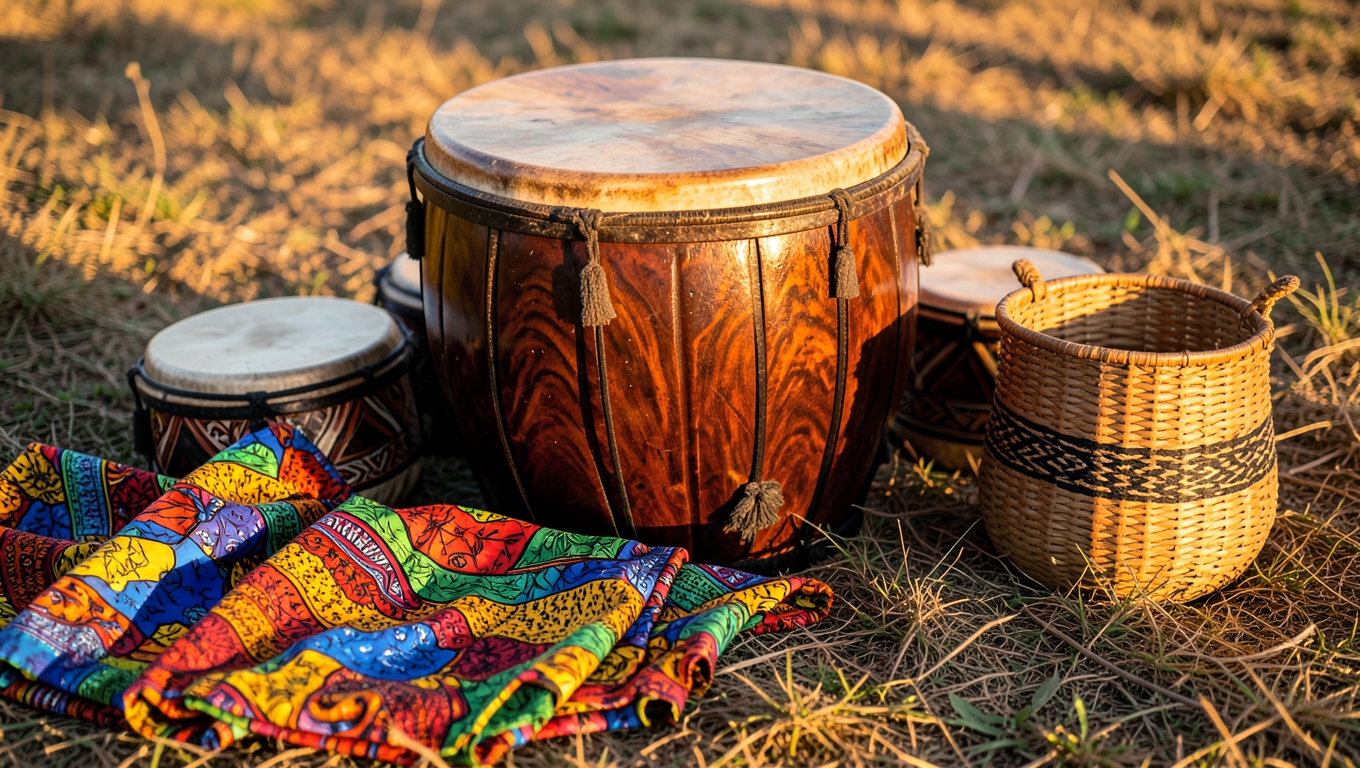
Drums, dance and colour: Zambia's traditional ceremonies light up the calendar.
Which Zambian Traditional Ceremonies Should Be on Your Calendar?
Six ceremonies carry most of the season, and between them they cover the whole country. Dates follow tradition rather than the office diary: Kuomboka shifts with the Zambezi floods, the rest belong to set weekends.
Ceremony | People | Where | When | Highlight |
Nc'wala | Ngoni | Mtenguleni, near Chipata, Eastern Province | Last Saturday of February (28 February in 2026) | First-fruits thanksgiving and the Ingoma war dance |
Kuomboka | Lozi | Mongu, Western Province | March or April, set by the flood (28 March in 2026) | The Litunga's royal barge Nalikwanda and its carved elephant |
Umutomboko | Lunda | Mwansabombwe, Luapula Province | Last Saturday of July (25 July in 2026) | The Mwata's victory dance and the crossing of the Luapula |
Likumbi Lya Mize | Luvale and related peoples | Zambezi town, North-Western Province | Last weekend of August (29 to 30 August in 2026) | The makishi masquerades closing the mukanda initiation |
Kulamba | Chewa | Mkaika, near Katete, Eastern Province | Last Saturday of August (29 August in 2026) | Homage from chiefs of Zambia, Malawi and Mozambique, and Gule Wamkulu |
Ukusefya pa Ng'wena | Bemba | Ng'wena Village, Mungwi, near Kasama, Northern Province | Typically in August | A re-enactment of the Bemba journey from Kola |
Some of these gatherings were nearly lost. Colonial administrators banned several as heathen practice, and they were only openly revived in the early 1980s. Today Zambia's tribes celebrate through the year, as travel writer Verona Mwansa notes in her guide to Zambian ceremonies, and the Chalo Chatu encyclopedia keeps a handy ceremonies table by province. Plan around national weekends too, such as Independence Day.
The ceremony season runs from February to September, and it will rearrange your travel plans in the best possible way.
What Happens at Kuomboka and Nc'wala?
Kuomboka is the ceremony everyone has seen in photographs. The Lozi king, the Litunga, leaves his palace at Lealui for higher ground at Limulunga as the Zambezi rises. The star of the day is the royal barge, the Nalikwanda, black and white, topped by a carved elephant whose ears move at a rope's pull. Between 80 and 100 paddlers in scarlet berets drive her across the plain, and between 200,000 and 250,000 spectators gather to welcome the king ashore, according to Zambia Tourism, which set the 2026 ceremony for 28 March. A fire burns on board, its smoke telling the crowds the king is alive, as Time and Tide describes. Three royal war drums at least 170 years old set the rhythm, and the Litunga arrives in a British admiral's uniform gifted by King Edward VII in 1902, as the record of the ceremony sets out. Our guide to getting rainy-season ready sets the scene, and our notes on Zambian food will have you planning the menu.
Nc'wala opens the season in late February. The Ngoni gather at Mtenguleni near Chipata on the last Saturday of the month, 28 February in 2026, to give thanks for the first fruits and pay homage to God, the ancestors and Chief Mpezeni, as Kingsfari's guide explains. The Ingoma dance is the heart of it: men in full regalia stamp in unison, clash spears and knobkerries, and answer the praise singers with cries of "Bayete". President Hakainde Hichilema officiated at this year's ceremony, as Open Zambia reported. The Ngoni arrived from present-day South Africa on one of the country's great migrations.
At Nc'wala the drums answer the warriors, and by mid-morning the whole arena is on its feet.
What Makes Umutomboko and Likumbi Lya Mize Special?
Umutomboko belongs to the Lunda and their paramount chief, Mwata Kazembe, at Mwansabombwe in Luapula Province, on the last Saturday of July, which was 25 July in 2026. The name means victory dance, and the day remembers the Lunda migration from the Luba kingdom and their crossing of the Luapula River, as Kingsfari sets out. The Mwata re-enacts the crossing by canoe, sprinkles flour to honour the ancestors, and performs the mutomboko dance in leopard-skin regalia. It is regarded as Zambia's second largest ceremony and can draw up to 20,000 visitors, according to the Kazembe history. Greet with "Kalombo Mwane!" and three claps, and leave party regalia at home, as the royal announcement made clear.
Likumbi Lya Mize is the one on our doorstep, and for anyone in Solwezi or Kalumbila it is the easiest headline ceremony to reach. The Luvale host it at Mize, their royal seat near Zambezi town, over the last weekend of August, which falls on 29 and 30 August in 2026, per the event calendar. It marks the end of mukanda, the initiation that guides boys of eight to twelve into manhood, and its highlight is the makishi: masked dancers representing ancestral spirits, each with a name and a role, as UNESCO explains. The masquerade joined UNESCO's Intangible Cultural Heritage list in 2008. Travellers describe the closing days as tradition and celebration in one breath, with rituals on the white beaches, as Kumakonda recalls.
Treat the makishi as ancestors rather than costumes, and Zambezi will welcome you like a neighbour.
How Do Kulamba and Ukusefya pa Ng'wena Close the Season?
Kulamba is the great cross-border gathering of the Chewa at Mkaika, near Katete, on the last Saturday of August, which fell on 29 August in 2026. Chiefs from Zambia, Malawi and Mozambique travel to pay homage to their king, Kalonga Gawa Undi, as Maravi Express reports. The numbers are remarkable: at least 137 chiefdoms from Malawi, 33 from Mozambique and 42 from Zambia send their leaders, and the 2026 ceremony brought together more than 290 Chewa chiefs, according to the Industrial Development Corporation. The signature performance is Gule Wamkulu, the masked Nyau dance of the Chewa, recognised by UNESCO as intangible cultural heritage. Banned in 1934 and revived after independence, it now doubles as a stage where chiefs speak on education and children, as the coverage of this year's gathering shows.
Ukusefya pa Ng'wena takes the season up to the Bemba heartland at Ng'wena Village in Mungwi, near Kasama, typically in August. It re-enacts the Bemba journey from Kola to the banks of the Milando, where a dead crocodile told them they had found their home, as the Music In Africa directory records. The Chitimukulu is carried into the arena to greet his people, and the day runs on dancing, singing and Imbeni performances, with a history reaching back through the Congo Basin. Music runs through every ceremony, from royal drums to the guitar bands that followed, as our Zamrock and Zambian music guide shows.
The last weekend of August belongs to the Chewa in the east and the Luvale in the west. Plan the fuel budget accordingly.
How Should You Behave at a Ceremony, and What Should You Wear?
Ceremonies are living culture, so arrive as a guest with good manners. Nobody expects you to know every custom, but everyone notices respect.
Greet before you photograph. Ask the person or a marshal first, especially near the makishi and the royal courts.
Stay out of the arena. The space in front of the chiefs and dancers belongs to the ceremony, so watch from the edges.
Leave politics at the gate. Party regalia and campaign messaging are banned at every ceremony.
Respect the quiet places. Some rituals are private, so if a section is closed, go around.
Support the stalls. Food vendors and craft sellers make the weekend work for the host community.
Zambians are famously welcoming, and that friendliness is an invitation rather than a free pass. Watch how families carry themselves at their own celebrations, such as the traditions around Zambian weddings, and copy that.
Then there is the wardrobe, and this is where the chitenge comes in. The colourful printed wrap sold in every market is the unofficial uniform of Zambian celebration. At Lozi events you will see women in the musisi and men in the siziba, the traditional shirt and knee-length skirt with a beret, as the record of Lozi dress sets out. As a visitor you do not need full regalia, but you do need to look like you made an effort.
Women: a chitenge wrap over a dress or trousers, a modest top, and a headwrap if you fancy it.
Men: a neat shirt, trousers or chinos and closed shoes. A chitenge draped as a scarf is a friendly nod.
Feet: flat, comfortable shoes. You will stand, walk, and very probably dance.
Sun and dust: a hat, sunscreen and a light long-sleeved layer for the dry-season heat.
Skip: party clothing and shoes you love, because ceremony grounds are hard on light colours, as our guide to removing stains from clothes explains.
A chitenge is a ticket to any celebration in Zambia. Buy two, one to wear and one to lend.
How Do You Plan a Trip from Solwezi or Kalumbila?
North-Western Province sits between the ceremony grounds, which is a blessing and a driving challenge. The table below gives honest distances based on current route estimates.
Ceremony | From Solwezi | From Kalumbila | Driving notes |
Likumbi Lya Mize, Zambezi town | About 500 km, 7 to 8 hours | About 570 km, 8 to 9 hours | The closest ceremony to home, on tarmac most of the way |
Umutomboko, Mwansabombwe | About 450 km, 8 hours | About 590 km, 10 hours | A full day on the road via the Copperbelt |
Kuomboka, Mongu | About 590 km, 10 to 11 hours | About 660 km, 12 hours | Plan a night en route or leave before dawn |
Ukusefya pa Ng'wena, Mungwi | About 750 km, 11 hours | About 900 km, 13 hours | Break the trip in Kasama |
Kulamba, Mkaika | About 1,070 km, 13 to 14 hours | About 1,200 km, 15 hours | Two days each way, or fly to Lusaka first |
Nc'wala, Mtenguleni | About 1,150 km, 14 to 15 hours | About 1,290 km, 16 hours | The far end of the country, worth a safari stopover |
Leave in daylight, carry cash for the stalls and book lodging early. Mongu fills to the brim around Kuomboka, and rooms get scarce as the crowds arrive, as a report on the festival's impact notes. Check the calendar twice, because ceremony weekends sometimes collide with big football nights, a topic of its own in our match day guide. If you are new to the province, start with our Solwezi guide and the tourism board's town profile.
Chitenge and a spare: celebration clothes for the big day, plus something warm for the evening.
Cash in small notes: market stalls and food vendors rarely take cards.
Power bank and spare memory card: you will take more photographs than you think.
Patience and a sun hat: the ceremony starts when it starts, and that is part of the charm.
Book the lodge first, then the leave form. Kuomboka waits for the flood, not for your calendar.
How Do You Host Guests or Travel for Ceremony Season?
Ceremony season turns a quiet house into a busy one, with relatives passing through on the way to Nc'wala and friends asking to stay after Likumbi.
Sort the spare room early. Fresh linen, a fan, a spare plug point and water by the bed.
Plan one big pot. Guests arrive tired and dusty, and one pot of rice with a stew covers dinner and breakfast.
Build a ceremony box. Chitenge, flat shoes, sunscreen, cash and the power bank by the door.
Confirm the dates. Schedules shift, especially Kuomboka, so check with Zambia Tourism before anyone books leave.
Reset the house before you leave. Coming home to a clean kitchen and fresh beds softens the post-ceremony landing.
When it is your turn to travel, leave keys with a trusted neighbour and pack light, because market chitenge always finds its way into the boot.
Zambian Traditional Ceremonies: Quick Answers
The six questions we hear most, answered fast.
What are the biggest traditional ceremonies in Zambia?
The headline six are Nc'wala (Ngoni, February), Kuomboka (Lozi, March or April), Umutomboko (Lunda, July), Likumbi Lya Mize (Luvale, late August), Kulamba (Chewa, late August) and Ukusefya pa Ng'wena (Bemba, typically August). Smaller ceremonies fill the rest of the year.
When is Nc'wala?
Nc'wala is held on the last Saturday of February at Mtenguleni village near Chipata, which was 28 February in 2026. The events run across a long weekend, so arrive on the Friday.
When is Kuomboka and where is it held?
Kuomboka is held at Mongu in Western Province, usually in March or April, and the date follows the Zambezi flood. The 2026 ceremony was on 28 March; the Litunga's return journey, Kufuluhela, follows in August.
What is Likumbi Lya Mize?
Likumbi Lya Mize is the Luvale ceremony that closes the mukanda initiation, held at Mize near Zambezi town in North-Western Province over the last weekend of August. Its highlight is the makishi masquerade, honoured by UNESCO as intangible cultural heritage.
How should visitors behave at a ceremony?
Greet people before photographing them, stay out of the arena and closed ritual areas, dress neatly, and leave party colours at home. Follow the marshals and ask questions politely.
Which ceremony is closest to Solwezi?
Likumbi Lya Mize, at Zambezi town, is the closest headline ceremony to both Solwezi and Kalumbila, about 500 km and 570 km away respectively. Umutomboko in Luapula is the next easiest run.
Get Ceremony-Ready with Aenon Horizons
Ceremony season fills the house with guests and turns the laundry basket into a mountain. If you live in Solwezi or Kalumbila, Aenon Horizons takes those jobs off your list:
Laundry and dry cleaning. Chitenge, ceremony outfits and travel clothes come back fresh and folded, with a bespoke scent bar and an express turnaround of one to four hours.
Maid and cleaning services. Our residential and corporate teams get the house guest-ready before the relatives arrive and calm again after they leave.
Car wash and auto care. Ceremony roads are dusty and the rainy season is muddy, so let the auto care team handle the road grime.
Every team is vetted, uniformed and trained, and every job is graded against our five-star quality-control system. Message us on WhatsApp at +260 978 789 767 or email info@aenonhorizons.com to book. Our office is on Kansanshi Road, opposite Yadah Christian School, Solwezi 10101, and you can see everything we do on our services page, meet the team on our about page, or get in touch right here. Lusaka, we are coming soon. Until then, browse our blog for more local guides.
You enjoy the drums, the dance and the first fruits. We will handle the packing, the polish and the pile of laundry when you get home.


Comments