
Natural Cleaning: Vinegar, Baking Soda and Lemon That Actually Work

Natural cleaning with vinegar, baking soda and lemon is the thriftiest chemistry lesson a Zambian kitchen ever gets: three pantry staples tackle glass, taps, drains, fridges, carpets and kettles, often better than a shelf of mystery sprays. Some of the advice doing the rounds is folklore, and a few mixes are genuinely dangerous. This guide sorts the heroes from the myths: what each staple does and why, the recipes worth mixing, where the pantry falls short, the safety rules that matter, greener habits beyond the bottle, and what to buy in Solwezi and Kalumbila.
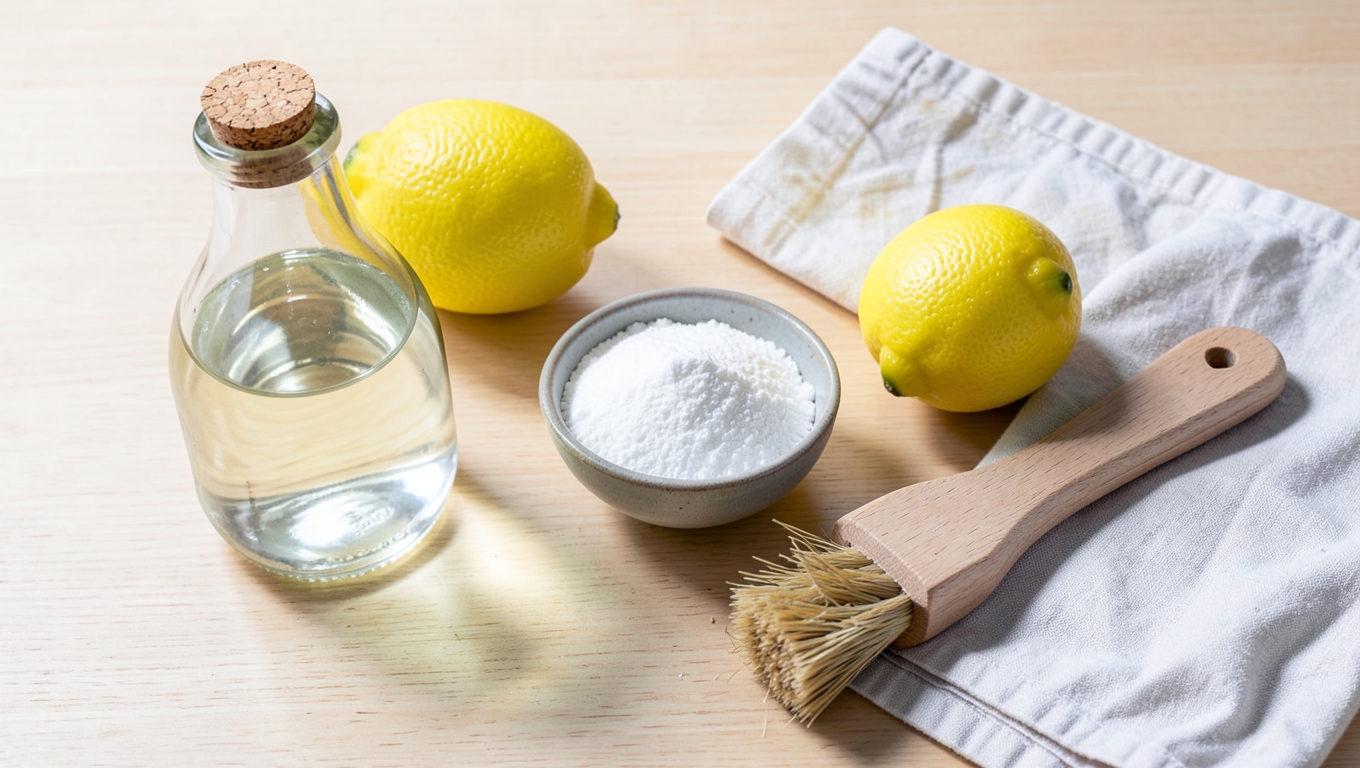
"Pantry staples that clean like champions."
Why Do Vinegar, Baking Soda and Lemon Actually Work?
Cleaning substances topped the list of poisoning calls about young children handled by American poison centres in 2024: 87,031 cases, nearly all of them accidental, according to Poison Control's national statistics. That single number explains why so many families are curious about gentler options for the shelves their children can reach. Three pantry staples carry a big share of everyday cleaning, each for a simple chemical reason.
White vinegar is an aqueous solution of acetic acid, typically 4 to 18 percent by volume depending on the bottle. The acid is the engine: it dissolves limescale on taps and kettles, hard-water film, and the grip of light grease and soap scum.
Baking soda, or sodium bicarbonate, is a mild alkali with a gentle grit: it scours without scratching and deodorises by neutralising smells, which is why an open box lives in so many fridges. Its germ-fighting powers, though, are weak. Lemon juice is about 5 to 6 percent citric acid, nearly twice the acid punch of grapefruit juice and five times that of orange, enough to break down soap scum and hard-water deposits.
Staple | Why it works | It shines on | Keep it away from |
White vinegar | Acetic acid, typically 4 to 18 percent | Limescale on taps, kettles and showerheads; glass; drains; light grease on benches | Natural stone such as marble and limestone, gold-plated fittings, and any mix with bleach |
Baking soda | Mild alkali, gentle abrasive, odour neutraliser | Sinks, tea-stained cups, fridge shelves, carpets, drains, baked-on pots after a soak | Your eyes, which it seriously irritates, and any delicate surface you have not spot-tested |
Lemon | About 5 to 6 percent citric acid | Hard-water spots, chopping boards, brass and copper, gentle whitening for whites | Natural stone, wood and electronics, plus colours you have not tested |
Three staples and a hot cloth will not empty your cleaning cupboard. They will shrink it, quietly and honestly.
Which Natural Cleaning Recipes Actually Work?
The best recipes use ratios you can remember and ingredients you already own. These seven come from university extension services and consumer cleaning tests:
Cleaner | Mix it | Use it for |
All-purpose spray | 1 part white vinegar to 1 part water in a spray bottle | Benches, sinks, tiles, cupboard fronts and most floors |
Grease-buster bucket | 1/4 cup baking soda, 1/2 cup white vinegar and 1 gallon (about 4 litres) of hot water | Greasy grime and kitchen odours; wipe or mop, then rinse |
No-streak glass cleaner | 1/4 cup white vinegar, 1 tablespoon cornstarch and 4 cups warm water | Windows and mirrors; buff dry with crumpled newspaper for a lint-free shine |
Drain freshener | 1 cup baking soda, then 1 cup hot vinegar; wait five minutes and flush with 2 quarts (about 2 litres) of hot water | Smelly or sluggish kitchen drains |
Fridge wipe | 2 tablespoons baking soda dissolved in 1 quart of warm water | Shelves and seals; leave an open box of soda inside to keep it sweet |
Carpet deodoriser | Sprinkle dry baking soda, leave a few hours, then vacuum | Rugs, carpets, mattresses and sofa cushions |
Kettle and tap descaler | Equal parts white vinegar and water: a gentle boil for the kettle, a soaked cloth tied around taps | Kettles, taps, showerheads and any limescale in sight |
The first four are Cornell Cooperative Extension classics, the glass recipe comes from Mississippi State University Extension, and the fridge wipe from the University of Arkansas clean-and-green guide. Carpet and limescale duties are Good Housekeeping favourites.
Before you mix, three house rules:
Make only what you will use in the next few weeks, label every bottle with its contents and date, and keep the caddy out of reach of children and pets.
Never pour a home mix into an empty shop bottle: the old label would stop telling the truth.
Keep the acidic spray off stone, wood and screens, and dry glass with a cloth instead of letting it air-dry, which leaves streaks.
Two pantry tricks deserve a mention. A lemon half dipped in baking soda scrubs a chopping board and lifts tea stains, a favourite of Good Housekeeping's lemon guide. Limescale, mostly calcium carbonate, surrenders to acid, which is why the same vinegar cloth clears taps and kettles alike; North-Western Province water runs hard enough to prove it within weeks. For carpets, sofas and mattresses that need more than a sprinkle, our guide to cleaning sofas, carpets and mattresses shows how far a machine can take you.
Good cleaning is chemistry with a shopping list: acid for minerals, alkali for grease and smells, and heat for everything else.
Where Do Natural Cleaners Fall Short?
An honest guide draws the line plainly. The pantry is brilliant at maintenance and ordinary mess, but it is not a replacement for every bottle on the shelf:
Job | What the pantry does | The honest move |
Disinfecting after flu, a tummy bug or in a sickroom | Vinegar cleans well but is not a registered disinfectant, and baking soda's microbe-fighting powers are weak | Use a registered disinfectant as labelled, and save the pantry for the tidying afterwards |
Baked-on oven grime and months of extractor fat | Mild acid and gentle grit give up before the job is done | Hot water, detergent and a long soak do the honest work, as our kitchen deep-clean guide sets out |
Marble, limestone, travertine and finished wood | Acid etches stone on contact and dulls wood finishes over repeat visits | Warm water and a soft cloth for daily care, then a cleaner made for that surface |
Set-in stains in fabric and upholstery | A spray will not fix what the wash could not | The playbook sits in our guide to removing stains from clothes, and some marks belong to a specialist |
Read that table as a map rather than a verdict: staples for the everyday majority of cleaning, and a small locked-away shelf of specialist products for the jobs that need them. Whatever you spray, natural is not a safety badge.
Know the jobs the pantry cannot do, and it becomes twice the cleaner. An honest bottle beats a miracle claim every time.
What Safety Rules Should You Never Break?
This list is short because these are the rules that matter most, and each comes from poison specialists, extension services or the chemistry itself:
Never mix vinegar, lemon or any other acid with bleach. Bleach with an acid forms chlorine gas, which burns the eyes, nose and throat and can injure the lungs; bleach with ammonia forms chloramine gas, as Poison Control explains.
Let bleach sit out every home recipe. Follow the bottle's own instructions and keep it away from every other product: bleach pairs with water and nothing else.
Store and label everything, high and out of reach. Cleaning substances lead the table of young children's poison exposures, nearly all accidental, so label, cap and store your mixes high.
Keep acids off stone, gold and wood. Marble, limestone and travertine etch on contact, and gold-plated fittings can discolour.
Test first, always. Dab a hidden corner, wait a few minutes, and check the colour and finish before committing; it is the same rule the New Mexico State University Extension guide applies to any product before it touches fabric.
Respect the strength. Vinegar above 10 percent acetic acid is corrosive to the skin; ordinary kitchen bottles and a little dilution are plenty. Keep baking soda out of eyes, too, because it causes serious irritation.
If someone swallows a cleaner or fumes make anyone cough, get proper medical advice immediately. One locked cupboard and one labelled bottle solve most of these risks before they start.
Acid into bleach is a poison cloud; acid onto stone leaves a scar. Label everything and keep the household well.
What Are Greener Habits Beyond the Bottle?
Half of green cleaning has nothing to do with recipes: air, heat and daylight do quiet work, and the tools matter as much as the mixtures. The US Environmental Protection Agency notes people spend roughly 90 percent of their time indoors, where some pollutants can run two to five times higher than outdoors, so moving air through a room counts as cleaning, not laziness.
Open windows and run fans while you clean, especially in kitchens and damp bathrooms; our Zambia rainy-season ready guide treats airflow as part of the rainy-season routine.
Let steam do the lifting. A kettle's steam softens stubborn spots, a bowl of water boiled in the microwave cleans it from the inside, and a steam mop turns hot water into elbow grease.
Use the daylight. Line-drying laundry and airing rooms out are free ways to freshen a busy home; check the care label first, which is where our laundry symbols guide earns its keep.
Reach for microfibre. Extension programmes note that microfibre cloths save time and lift dust with less water and product; colour-code them, so the bathroom cloth never visits the kitchen.
Sunshine, steam, airflow and a good microfibre cloth do quiet work that no bottle can copy.
What Should You Buy in Solwezi, and How Do You Start?
Everything on the list is ordinary shopping in Solwezi and Kalumbila, no specialist store required:
White vinegar: the clear, distilled kind from the grocery aisle, not malt, spiced or balsamic; plain and pale is what a spray bottle wants.
Baking soda (often sold as bicarbonate of soda): one plain box for cooking and one for the cleaning caddy.
Lemons: fresh from the market stall when they are in, bottled lemon juice when they are not; both do the work.
Two labelled spray bottles and a marker: name and date every mix you make.
A small stack of microfibre cloths and an old toothbrush for taps, grout and corners.
The first week is a test rather than a transformation: mix the all-purpose spray and the glass cleaner, park them where the old bottles lived, and note which recipes earn their keep. Once the kit settles in, give the habit a calendar; our guide to how to deep clean your house shows where the big resets fit into the year.
Eco-friendly lives in the habit of buying fewer bottles, mixing carefully and using what you already own.
Natural Cleaning in Zambia: Quick Answers
The questions Solwezi and Kalumbila homes bring us most.
Does vinegar really disinfect?
No. Vinegar is a strong everyday cleaner but not a registered disinfectant, and it should not be trusted to kill germs where health matters. For illness in the house, use a properly registered disinfectant and follow its label exactly.
Is baking soda safe on all surfaces?
On nearly all of them. It is a mild alkali and a gentle abrasive, used by extension guides from sinks and tiles to fridges and carpets. Test delicate finishes first, keep it out of eyes, and rinse well after scouring.
Can you mix vinegar and bleach?
Never. Bleach plus any acid forms chlorine gas, which irritates the eyes, nose and throat and can injure the lungs. If it happens by mistake, leave the room, breathe fresh air, and seek medical help if breathing is affected.
Does lemon juice whiten clothes?
It can: citrus juice works as a natural bleaching agent, and a small splash in the wash brightens whites and pale cottons. Keep it off coloured items until a hidden hem has been tested, and off natural stone entirely.
What is the best all-purpose natural spray?
For most surfaces, one part white vinegar to one part water. For greasier benches and floors, step up to the baking soda and vinegar bucket mix. Both are extension-service recipes, and both stay off stone.
Are natural cleaners cheaper than shop-bought ones?
Often they go further per job, because a handful of staples replaces several specialty bottles, and refilling your own bottles is the thriftiest habit of the lot. The caveat: a recipe that flops costs you time, so start with the keepers on this page.
The Eco-Friendly Mindset That Makes It Last
Greener cleaning is a direction rather than a destination: fewer bottles refilled rather than replaced, ingredients you can name. Where a home mix honestly cannot do the job, choose products with a safer-ingredients certification; the EPA's Safer Choice programme exists to help people find products that perform while treating health and the environment kindly.
Refill the same spray bottles and buy the staples in the largest sensible size.
Wash and reuse your cloths in hot water, and tape the safety rules inside the cupboard door for the next person who cleans.
Natural does not mean harmless: an acid strong enough to clear limescale can etch marble or sting an eye, which is why the rules above matter more than any label. Used well, a pantry that cleans is also a pantry that teaches: less waste, less packaging, and a home that smells of lemon rather than a chemistry set.
The Jobs Too Big for the Pantry
Some work outgrows any spray bottle: the whole-house reset before visitors arrive, the duvets that need proper steam, the shift rota with no free Saturday in it. That is where Aenon Horizons does its best work. We are a registered Zambian company serving homes and businesses across Solwezi and Kalumbila, with Lusaka coming soon:
Laundry and dry cleaning. Everything from school shirts to ceremony wear, finished at our bespoke scent bar, with an express turnaround of 1 to 4 hours when the day cannot wait.
Maid and cleaning services. Scheduled upkeep and deep resets for corporate and residential clients, from homes in Solwezi and Kalumbila to busy offices.
Car wash and auto care. The school run and the dust road treat a car the way they treat a kitchen floor, and our auto care team takes over from there.
Every Aenon Horizons team is vetted, uniformed and trained, and every job is graded against our five-star quality-control system. Message us on WhatsApp at +260 978 789 767 or email info@aenonhorizons.com, book right here, see the full range on our services page, meet the team on our about page, or browse more guides on our blog. Our office is on Kansanshi Road, opposite Yadah Christian School, Solwezi 10101, and the journey starts at aenonhorizons.com.
Rinse the kettle with the pantry trick, and hand us the mountain of laundry, the steam work and the rainy-season reset. Solwezi and Kalumbila, we have you.


Comments