
How to Clean Your Bathroom: The Complete Guide

Learning how to clean your bathroom properly comes down to two things: the order you work in, and knowing what actually lifts soap scum instead of just wetting it. Most bathrooms in Solwezi get cleaned back to front: start at the toilet because it looks the worst, finish at the mirror, then mop over everything you have just wiped. An hour later the floor is streaky and the shower still feels slimy underfoot.
This guide fixes the order first, then the rest: borehole water and its white marks, the mixtures that do the real work, what must never meet in a bucket, and keeping the room dry through the rains.
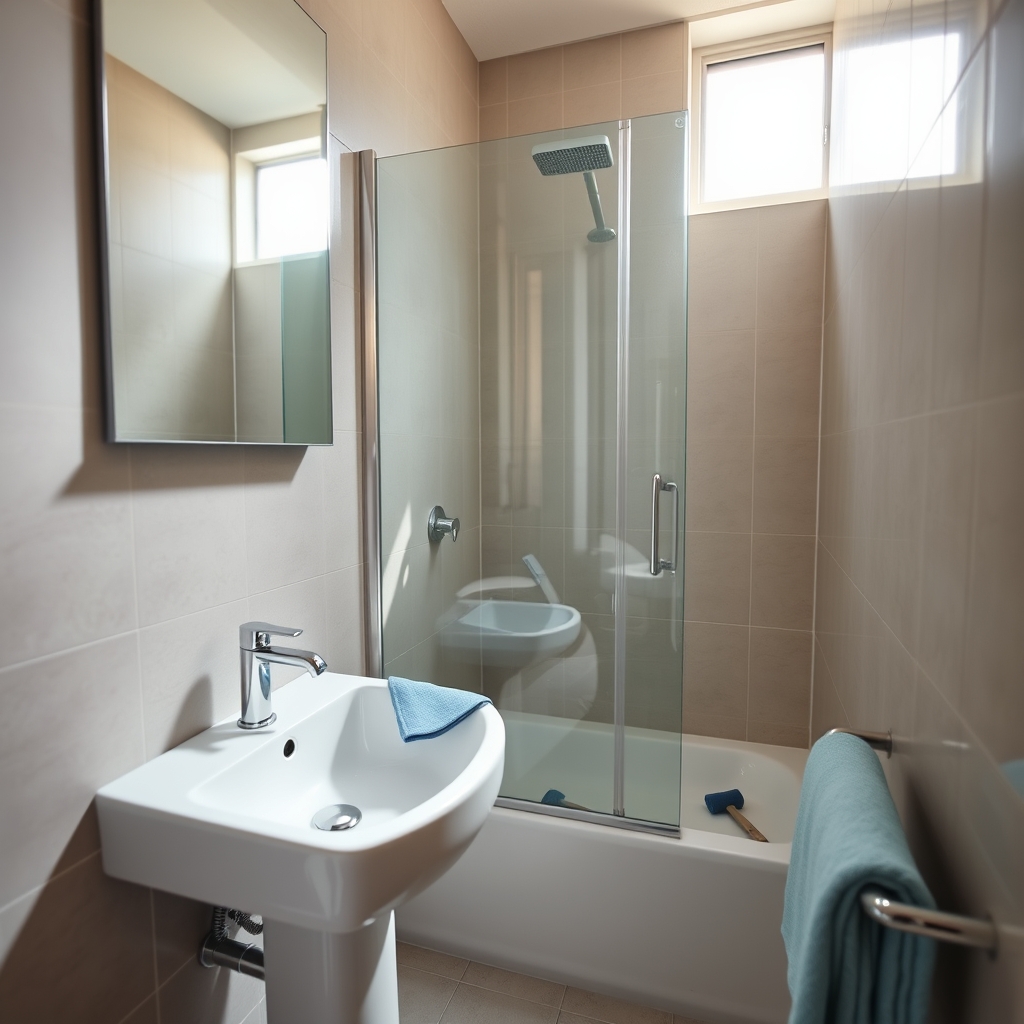
Bathroom cleaning starts at the shower and ends at the floor. A squeegee on the wall is the cheapest habit in the room.
How often should you clean your bathroom?
The World Health Organization reports that 1.4 million people die each year from inadequate water, sanitation and hygiene, and that unsafe sanitation alone accounts for 564 000 of those deaths.
Nobody needs to scrub the whole room daily. The realistic schedule depends on the job:
What | Daily | Weekly | Monthly | Seasonally |
Shower and bath | Squeegee walls, rinse bath | Scrub with cream cleaner | Descale head and glass | Recheck silicone |
Toilet | Flush, wipe the seat | Cleaner, brush, wipe outside | Descale under the rim | Check valve and bolts |
Basin and taps | Rinse, dry the taps | Cleaner, then buff dry | Clean spout and waste | Descale the aerator |
Mirror and glass | Wipe the splashes | Glass cleaner, dry cloth | Clean frame and hinges | Wash window and screen |
Floor | Dry the wet patch | Mop with hot water | Scrub behind the toilet | Clean under cabinet |
Ventilation | Open window or door | Wipe the louvres | Dust the fan blade | Check the roof vent |
Two things shift that schedule here: people per bathroom, since four or five sharing one plot house makes the floor the weekly job, and water. Borehole water in Solwezi and around Kalumbila is mineral-heavy, so glass and taps scale faster than on treated town water. The WHO drinking water guidance adds the point worth remembering: in 2022 at least 1.7 billion people used a drinking water source contaminated with faeces. Twice a year, when the rains end in April and again in September, do the job properly as part of a whole-house deep clean.
Every bathroom has a tipping point. Push the weekly clean back by one week and you have doubled the next one.
What should you clean first in a bathroom?
Work from dry to wet, top to bottom, and leave the floor for last. That one rule fixes most bad habits in the room.
Dust while the room is dry: corners, light fitting, cistern lid, mirror frame.
Mirror and glass second, so the cleaner flashes off before it streaks.
Shower and bath third, the wettest and most chemical job, with nothing above it left to drip.
Basin and taps fourth, then buff the chrome dry with a second cloth.
Toilet fifth, with a cloth and brush that afterwards touch nothing else.
Floor last, then dry it with a separate mop. A wet floor is why the room smells damp an hour later.
The same order runs a kitchen clean. One step is worth adding first: half-empty bottles crowd every bathroom shelf, and lifting them one at a time adds fifteen minutes to every clean. Clear the clutter once and the weekly job stays shorter.
Once my glove hand has touched the toilet brush, it does not touch anything else in that room.
How do you remove soap scum and hard water marks?
Soap scum and limescale look alike and need different treatment. Scum forms when soap meets hard water: the minerals bind with the soap and leave a white solid that holds on. The encyclopaedia entry on soap scum calls it the white solid resulting from adding soap to hard water.
Hardness is measurable. The US Geological Survey puts water on this scale: 0 to 60 mg/L is soft, 61 to 120 moderately hard, 121 to 180 hard, above 180 very hard. Borehole water on Solwezi plots often lands in the hard and very hard range, which is why shower glass here goes cloudy, and why the same source notes hard water shortens the life of fabrics.
Match the treatment to the mark:
The mark | What it is | What lifts it | What to avoid |
Waxy film on tiles and the bath | Soap scum | Hot water, a squirt of dish liquid, nylon pad | Scrubbing dry |
White crust on taps and glass | Limescale | White vinegar 1:1 with water, ten minutes, rinse | Acid on natural stone |
Grey ring round the bath | Scum plus body oils | Cream cleaner in circles, then rinse | Steel wool on enamel |
Black speckles in the grout | Mould, not dirt | Bicarbonate paste and a brush | Weekly bleach, which eats grout |
Two mixtures cover most of the room: hot water with a squirt of dish liquid for everyday film, and white vinegar or citric acid for anything white and crusty. Bicarbonate of soda paste sits between them, mildly abrasive and good on grout lines and tap bases. A short kit finishes the job:
A squeegee on the wall, used after every shower.
Two cloths: microfibre for wet work, dry for glass and chrome.
An old toothbrush for grout lines and tap bases.
Cream cleaner, and bicarbonate of soda.
Vinegar is acidic, so keep it off marble, limestone and natural stone, and do not leave it sitting on chrome. Rinsing is the step everybody skips: scum has to be dissolved and carried away with water, which is why the same shower looks dull again by Thursday. The natural cleaning guide covers what vinegar, bicarbonate and lemon actually do, and what they do not.
Vinegar is the best thing in the house for a shower screen and the worst thing for the wrong tile.
How do you clean a toilet properly?
A toilet is not hard to clean. It is hard to clean properly, because the parts that matter are the ones people skip: under the rim, the rim holes, the hinge covers and the handle.
Flush first, so the bowl is wet and you can see the scale line.
Cleaner around and under the rim, then wait ten minutes. The acid needs contact time, and waiting beats brushing.
Brush the whole bowl: rim holes, under the water line, down the sides, into the outlet.
Clean the outside with a separate cloth: cistern, lid, seat, hinges, pedestal base.
Handle and light switch last, with a disinfectant wipe.
Rinse and dry the floor around the base, including the grout line behind the pedestal.
Then wash your hands with soap and running water rather than hand gel, as the NHS hand washing guidance advises. Never pour bleach into a bowl that still holds an acid cleaner: the two react and release chlorine gas. Keep bleach off anything you care about, too, because one splash on a chitenge or a school shirt is permanent; if it happens, treat it fast, following the guidance on removing stains from clothes.
Load shedding leaves the geyser cold, so keep a jug in the room to rinse the bowl rather than leaving cleaner residue sitting. In compounds still on a bucket flush, rinse after pouring and never leave the brush standing in dirty water. Where the water is hard, the brown line under the rim is scale as much as dirt, so it needs the ten minute wait, not more scrubbing.
You do not need to flood the bowl with bleach every day. You need to let the cleaner sit, and use the brush properly.
How do you clean grout and silicone without scrubbing for hours?
Grout is porous and silicone is soft, so both hold water and soap and both reward patience over muscle. Scrubbing harder wears the surface without lifting what is inside it.
Make a paste of bicarbonate of soda and water, thick enough to sit on the grout line.
Work it in with a brush, not a cloth: an old toothbrush reaches into the line.
Leave it five to ten minutes, then scrub lightly and rinse. Dwell time does the work.
On dark grout, a short bleach dwell works, with the window open and a good rinse after.
On black spots in silicone, press on cotton wool soaked in bleach for thirty to sixty minutes, then remove and rinse.
If the black has gone through the silicone, replace it. No product fixes a failed seal.
Sealing saves the hours: a grout line sealed once a year takes minutes to clean instead of an afternoon.
Wash the bath mat, towels and shower curtain on the same day, because a clean bathroom with a musty mat smells damp within the hour. The laundry symbols guide explains the wash labels. The NHS norovirus guidance adds the part people miss: clothing and bedding soiled by vomit or diarrhoea go on a 60C wash, separately, and alcohol gels do not kill norovirus.
How do you stop a bathroom going mouldy in the rainy season?
Mould needs water and time, and the time part surprises people. Per the US Environmental Protection Agency, water-damaged areas and items should be dried within 24 to 48 hours to prevent mould growth. Three wet days in a corner is enough. The rains from November to April do not create mould; they give it far more chances.
The EPA also draws a line on size. On its mould cleanup guidance, a patch smaller than about 10 square feet, roughly 3 ft by 3 ft, is a householder's job; beyond that, or after serious water damage, it is not. From the same agency's indoor air quality material, we spend about 90% of our time indoors, so a damp bathroom is not a small exposure.
Ventilation costs nothing. Open the window even in the rain, and leave the door open for twenty minutes after a shower. Energy Star certified ventilation fans use about 48% less energy than standard models, though in most Solwezi homes the practical fix is simpler: get the water out of the air and the wet towels out of the room.
Then go after the source. A dripping geyser, a roof sheet leaking over the ceiling line, a shower rose spraying the window frame: all keep the room wet for weeks. The season's wider routine sits in this rainy season checklist, and if a whole ceiling is speckled, that is the point to call in a team, as set out in this guide to choosing cleaning services in Solwezi.
Mould does not need a flood. It needs one damp corner and three days.
What should you never mix when cleaning a bathroom?
The Washington State Department of Health is blunt about this: bleach mixed with ammonia releases chloramines, and bleach mixed with an acid releases chlorine gas. Both irritate the lungs, and both get mixed by accident far more often than anyone admits.
Mix | What it releases | Where people go wrong |
Bleach plus ammonia | Chloramines | Urine in the bowl is ammonia |
Bleach plus acid | Chlorine gas | Vinegar, descalers and most toilet cleaners are acidic |
Bleach plus another bleach | Stronger chlorine fumes | Double the concentration, not double the cleaning |
Bleach plus hydrogen peroxide | A fast reaction | Some stain removers hide peroxide in the label |
Vinegar plus bicarbonate | Foam, nothing more | Not dangerous, just wasted effort |
Four rules cover it: one chemical at a time, rinsing in between; ventilate, because a small bathroom with the window shut concentrates fumes fast; wear gloves, since HSE guidance for cleaning work lists skin disease among the main health risks; and never leave a bucket of mixed anything where a child or a dog can reach it.
Store bleach cool, dark and upright, and never decant it into a drinking water bottle, which is how most household chemical burns happen. Products screened under the EPA Safer Choice label have been reviewed for exactly this hazard. If you have already made one of these mixtures, leave the room and stay out until the air clears; anyone coughing badly or short of breath needs a clinic, not a cleaning tip.
One product at a time, rinse in between. That is the whole rule.
Bathroom Cleaning in Zambia: Quick Answers
What should be in a basic bathroom cleaning kit?
A squeegee, two microfibre cloths, an old toothbrush, cream cleaner, toilet cleaner, white vinegar or citric acid, bicarbonate of soda and disinfectant. Add rubber gloves and a mop head kept only for the bathroom. All of it is available in Solwezi.
How long should it take to clean a bathroom?
Fifteen to twenty five minutes for the weekly clean once you know the order, and one to two hours for a deep clean covering grout, silicone, descaling and the floor behind the pedestal.
Does vinegar really work on bathroom grime?
On limescale, yes: it dissolves the white crust on taps, glass and shower heads. It does little against soap scum mixed with body oils and nothing against mould. It is an acid, so never share a bowl with bleach.
How do you clean a bathroom with no window?
Leave the door open whenever the room is empty, squeegee the walls after every shower, and dry the floor instead of letting it air dry. Wipe the ceiling line monthly, where condensation shows first, and keep the extractor fan blade clean.
What are the best bleach-free options for a bathroom?
Vinegar or citric acid for scale, bicarbonate paste for grout and tap bases, cream cleaner for enamel and porcelain, and hot water with a little dish liquid for everyday film. Oxygen-based bleach handles grout and fabric without chlorine fumes.
Why does my bathroom smell worse after cleaning?
Usually a chemical reaction. Bleach meeting ammonia or an acid releases chloramines or chlorine, and a sharp swimming pool smell in a small closed room is a warning, not freshness. The other cause is water: a wet floor, a damp mop head, or silicone that never dried.
The bottom line on cleaning a bathroom in Solwezi
Get the order right and keep the room dry, and a bathroom stops being a weekly argument: dry work first, shower and bath in the middle, toilet and floor last. Vinegar for scale, bicarbonate and a brush for grout, one chemical at a time. Repetition through the rainy season is what keeps mould out.
If you would rather hand it over, Aenon Horizons is a cleaning and home services company in Solwezi, and bathroom deep cleaning is one of the jobs we do most. See the full range on our services page, read how the team works on the about page, and find more practical guidance on the blog. To book, the contact page is the fastest route, or message us on WhatsApp on +260 978 789 767 or email info@aenonhorizons.com. Start at the homepage if you are new, or call in at the office on Kansanshi Road, opposite Yadah Christian School, Solwezi 10101.
Nobody has ever regretted spending ten minutes drying a bathroom. Plenty of people have regretted not doing it.


Comments