
Zambian Drinks: Munkoyo, Maheu and the Flavours of Home

Zambian drinks are one of the warmest welcomes this country has to offer: a cool cup of munkoyo on a hot October afternoon, a flask of maheu for the drive north, a clay pot of thobwa settling in the corner of a wedding kitchen. Long before fizzy drinks arrived, families here fermented their own refreshment from maize, millet and special roots: a family of local drinks that are sour, sweet, creamy and completely Zambian. If our guide to Zambian food made you hungry, this one will make you thirsty. Here is how each drink is made, what it tastes like, when Zambians drink it, and how the fermentation works. Bring a cup; we will keep it filled.
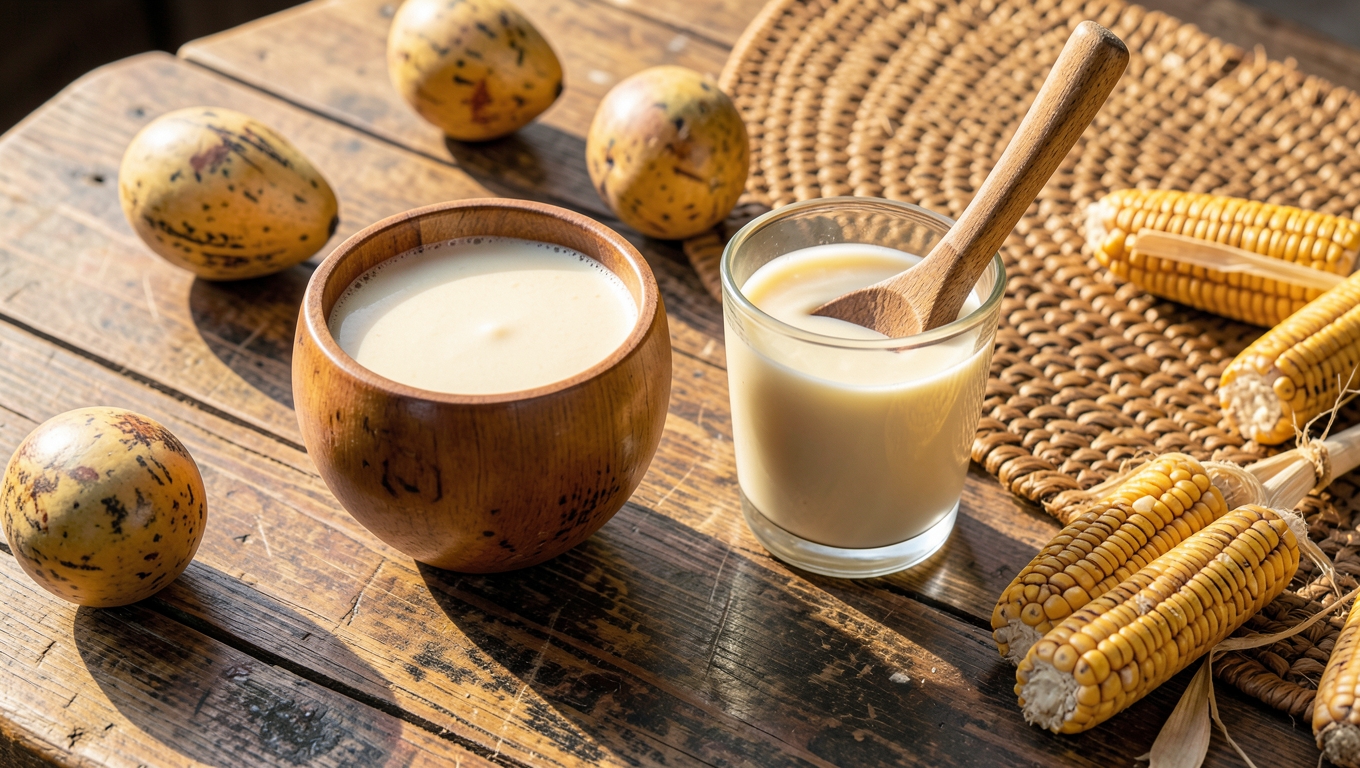
"Munkoyo, maheu and the taste of a Zambian afternoon."
What Are the Classic Zambian Drinks You Should Know?
The classic line-up is munkoyo, chibwantu, maheu, thobwa and mabisi, with tea and soft drinks around the edges. All five are fermented and start life in a home kitchen, and a 2013 study that mapped the microbes behind them found that six to eight kinds of lactic acid bacteria do the heavy lifting in each batch, with munkoyo typically fermenting for around two days at ambient temperatures that swing from 21°C in winter to 29°C in summer.
The line-up at a glance:
Drink | Made from | Taste | When it is served |
Munkoyo | Maize porridge with munkoyo root | Sweet-sour, the original sweet beer | Sold at markets as an energising lunch |
Chibwantu | Maize with a little millet or sorghum | Mildly sour and slightly firm | An everyday drink of Central and Southern Zambia |
Maheu | Maize porridge, often with wheat flour | Creamy, tangy and a little fizzy | Chilled; a family favourite across the region |
Thobwa | White maize with millet or sorghum flour | Milky look, cereal taste, grainy texture | Warm or cold at breakfast; wedding pots; the hot season |
Mabisi | Fresh milk fermented in a calabash | Mildly sour with a slightly firm body | An everyday refresher in central and southern Zambia |
These drinks are made at home and almost entirely by women, who sell them at local markets, so a cup of munkoyo is a handshake with a family business. The same research describes them as major drinks at ceremonies, from weddings to community gatherings.
A shared cup is Zambian hospitality in its simplest form: cold, sweet-sour and offered before you have even sat down.
What Is Munkoyo, and Why Do Zambians Call It Sweet Beer?
Munkoyo, known in some communities as ibwatu, is a mildly fermented drink of maize porridge and the pounded roots of the munkoyo shrub. As the encyclopedia entry on munkoyo explains, the roots carry the enzymes that get things going, and the finished drink is nicknamed sweet beer: slightly sweet, gently sour and cheerfully tangy at a pH of around 3.3.
Making it is a patient, simple craft:
Cook the porridge. Maize meal is stirred into boiling water and cooked into a smooth, thick base.
Cool it to hand-warm. The roots work best at around 45°C: in tests, munkoyo root extract turned 75% of the porridge starch into sugars, mostly maltose, within an hour.
Add the roots. Pounded munkoyo root goes in to start the souring; a spoonful of yesterday's batch does the same job at home.
Let it ferment. The pot rests somewhere warm, often overnight and sometimes up to two days, while lactic acid bacteria and wild yeasts turn sweet porridge into something alive.
Serve it cool. The roots come out, and the drink goes into cups or bottles.
One word of care before you go hunting for roots. Munkoyo roots must come from someone who truly knows them: lookalike roots have been mixed up before, with hospitalisations recorded in Zambia, including one incident in Solwezi District that sent 17 people to hospital. Buy from experienced traders, as our market shopping guide explains.
Munkoyo is a daily habit across the Copperbelt and northern Zambia, sold at markets as an energising, refreshing lunch.
Munkoyo is patience you can drink: maize porridge, a root and two warm days, and the pot handles the rest.
What Is Maheu, and How Is It Different from Munkoyo?
Maheu is munkoyo's creamier cousin, and the difference is all in the base. Where munkoyo leans on root enzymes, the encyclopedia entry on Zambian cuisine describes maheu as a drink of corn flour, water and sugar that ferments over several days into a non-alcoholic, tangy refreshment served chilled. It is filling and softly sour from fermentation, and a good batch carries a touch of fizz.
The drink answers to many names across the region, which shows how one good idea travels:
Mahewu in Zimbabwe and across Chewa and Nyanja-speaking communities, including eastern Zambia.
Mageu in South Africa, where it also appears on supermarket shelves.
Mahleu in Sesotho.
amaHewu in isiZulu and isiXhosa.
Madleke in Tsonga communities.
However you spell it, it is made for sharing. As researchers note, the soft, non-alcoholic nature of these drinks makes them ideal for the entire family, children included. Homemade maheu is lighter and less sweet than shop versions; though treated as non-alcoholic, tiny amounts of alcohol, under 1%, have been reported, so enjoy it fresh and properly chilled.
Maheu is what happens when maize porridge takes its time: cool, creamy, clever and completely delicious.
Where Does Thobwa Fit, and What Else Is on the Drink Table?
Thobwa is the breakfast champion: milky to look at, gently cereal in taste, grainy in texture, made from white maize with millet or sorghum flour. The name means sweet beer, but thobwa is soft by design: it rests two days in a big clay pot, and only becomes real beer, mowa, if left for the best part of a week. It is a favourite in Zambia's eastern regions, served in huge quantities at weddings and poured for guests as they arrive.
The rest of the day matters too. Tea is the quiet constant: fresh buns and a strong cup of tea make a classic Zambian breakfast, a long-standing habit in everyday culture. Celebrations gather families around generous food and traditional brews. Soft drinks hold their own: as a 2025 News Diggers feature put it, Zambia moves from maheu to Fizzi and on to beloved Mazoe, with a friendly reminder to keep the sweet stuff in balance.
Put together, a Zambian drink day looks something like this:
Morning: tea with buns, or a warm cup of thobwa to start the day.
Midday: munkoyo or fresh maheu from the market, an energising lunch companion.
Afternoon: something cold, from a chilled maheu to plain water, to see off the heat.
Celebrations: huge pots of thobwa at weddings, and munkoyo and friends at ceremonies across the year.
At a braai: a jug of cold maheu beside the grill, with the braai itself in your best hosting hands.
If a wedding is coming up in your family, our guide to Zambian wedding traditions shows where the thobwa pots fit in.
Thobwa is a hug in a cup: maize, millet and two quiet days in a clay pot.
How Does Fermentation Work, in Plain Kitchen Language?
Fermentation is one of the oldest tricks in the kitchen: tiny bacteria and yeasts changing food for the better. The Food and Agriculture Organization documents it as an ancient tradition that preserves food and improves nutrition, and in Zambia's traditional drinks the stars are lactic acid bacteria, the crew behind yoghurt, sauerkraut and sourdough.
Here is the science, minus the lab coat. Cooked maize porridge is full of starch, long chains of sugar locked together. Munkoyo roots, or the malted millet and sorghum in maheu and thobwa, carry enzymes that snip those chains into sweet, simple sugars; the lactic acid bacteria then eat those sugars and produce lactic acid. That acid does two jobs at once: it gives the drinks their sour bite, and it drops the acidity to a level where unwanted microbes cannot thrive, which is why these drinks have been enjoyed safely for generations. Wild yeasts add bubbles and depth.
How well does that defence work? In a close study of mahewu fermentation, the lactobacilli won outright: unwanted bacteria fell sharply within 24 hours as the drink dropped to a protective pH of around 3.3.
Stage | What is happening | Roughly when |
Cook the base | Maize meal is cooked into a smooth porridge, the base for everything that follows | First, on the stove |
Cool and add the starter | Roots or malt bring enzymes that turn starch into sweet sugars; in tests this took an hour at 45°C | While the pot is hand-warm |
Ferment | Lactic acid bacteria take charge and the drink turns gently sour, around two days at 21 to 29°C | 24 to 48 hours |
Check, then chill | Once it tastes tangy it is ready; cooling slows everything down, while warmth and time let alcohol creep up | Serve within a day or two |
Fermentation is patience with a job to do: warmth, time and a little acidity working quietly in the pot.
How Do You Keep Home Fermentation Safe?
Home brewing is forgiving, but it still answers to the kitchen's rules. The World Health Organization's five keys to safer food, keep clean, separate raw and cooked, cook thoroughly, keep food at safe temperatures, and use safe water and raw materials, read like a checklist written for a pot of munkoyo:
Start spotless. Scrub pot, spoons and bottles with hot water and soap, and wash your hands first.
Use safe water. If you would not happily drink it, do not ferment with it.
Buy trusted roots and malt. Roots should come from sellers who know them; your maize, millet and sorghum should be fresh, dry and mould-free.
Keep it warm, not hot. A shaded, warm corner is ideal; a baking windowsill can hurt the friendly microbes or hurry the drink towards alcohol.
Cover it, lightly. A clean cloth keeps dust and flies out while letting the ferment breathe.
Time it, then chill it. Twenty-four to forty-eight hours is the sweet spot; once it tastes right, chill it, because warmth and time nudge the alcohol upwards.
And when something looks or smells off? A quick field guide:
What you notice | What it means | What to do |
Gentle bubbles in the pot | Wild yeasts adding natural fizz | Nothing at all; enjoy the sparkle |
A sour, bready smell | Lactic acid bacteria doing their job | Serve it cool and fresh |
A sharp, boozy smell | The batch has drifted towards alcohol | Cooler, shorter next time; taste before serving to children |
Fuzz or mould on top | Something unwanted moved in | Tip it out and start again with clean kit |
Above all, relax: a fresh batch that smells sour, sweet and a little bready is doing exactly what generations of Zambian cooks expected.
How Do Traditional Drinks Fit into a Modern Kitchen?
These old drinks barely need updating; they just need a fridge, a jug and a little pride. Hospitality is the whole point of them, and Zambia Tourism's portrait of the country says it well: this is a place where a visitor is family, and something cold and home-made is the fastest way to say so.
Five easy ways to work these drinks into the weekly rhythm:
Breakfast, sorted. Warm thobwa beside your tea and buns makes a filling start to a busy day.
The fridge jug. Make a batch over the weekend and pour from the jug all week; chilling slows fermentation and keeps it fresh.
The lunchbox trick. A bottle of maheu frozen overnight keeps a lunch cool and becomes a cold drink by midday.
Guests arrive, drinks appear. Keep cups and a cold jug ready, and serve munkoyo or maheu the way they are meant to be served: cold and generous.
Weekend soundtrack. A cold drink and the story of Zamrock on the speaker make a very Zambian sort of afternoon.
One note for the grown-ups: since alcohol creeps up with warmth and time, keep fermentation short and cool when children will be sharing, and treat longer experiments as exactly that, experiments.
Zambian Drinks: Quick Answers
These are the questions visitors and newcomers ask us most, usually with a cup already in hand.
What does munkoyo taste like?
Gently sweet and pleasantly sour, like a light, drinkable porridge with a citrusy tang. Zambians call it sweet beer for that sweet-sour balance, it is best served cool, when the flavour is liveliest.
Is maheu the same as munkoyo?
They are close cousins, not twins. Munkoyo starts with maize porridge and munkoyo roots, whose enzymes get the sweetness going; maheu uses maize porridge alone, ferments over several days and comes out creamier and a little fizzier. Both are soft, non-alcoholic drinks the whole family can share.
Is home-fermented munkoyo safe?
Home fermentation has kept families refreshed for generations, and the science explains why: the drink turns acidic enough to keep unwanted microbes in check. Keep pots and hands clean, use safe water and trusted roots, ferment warm rather than hot, and trust your nose. Anything mouldy goes in the bin, no debates.
When do Zambians drink maheu?
All day, happily: a breakfast and mid-morning favourite, a lunchtime refresher sold at markets, and a family drink at weekends and celebrations. It is meant to be drunk cold.
Are there non-alcoholic traditional drinks in Zambia?
Yes, and they are the heart of it: munkoyo, chibwantu, maheu and thobwa are all made to be soft drinks. Studies describe their non-alcoholic nature as exactly why they suit everyone, children included. Kept short and cool they stay gentle; left warm for days they drift towards beer.
Where can a visitor try these drinks?
Start at the busy markets and roadside stalls, where fresh munkoyo and maheu are sold by the bottle, and thobwa is a breakfast staple in the east. Bottled versions exist, but market-fresh and cold is the real taste of the country. Ask locally and follow the queues.
Sweet Drinks, Sticky Glasses: Let Aenon Horizons Take Over
A full pot of thobwa and a happy crowd leave a particular kind of kitchen behind: sticky glasses, porridge pans, sweet rings on the counter and a mountain of washing up. That is where we come in. Aenon Horizons looks after homes and offices across Solwezi and Kalumbila:
Laundry and dry cleaning with a bespoke scent bar and a one to four hour express turnaround, so the tablecloth is fresh before the next celebration.
Maid and cleaning services for corporate and residential clients, taking the post-feast reset off your hands.
Car wash and auto care for the vehicle that did the market run and the wedding lift.
Coming soon to Lusaka, because good habits travel.
Every team is vetted, uniformed and trained, and every job is graded against our five-star quality-control rating. Message us on WhatsApp at +260 978 789 767 or email info@aenonhorizons.com to book, and visit our services page and about page to see everything we do. Our office is on Kansanshi Road, opposite Yadah Christian School, Solwezi 10101, and you can book right here. For more on Zambian life and happy homes, browse our blog, starting with this week's pair: our kitchen cleaning guide and our natural cleaning guide.
Pour the drinks, make the memories, and leave the sticky glasses to us.


Comments